Life can take unexpected turns, and for Greg Pryer, a former Marine and New York City police officer, those turns were especially tumultuous. Having faced trauma both in the military and on the police force, Pryer found himself battling post-traumatic stress disorder (PTSD) and resorting to alcohol as a coping mechanism.
Pryer’s life began to unravel after his retirement from the NYPD in 2015. Struggling with a loss of identity and purpose after leaving behind a career marked by camaraderie and duty, he turned increasingly to alcohol. “I went from being a veteran and being in law enforcement… and retirement somewhat stripped me of my identity,” Pryer recounted in an interview with CNN.com. “All I had, in a way, was my alcohol to deal with it.”
By 2019, Pryer was facing legal troubles, having been arrested for DWI and weapons violations. The prospect of standing before a judge in Suffolk County Courthouse was a surreal and sobering experience for someone used to enforcing the law, not breaking it.
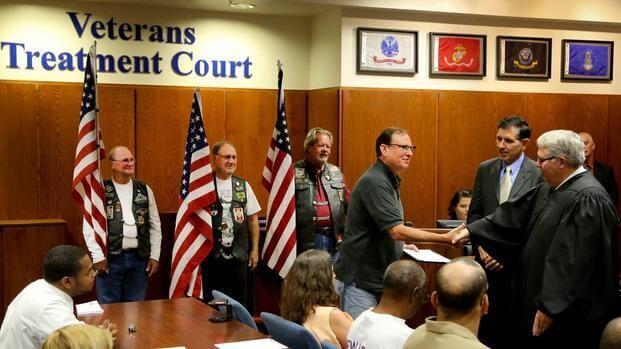
Pryer’s turning point came through the Suffolk County Veterans Treatment Court, a program designed to help veterans with addiction issues through rehabilitation and mental health support. This court offers a path to redemption by ensuring veterans receive the help they need to avoid incarceration.
“Yes, it’ll help out your legal situation, but it’s also a chance to work on yourself,” Pryer said. This program, part of a broader initiative that began in Buffalo, New York in 2008, now spans 49 states with approximately 750 treatment courts nationwide, according to the Department of Veterans Affairs.
No Ordinary Judge
Judge John Toomey, a Vietnam War veteran, played a pivotal role in establishing the Suffolk County Veterans Treatment Court with the support of local veterans’ organizations and the VA. Known for his unconventional approach, Toomey interacts personally with veterans, offering guidance and support outside of traditional court settings.
Defendants find this alternative approach refreshing and motivating, as Judge Toomey explained, “Otherwise, they could have gone through the regular court system, served a few months in jail, and gone right back to what they were doing before their arrest.”
How It Works
The program begins with a detailed screening by the district attorney’s office to determine eligibility. Veterans then participate in tailored rehabilitation programs, including substance use counseling and mental health treatment, and appear regularly in court for progress evaluations.
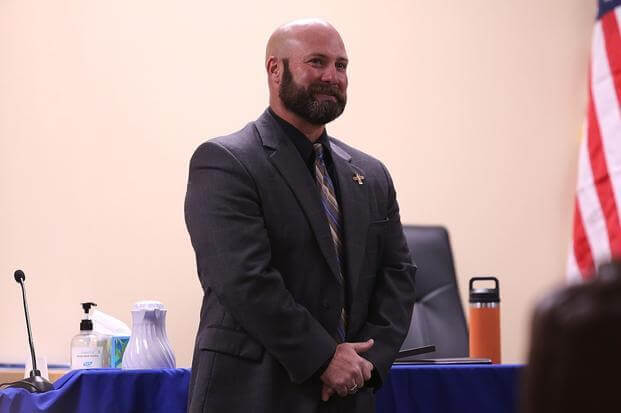
Judge Pierce F. Cohalan, who succeeded Toomey in 2018, continues this approach, prioritizing personal interaction and support for veterans. “We’re here to catch them or to pick them up, and to keep them moving forward,” Cohalan stated.
Green Jackets Answer the Call
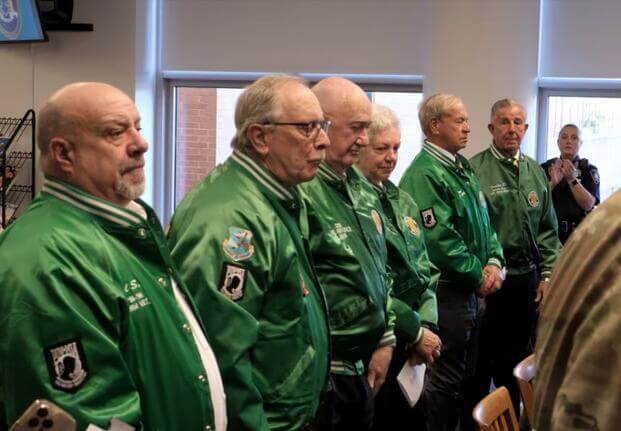
The Green Jackets, a group of volunteer veterans, provide additional support by acting as mentors. Their presence in court not only offers encouragement but also fosters trust with defendants.
Volunteer Grace Mehl noted, “The more they can talk to us about their issues, the more they get it off their chest, the more they can start to see answers.” This support proved vital for participants like Melissa, a Navy veteran who credits the program and the Green Jackets for her recovery and reconciliation with her family.
Camaraderie Key to Success
The Suffolk County Veterans Treatment Court boasts a 90 percent success rate, emphasizing the importance of camaraderie and mutual support among veterans. For Frank D’Aversa, a founding member of the Green Jackets, the program is a way to ensure that no veteran is left behind.
Greg Pryer, now 18 months sober, has become a mentor himself, extending the support he received to others in need. “I am honored to do it today,” he said, reflecting on his journey and the opportunity to give back.