In March 1953, as peace talks dragged on during the Korean War, an unexpected escalation occurred on the Jamestown Line. The 1st Marine Division, tasked with defending critical hilltop outposts known as “The Cities,” faced a formidable Chinese onslaught. This engagement would later be remembered as one of the bloodiest battles the Marines had to endure in the war.
The Strategic Importance of “The Cities”
The collection of outposts dubbed “The Cities” included Reno, Carson, Vegas, Berlin, East Berlin, and the Reno Block. Inspired by Nevada city names, Lt. Col. Anthony Caputo of the 5th Marine Regiment described these positions as a high-stakes “gamble.” “It’s a gamble if we can hold them,” he remarked, highlighting the precarious nature of the defense line.
Lt. Col. Jonas M. Platt commanded the 1st Battalion, 5th Marines, responsible for manning these outposts with roughly 40 Marines and two Navy corpsmen per position. These forward posts served as early warnings, alerting the main Marine forces to any impending attacks as negotiations continued at Panmunjom, just a few miles away. On the other side, Chinese commanders viewed these hilltops as vital bargaining chips, potentially threatening Seoul if captured.
The Chinese Offensive
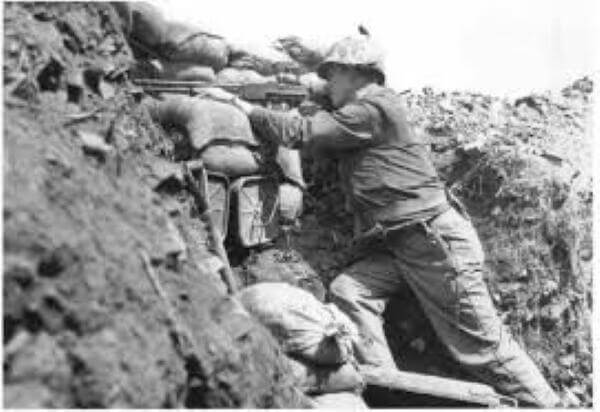
On the evening of March 26, 1953, the Chinese 358th Regiment launched a massive assault on the outposts with approximately 3,500 soldiers. The Marines, outnumbered nearly 30 to one, faced waves of enemy troops. At Carson, 1st Lt. John F. Ingalls of Company C, 1st Battalion, 5th Marines, noted the tense situation as ammunition ran low and ordered his men to fix bayonets.
Reno quickly fell under the pressure of the attack. Marines retreated into hillside caves, but the enemy began sealing the entrances, leading to a suffocating environment for those trapped inside.
Desperate Attempts and Heroic Resistance
Efforts to relieve the besieged outposts faced fierce resistance. The Marines ran into heavy ambushes, turning the battle into close-quarter hand-to-hand combat. Despite significant casualties, attempts to break through to Reno failed.
Meanwhile, Sgt. George Johannes of H Company, 3rd Battalion, 5th Marines, described a close encounter with a Chinese soldier, exemplifying the brutal nature of the conflict. Navy corpsman Billy Rivers Penn also faced intense hand-to-hand battles, sustaining wounds and eventually becoming a prisoner of war.
The Battle for Vegas
At Vegas, intense combat ensued, with Marines like Sgt. George Johannes and Navy corpsman Billy Rivers Penn engaging in direct battles against Chinese soldiers. Despite heavy casualties, the Marines held their ground, demonstrating remarkable resilience.
Counterattacks and Final Assault
Col. Lewis “Silent Lew” Walt orchestrated counterattacks to reclaim lost positions. Despite initial setbacks, a concerted effort involving airstrikes and artillery support enabled E Company, 2nd Battalion, 7th Marines, to retake Vegas through fierce combat.
Supporting their efforts was a unique Marine—a small Mongolian mare named Sergeant Reckless. Trained to carry ammunition, Reckless made multiple trips through dangerous terrain, playing a crucial role in the resupply efforts.
The Aftermath
The intense battle resulted in significant casualties. Of the approximately 1,500 Marines involved, 1,015 suffered casualties, with 156 killed, 801 wounded, and 19 captured. Chinese losses were estimated at 4,000, effectively decimating their 358th Regiment.
The battle’s ferocity left a lasting impact on those involved. Sgt. Frank Metersky’s recollection of the harsh realities faced during the conflict is a testament to the battle’s lasting psychological scars.
Legacy and Recognition
The Battle for Outpost Vegas led to the awarding of two Medals of Honor, including a posthumous award to Matthews and one to Charette. Sgt. Reckless was also recognized for his contributions, being promoted to staff sergeant.
In the months following the battle, strategic shifts led to the eventual abandonment of the contested hilltops. By July 1953, an armistice had been signed, marking the end of active hostilities, although the scars of the conflict remained evident along the Korean Peninsula’s divided border.