With grocery prices in Colorado climbing 25% over the past five years, outpacing wage growth, residents are feeling the pinch. The surge in food costs has become a pressing issue, as highlighted by a December 2025 Reuters/Ipsos survey, which identifies living expenses, including housing and healthcare, as top concerns for Americans.
In Colorado, the food pricing issue is exacerbated due to a concentrated retail landscape. King Soopers, a Kroger affiliate, and Walmart collectively command about half of the market share. Meanwhile, Safeway/Albertsons is losing ground, and alternatives like Costco and Sam’s Club remain limited-access options.
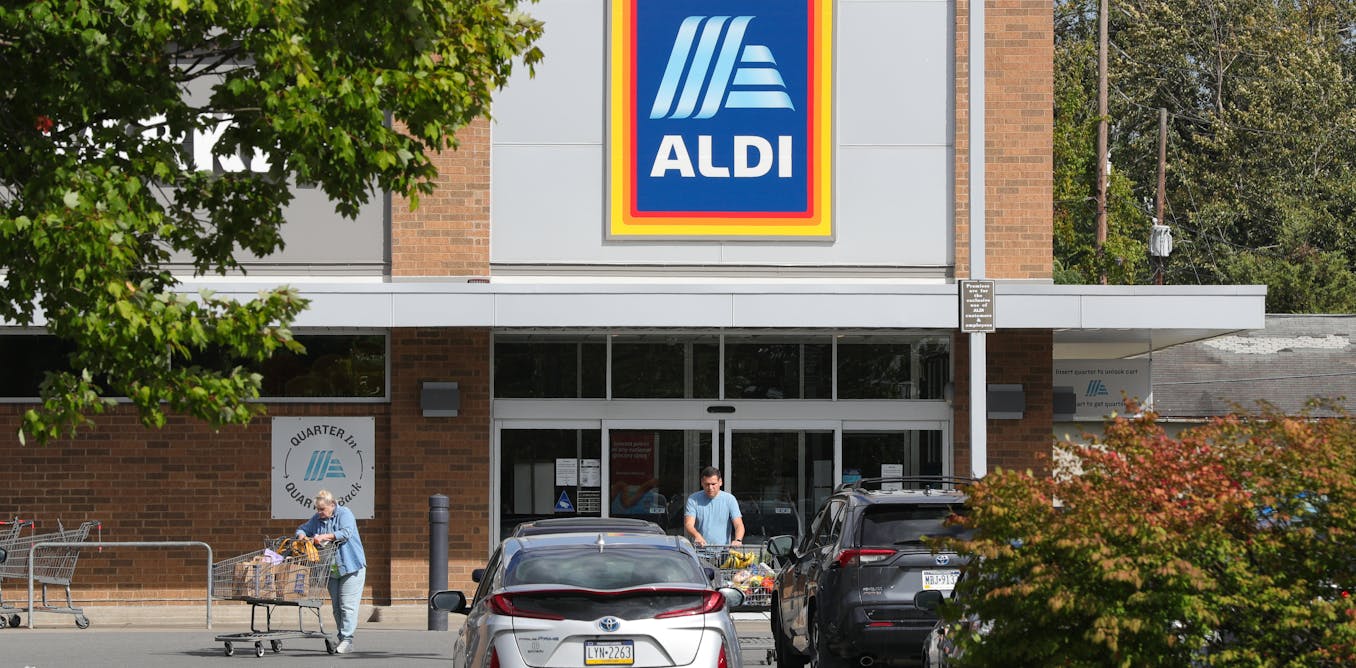
While consumers have voiced their concerns to politicians, tangible solutions have been scarce. However, a new player aims to shake up the market. Aldi, a major grocery chain, plans to open 50 stores and establish a distribution center in Colorado over the next five years.

Kevin Dietsch/Getty Images
Market Dynamics and Disruption
Though Aldi’s 50 new stores will hardly cover a fraction of Colorado’s 1,000 grocery outlets, the retailer’s strategy doesn’t hinge on matching the giants. Nationally, Aldi holds a modest 3% market share, compared to Walmart’s 21% and Kroger’s 9%. Instead, Aldi targets the market as a low-cost alternative, a strategy Colorado sorely needs.
Drawing from two decades of food industry experience and supply chain research, I observe that retailers often consolidate to lower prices, only to hike them once competition wanes. Aldi’s supply chain strategy could disrupt Colorado’s market stagnation, benefiting consumers.
Competitive Landscape in Colorado
Improving competition in Colorado’s grocery scene involves more than adding stores. The state faces a conundrum between retailers and the food supply chain, limiting healthy competition.
Colorado, primarily a food importer, is not a key focus for supply chains due to its location in the sparsely populated Mountain West and its limited food production beyond beef. The state relies on imports for most food products, with vegetables from California, Arizona, and Mexico, meats from neighboring states, and packaged foods from the Midwest.
The market stability provided by Kroger and Walmart doesn’t necessarily equate to opportunities for new or existing players. With Walmart holding a lower 11% market share in Colorado compared to its national average, these giants lack incentives to lower costs for consumers.
Hyoung Chang/Getty Images
In 2024, the grocery sector in Colorado and beyond saw turbulence due to a failed merger between Kroger and Safeway/Albertsons. The move was halted by a federal court, leaving these chains at a disadvantage against Walmart and agile newcomers like Trader Joe’s and Aldi.
Aldi’s Potential to Transform the Market
Nontraditional retailers like Walmart and Aldi are challenging the traditional supermarket model, which now accounts for only 37% of market share compared to nontraditional’s 63%.
Traditional supermarkets, including King Soopers, struggle to match the lean operations and extensive offerings of nontraditional competitors. In this context, only supercenters like Walmart may endure, while others might pivot to smaller, cost-efficient models.
Aldi’s entry into Colorado could be the disruption needed to invigorate the market. With the lowest costs and profit margins in the industry, Aldi’s small stores and private label focus reduce overhead and marketing expenses.
Plans for an Aldi distribution center in Aurora by 2029 could enhance local supply chain infrastructure, crucial for reducing food prices.
Innovative Supply Chains to the Rescue
Though Americans spend only 10% of their income on food, affordability remains a challenge. In Colorado, 1 in 8 people faces food insecurity, with rural and urban areas often turning into food deserts.
Aldi’s model, featuring smaller stores and private labels, could influence low-income areas where Dollar Tree and small independents dominate. Efficient supply chains might extend their benefits to underserved regions, potentially improving food access statewide.