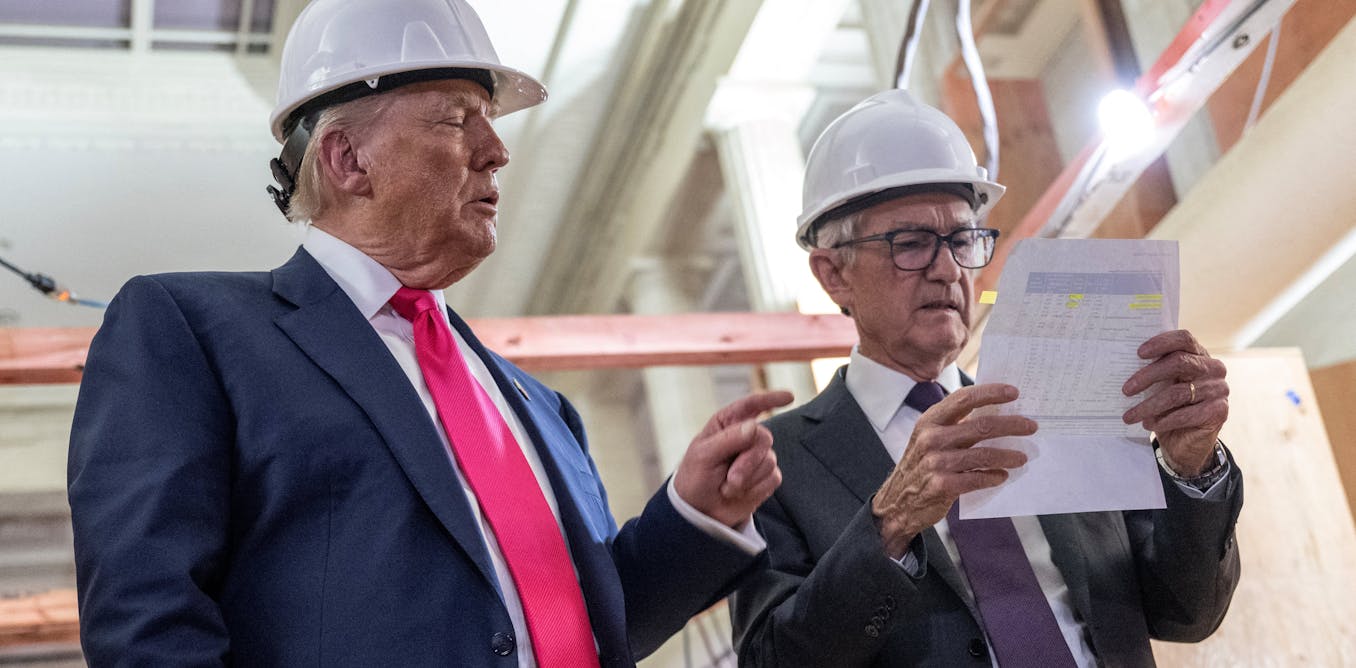
In a surprising turn of events, the U.S. Department of Justice has launched a criminal investigation into Federal Reserve Chair Jerome Powell, prompting renewed discussions about the central bank’s independence. Powell has openly criticized the investigation, describing it as a politically motivated move by the White House, which has been pushing for significant cuts to interest rates—a stance long supported by President Donald Trump.
To place this situation in context, The Conversation reached out to Cristina Bodea, a professor at Michigan State University with extensive experience studying central bank operations, to explore the broader implications of such an investigation.
Historical Context
The investigation into Powell marks a unique moment in U.S. history, as no previous Fed chair has faced such scrutiny. Historically, during the administrations of Nixon and Reagan, presidents have exerted pressure on Federal Reserve chairs amid challenging economic conditions, characterized by high unemployment and inflation. However, recent decades have seen bipartisan support for maintaining the Fed’s independence.
Understanding Central Bank Independence
Central bank independence is both legal and practical. Legally, central banks operate with a degree of separation from political influence, allowing experts to make decisions based on economic data and mandates, such as maintaining low inflation. This legal framework ensures the Fed remains accountable to Congress, with appointments subject to presidential nomination and Senate confirmation.
In practice, the Fed has enjoyed a level of independence beyond legal requirements, thanks to a bipartisan consensus against politicizing the institution. This autonomy has helped shield monetary policy from electoral cycles and political pressures.
Political Pressures and Implications
Politicians often aim to influence monetary policy due to its powerful and rapid impact on economic outcomes like credit availability and employment levels. However, resorting to such tactics could undermine the Fed’s credibility, resulting in increased inflation expectations among the public and diminishing the institution’s ability to stabilize employment.
Impact on Consumers
For American consumers, the primary concern is inflation. While there is currently no financial or unemployment crisis, lowering interest rates as proposed by Trump could deplete the Fed’s tools for addressing future economic downturns. Economic data remains mixed, and debates continue within the Fed over the appropriate monetary policy direction.

AP Photo/Richard Drew
Global Perspective
Challenges to central bank independence are not exclusive to the United States. Similar issues have arisen in countries like Turkey, Venezuela, and Argentina. However, such interference is less common in democracies with strong institutional frameworks and adherence to the rule of law.