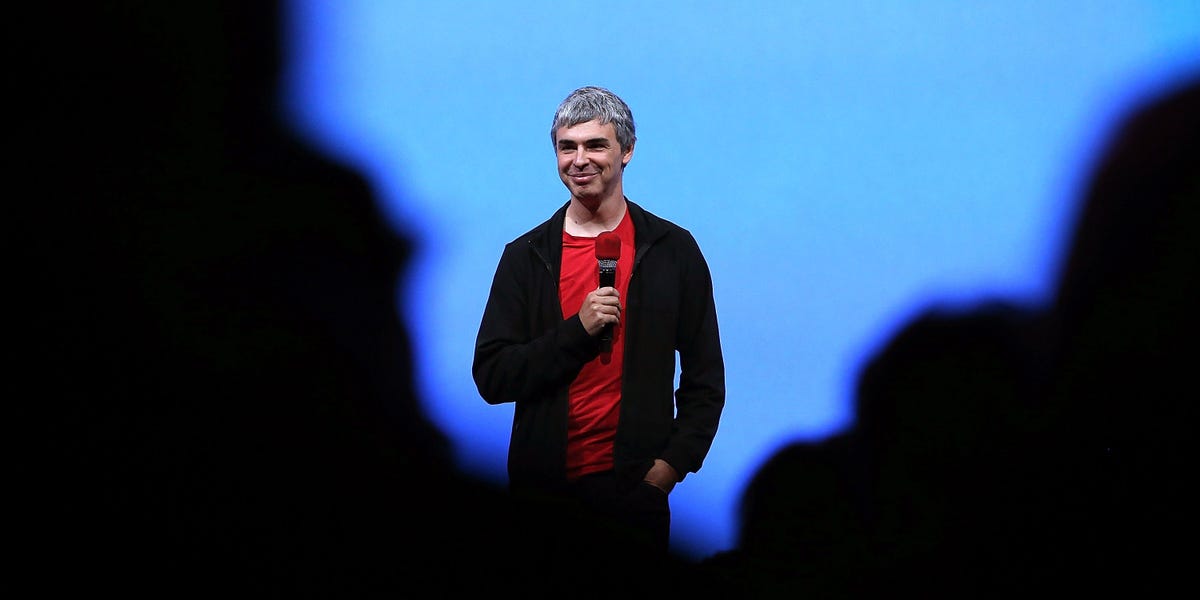
In a strategic move to shield his assets, Google cofounder Larry Page has distanced himself from California in anticipation of a proposed wealth tax targeting the state’s billionaires. Recent filings reveal Page’s efforts to relocate numerous business entities away from California, ahead of the proposed legislation’s end-of-2025 deadline.
Page’s family office, known as Koop, underwent incorporation in Delaware last December, transitioning out of California. This shift was mirrored by other Page-affiliated entities, such as Flu Lab LLC, which focuses on influenza research and is now listed in Nevada, and One Aero, a venture investing in flying cars, currently based in Florida.
Additionally, Dynatomics, LLC, a startup introduced by Page in 2023 to integrate AI into aircraft manufacturing, has transitioned its registration from California to Delaware, now operating from Keller, Texas. Despite these changes, Dynatomics’ operations, led by Chris Anderson, reportedly remain in California. Requests for comments from Anderson and Page’s representatives were not answered.
According to The New York Times, Page has contemplated moving to Florida, influenced by a proposed measure that would levy a 5% tax on billionaires residing in California. This initiative, if enacted, would retroactively affect residents as of January 1, 2026. A source close to Page confirmed his departure from the state, though the permanence of this move remains unclear.
Page, ranked as the second-richest individual globally by the Bloomberg Billionaires Index, has made further strategic relocations. His family has converted various LLCs used for acquiring islands in Puerto Rico and the Virgin Islands to Delaware, now listing a Florida address. A similar move was executed for an LLC associated with a Fiji island purchase.
Page’s family converts other entities to Delaware
Lucinda Southworth, Page’s spouse and a scientist, relocated her marine-conservation charity, Oceankind, from California to Delaware. Delaware’s appeal lies in its favorable taxation and privacy laws, attracting businesses to incorporate within the state. Notably, Delaware’s regulations do not mandate the disclosure of LLC directors’ names, offering enhanced privacy.
Page’s family office, characterized by its secrecy and managed by CEO Wayne Osborne, exemplifies this preference for confidentiality. Legal filings by Cristina Rosado, an attorney for Page and Southworth, reflect these strategic shifts.
In 2025, Page incorporated three entities in Florida, as reported by The New York Times. Among them, a Koop LLC was registered in January. However, its association with Page is unconfirmed.
California’s billionaire tax proposal
The proposed wealth tax has sparked debate among venture capitalists and political figures. Venture capitalist Vinod Khosla voiced concerns on X, warning that the tax might drive away key taxpayers and harm California’s economy. “Long term damage unless legislature bans wealth taxes,” he stated, suggesting a need for uniform national tax policies.
San Jose’s Democratic mayor, Matt Mahan, criticized the proposal as a threat to California’s innovation-driven economy. Meanwhile, White House AI czar David Sacks argued that the measure could backfire, predicting a shift in financial and tech leadership to Miami and Austin over New York and San Francisco. His venture firm, Craft Ventures, has recently expanded to Austin.
Celebrity lawyer Alex Spiro penned a letter to California Governor Gavin Newsom, cautioning that the tax could trigger a capital and innovation exodus from the state.