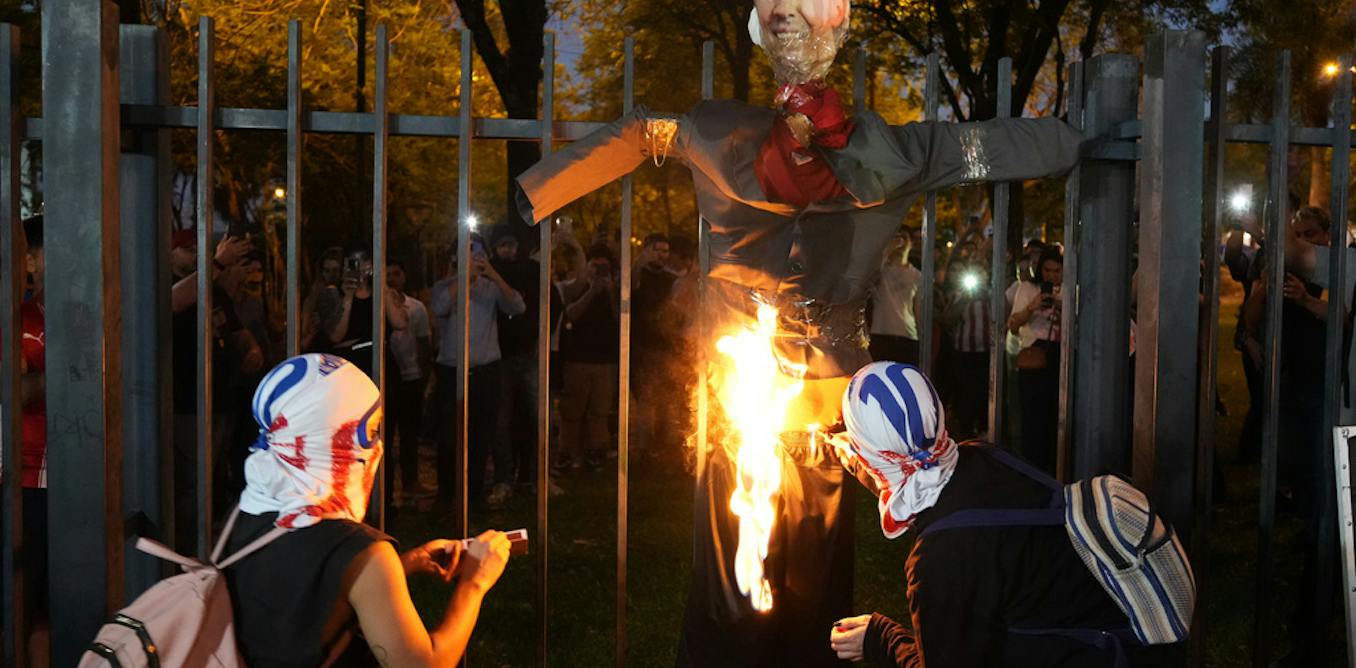
On November 3, 2026, a financial crisis unfolded in Paraguay as millions of users found themselves unable to access their funds via the Ueno banking app. This situation rapidly escalated into a political upheaval, resulting in the ousting of the country’s president, who was then placed under house arrest and faced multiple corruption charges. Read more about the crisis here.
The crisis has thrown light on a contradiction within Paraguay’s economic development. Ueno Bank, known for its role in enhancing financial accessibility, expanded with the aid of close ties to political figures and institutions. Despite its rapid growth, warning signs were evident before the crisis hit. Details on the president’s corruption charges can be found here.
Experts in Paraguay’s political, economic, and environmental sectors express concern over the collapse, raising questions about who reaps the benefits of financial modernization and who takes on the risks. The relationships between political and financial entities, regulatory authorities, and the allocation of public resources to private firms are crucial issues for a nation that has been considered a model of economic stability. Explore more about Paraguay’s economic development here.
A Rapidly Expanding Bank
Launched in 2021, Ueno attracted customers with digital banking and cash-back incentives, offering services to underserved groups including rural communities. It also extended credit card access to low-income clients. Its growth coincided with Paraguay becoming an attractive destination for investors due to its favorable economic policies. Learn more about Ueno’s expansion strategies here.
However, Ueno’s success masked underlying issues. The central bank acted only after significant accounting discrepancies left Ueno’s solvency ratio below legal requirements. A report from June 2026 already highlighted questionable loans linked to Ueno’s controlling shareholder, Grupo Vázquez. Despite these red flags, regulatory oversight failed to address the growing concerns. Investor interest in Paraguay was rising, driven by its economic policies.
The central bank eventually placed Ueno into resolution, halting transactions for its nearly 3 million customers. The crisis led to the resignation of President Santiago Peña, who was closely associated with the bank. The Senate voted to remove him, paving the way for Vice President Pedro Alliana to assume the presidency. Details of the financial irregularities can be found here.
Public discontent has manifested in protests, with citizens accusing the government of mismanaging their savings. Read about the public reaction here.
Intertwined Interests
The Ueno story also highlights the close links between Paraguay’s political and financial elites. Carlos Carvallo, who previously chaired Ueno’s predecessor, became central bank president under Peña’s administration. He resigned following the crisis and faced charges similar to those against Peña. Carvallo’s resignation details are available here.
Peña had financial ties to Ueno through a stake in Ueno Holding, and his brother was involved with a shareholder entity. These connections, coupled with regulatory changes, have raised questions about regulatory capture and conflicts of interest. Read more about these connections here.
Ueno’s association with public funds is particularly controversial. The bank held significant reserves, including funds from the social security system, IPS. Under Peña’s appointees, eligibility requirements for bank deposits were relaxed, increasing Ueno’s deposits from public sources. Further details on public funds involvement are available here.
Unseen Costs of Economic Growth
Despite Paraguay’s economic growth, the crisis reveals the gaps in financial oversight and the burden of banking failures. The country’s economy has seen significant growth rates and improved credit ratings, driven by sectors like hydroelectric power and agriculture. However, these figures do not address the underlying issues of financial governance. The IMF’s growth projections can be found here.
The crisis has reignited discussions on the need for separation between financial supervision and political networks. While Paraguay’s ruling party has managed to address the immediate political fallout, the long-term implications on its economic model remain uncertain. More on the political impact of the crisis is available here.