The United States government is pumping hundreds of millions of dollars into domestic drone manufacturing — and for everyday Americans, the stakes go well beyond military hardware. From the factory jobs these investments could create to the tax dollars tied up in reducing dependence on Chinese-made technology, this shift in defense spending touches the kind of economic concerns that hit close to home.
California-based Neros Technologies has secured a $450 million conditional loan from the Defense Department’s Office of Strategic Capital to build out American manufacturing of small drone components. The company is also committing an additional $165 million of its own, bringing the total investment to $615 million. That money is expected to flow into domestic production facilities — and the jobs that come with them.
Ross Pederson, Neros’ head of growth, framed the investment in terms that resonate far outside Pentagon corridors. The growth of the U.S. small drone industry, he said, is
“a huge benefit to the American taxpayer.”
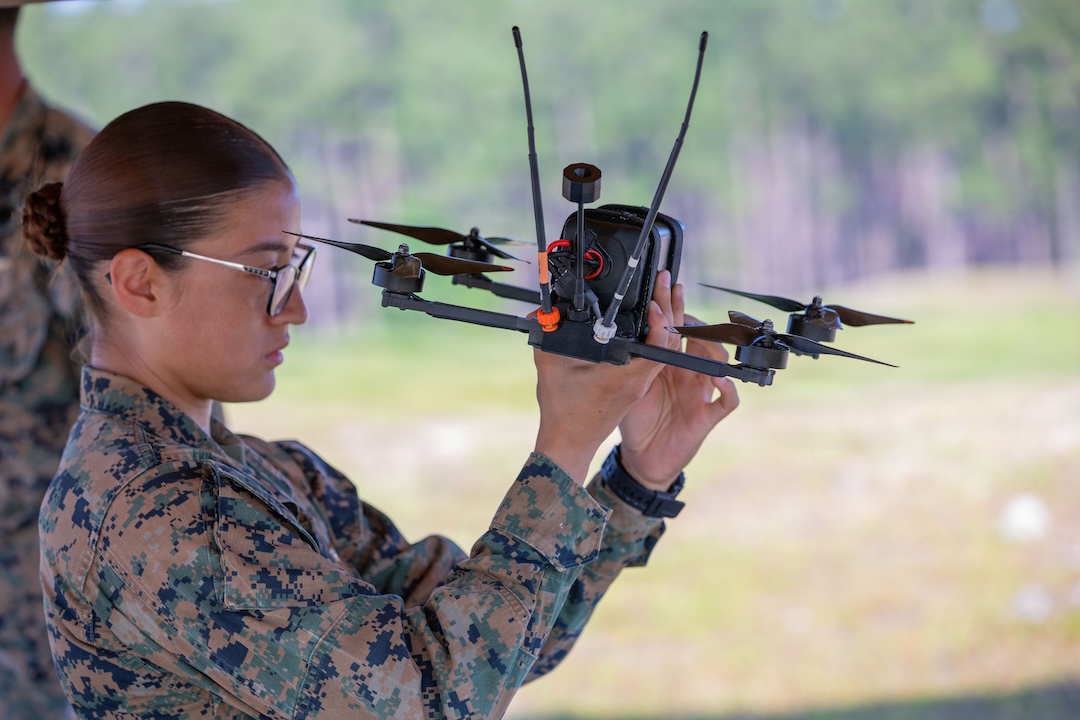
Neros is currently a leading contender in the Pentagon’s Drone Dominance Program, a competition aimed at identifying the best affordable small combat drone. David Lorch, director of the Office of Strategic Capital and senior advisor to the deputy secretary of defense, explained the rationale in a statement: the company
“has already demonstrated an ability to design, manufacture and deliver exceptional small unmanned aircraft systems.”
Lorch added:
“OSC’s investment will turbocharge Neros’ ability to manufacture drones and components critical for the production of drone systems.”
Why It Matters for American Workers and Taxpayers
Right now, almost all small drone components are manufactured overseas — and not in friendly territory. Pederson put it plainly:
“I don’t think you have to squint too hard to convince yourself that small drones are going to be very, very important in the future of warfare. And if you look at the status quo ante, which is that 99% of them are made in China, that’s not a tenable place for the U.S. to be.”
That near-total dependence on Chinese manufacturing isn’t just a national security problem — it’s a financial one for ordinary Americans. When the military is forced to source critical hardware from a potential adversary, it creates supply chain vulnerabilities that can drive up costs, delay readiness, and ultimately fall on taxpayers to fix. Pederson said China has “completely dominated” the sector, with Chinese companies supplying the vast majority of components used to assemble drones.
Neros is not the only company receiving this kind of support. Drone maker PDW received an $820 million loan from the same office in July — a sign that the government is making a broad, sustained bet on rebuilding American manufacturing capacity in this sector. These are loans, not grants: Pederson confirmed the Neros commitment is not subject to loan forgiveness, and the Defense Department has set specific domestic manufacturing goals the company must meet.
Before the loan, Neros didn’t make its own components at all — it contracted out manufacturing and assembled the finished drones. That’s about to change. The company has already expanded in-house motor production and plans to soon begin manufacturing the circuit board components known as surface-mount technology parts. Pederson said that by late next year, roughly 80% of the value of each drone should be produced under the same roof where the drones are assembled — a shift that could translate directly into American manufacturing jobs.
“They’re all centered on making these components in the United States and making them available broadly to the market, not just to ourselves,”
Pederson said, describing the Defense Department’s goals for the loan.
Tariffs: A Tool With Real Tradeoffs
Alongside these investments, the federal government has pursued other strategies to encourage domestic production, including imposing tariffs on imported drone components and launching high-profile competitions to spur innovation from American startups. But tariffs are a blunt instrument — and their costs are real.
The Trump administration’s broader use of tariffs on consumer goods has drawn criticism from economists and industry groups who argue that import taxes raise prices for American businesses and, ultimately, consumers. Tariffs on drone components are no different in that regard: they increase the cost of parts that U.S. companies currently rely on, squeezing businesses that haven’t yet built domestic alternatives.
Brett Velicovich — author of Drone Warrior and head of drone company POWERUS — acknowledged as much. The component bottleneck created by tariffs, he said,
“has been hard on everyone.”
Still, Velicovich argued that the pressure has pushed American companies to find new supply chains. He called tariffs on drone components “one of the smartest things the White House has done in decades,” saying they force domestic producers to seek out parts that comply with the National Defense Authorization Act rather than defaulting to cheaper Chinese alternatives.
“In the end, it’s what’s good for America because we can’t continue to be reliant on China. We can’t continue to be reliant on those systems,”
Velicovich said.
He also argued that U.S. export restrictions had placed “handcuffs” on the domestic drone industry while China faced fewer constraints — a dynamic that helped Chinese manufacturers capture an overwhelming share of the global market.
Pederson, however, offered a more nuanced view of tariffs’ actual impact on military procurement. The Defense Department has long been legally barred from buying drones that contain electronic components from certain foreign countries, including China — a prohibition that predates the current tariff regime.
“When it comes to that specific customer set, the tariffs aren’t necessarily the driving factor. It’s really the prohibition that the Department of War has on purchasing Chinese electronics,”
he said.
In other words, for defense contractors serving the military, the legal ban on Chinese components matters more than the tariff price signals. The tariffs may be reshaping commercial markets, but the deeper structural push in military procurement has been underway for years — and the billion-dollar loans now flowing to American drone makers suggest the government is serious about making domestic production stick, whatever the broader economic debate over tariffs turns out to be.