In a surprising turn of events, precious metals have begun to recover from their significant losses experienced over the weekend, with gold and silver prices showing signs of resilience. This comes after a historic market sell-off last Friday, which left many investors concerned about the future of these commodities.
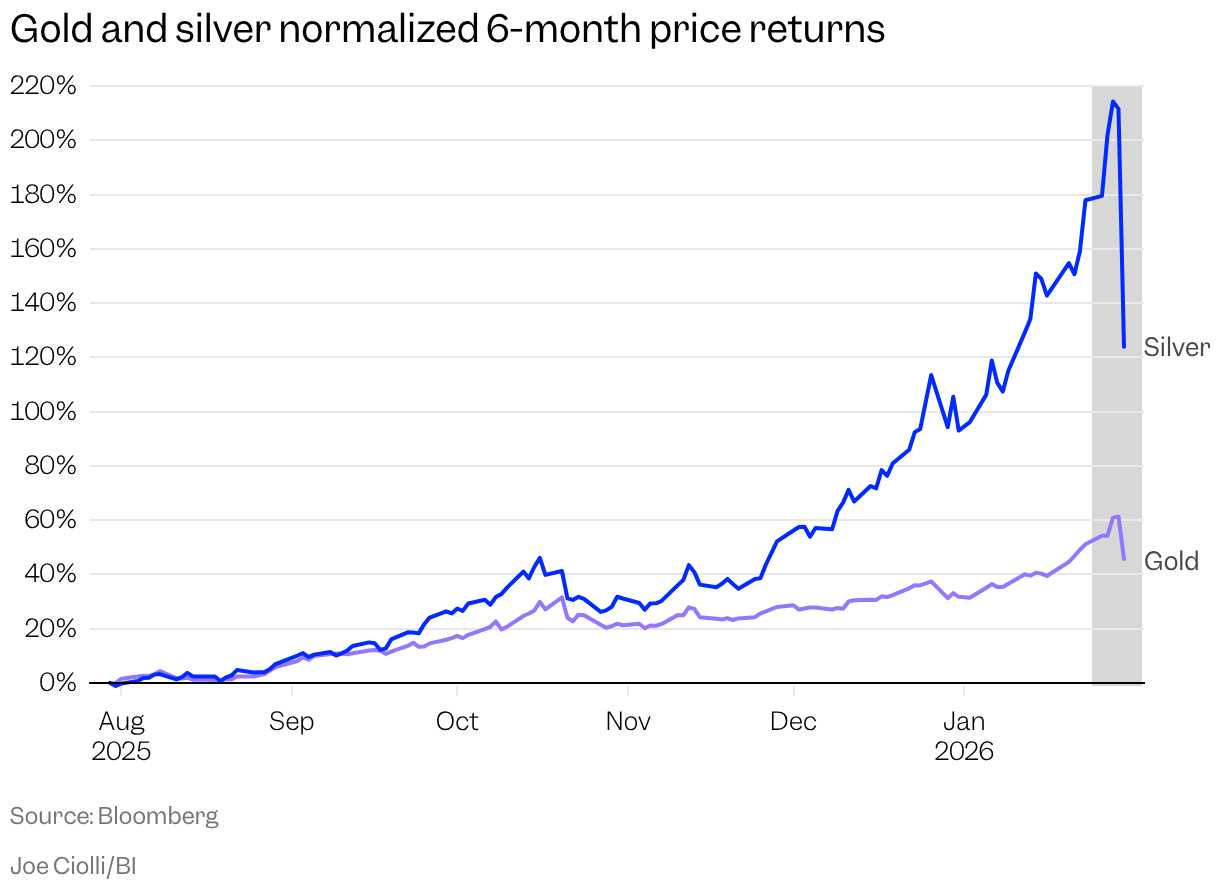
Gold experienced a notable recovery, climbing 2.38% to approximately $4,814 per ounce on Monday. This rebound follows a dramatic drop of more than 10% on Friday, marking its steepest decline since 2013. Despite this setback, gold remains up by about 10% for the year.
Silver also displayed considerable volatility, rising by as much as 6% to around $82 an ounce. This increase comes on the heels of a 36% plunge on Friday, the most significant single-day loss since 1980.
The turbulence in the metals market was sparked by the announcement of Kevin Warsh as the nominee for Federal Reserve Chair by Donald Trump. Warsh is perceived as a hawkish figure who is expected to maintain the independence of the central bank more than other potential candidates.
This development initially boosted the US dollar, applying downward pressure on dollar-denominated assets like gold and silver. However, as US markets opened on Monday, both metals showed signs of stabilization, indicating resilience against market-driven fluctuations.
Analysts suggest that Warsh’s policy of reducing the Fed’s balance sheet could alleviate concerns over a weaker dollar, potentially explaining the recent decline in gold and silver prices, as noted by Vishnu Varathan, Mizuho’s Asia head of research excluding Japan.
Meltdown after historic rally
Prior to the recent downturn, gold was enjoying a robust rally over the past year, driven by increased central bank purchases and geopolitical tensions. These factors, according to market analysts, continue to provide support despite earlier market speculation.
“I think the fundamentals remain pretty well in place despite those risks around Fed independence,” stated Daniel Hynes, a senior commodities analyst at ANZ, during an interview with Bloomberg TV. Hynes emphasized that ongoing geopolitical tensions still favor gold, although price volatility is expected to persist.
“The general unbending of the world order that we hear about constantly, and the US’s role within that, has really been at the crux of this haven buying, and I don’t see that ending any time soon,” he added.
While gold maintains its stronghold, silver faces more uncertainty. Analysts caution that its recent gains have been largely fueled by speculative demand from China.
Ole Hansen, Saxo Bank’s head of commodity strategy, commented on Friday that gold might experience a pullback given the recent surge in prices. However, any decline is likely to be met with renewed interest from buyers. On the contrary, silver might find it challenging to keep pace with gold, as some experts speculate a potential decline in the coming months.
“Its heavy reliance — in normal times — on industrial demand could become a drag as some end users, particularly within the solar sector, increasingly seek alternative materials in order to protect margins,” Hansen noted.
He also pointed out that an increase in scrap supply is expected as holders of silver look to cash in on the significant price rise over the past decade, potentially affecting the market dynamics further.