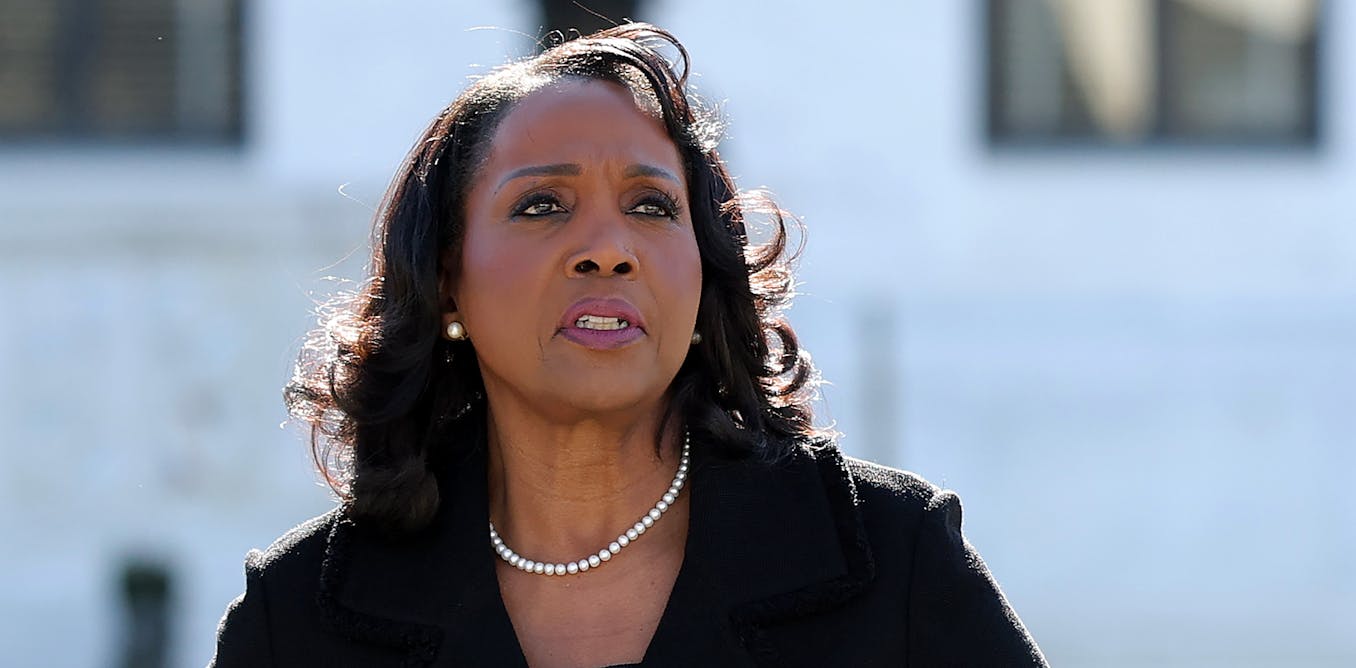
The authority of the U.S. President to dismiss high-ranking officials has once again come under the spotlight as the Supreme Court deliberates on a critical case involving the Federal Reserve. This case, which has significant implications for presidential powers, centers around the firing of Lisa Cook, a Federal Reserve Board member.
On January 21, 2026, the Supreme Court reviewed the contentious case where Lisa Cook, appointed by President Joe Biden in 2022 and serving on the Federal Reserve’s Board of Governors, was dismissed by former President Donald Trump on August 25, 2025. A lower court had since reinstated her on September 9, pending further legal proceedings. This case, seen by many as crucial in defining the boundaries of presidential authority over the Federal Reserve, examines crucial issues of employment law and the autonomy of federal agencies.
Understanding the Case’s Significance
Unlike typical employment disputes, this case involves a unique legal framework due to Cook’s position. Most American workers are employed “at-will,” meaning they can be terminated without cause or notice. However, Cook’s role is governed by the Federal Reserve Act, which mandates that board members can only be dismissed by the President for “cause.” This provision is at the heart of the legal battle.
The Supreme Court’s review focuses on whether Cook received the due process she was entitled to before her termination. A federal judge previously ruled that Cook deserved notice, an explanation of the allegations, and a chance to respond, which was not adequately provided.
The Federal Reserve’s Independence at Stake
The independence of the Federal Reserve is seen as vital for maintaining effective monetary policy and insulating the institution from political pressures. Former Fed governors have argued that long-term goals are essential for the Federal Reserve’s functionality, and the 14-year terms of board members are designed to shield them from short-term political influence. Economists have warned that compromising this independence could jeopardize the U.S. dollar’s status as a global reserve currency.
During oral arguments, Justice Brett Kavanaugh highlighted the importance of Fed autonomy, questioning the government’s attorney on the need for such independence. Kavanaugh has previously expressed the view that insulating the Federal Reserve Board from direct presidential oversight could be beneficial.
Determining “Cause” for Termination
The Department of Justice launched an investigation into Cook’s alleged false statements on mortgage applications in 2021, which she denies. The ambiguity of what constitutes “cause” for termination under the Federal Reserve Act complicates the case. Historically, “cause” has implied inefficiency, neglect of duty, or malfeasance, but the term is not explicitly defined in the statute.
The court may explore the historical context of the “cause” provision, reinstated in 1935 to reinforce Fed independence, to interpret its modern-day meaning. The U.S. District Court has previously ruled that “cause” should only relate to actions committed after appointment, a perspective the Supreme Court may consider.
The Due Process Debate
Constitutional law mandates that government employees like Cook receive “due process” before being terminated. This typically involves a Loudermill hearing, where the employee is presented with evidence and given a chance to respond. The lower court found that Cook was denied this process. The government’s attorney claimed that a Truth Social post by Trump calling for Cook’s resignation constituted due process, but justices, including Amy Coney Barrett, expressed skepticism about this argument.
Ultimately, the Supreme Court’s decision could significantly influence the balance of power between the presidency and independent federal agencies, with implications for the future of monetary policy and governance in the United States.