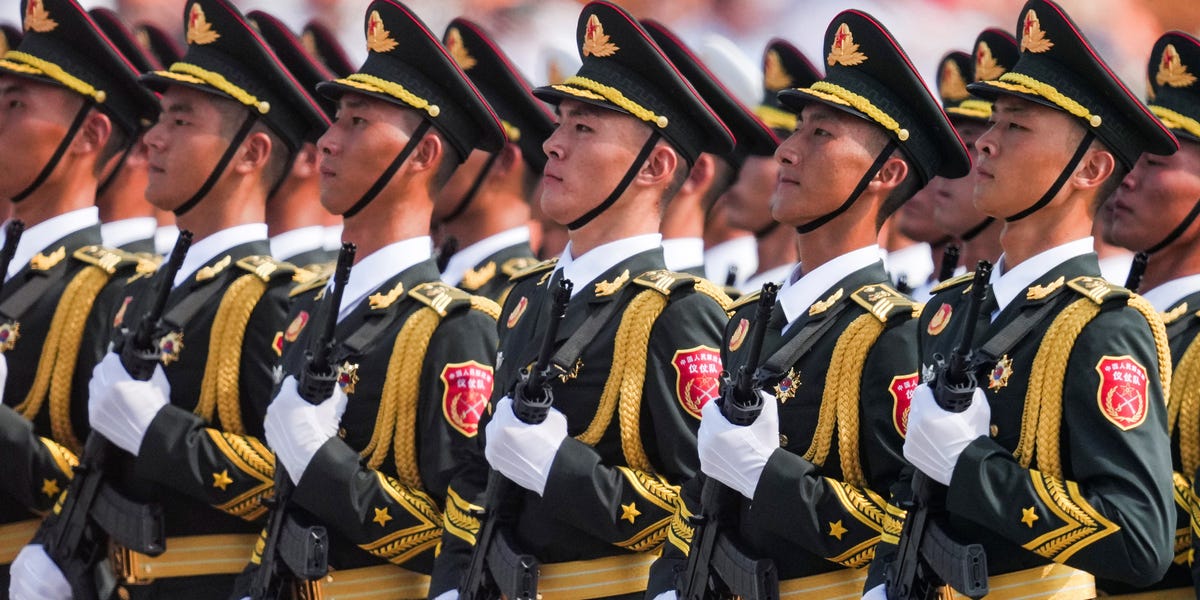
China’s military landscape is undergoing a significant transformation marked not only by efforts to enhance its military capabilities but also by an intensive leadership overhaul. As the nation aims to rival the might of the US armed forces, this dual strategy of modernization and purging senior officials is redefining the People’s Liberation Army (PLA).
The PLA, recognized as the world’s largest military, is currently embroiled in a sweeping anti-corruption campaign spearheaded by Chinese leader Xi Jinping. This initiative has intensified following the investigation of one of China’s top generals, placing the military’s leadership and readiness under the spotlight.
Recently, the Chinese defense ministry disclosed probes into Gen. Zhang Youxia, vice chairman of the Central Military Commission, and Liu Zhenli, chief of staff of the commission’s joint staff department. Zhang, who was perceived as a close advisor to Xi, is now facing scrutiny, adding to the turbulence within the military ranks.
A statement from official PLA channels criticized the two for having “seriously betrayed the trust and expectations” of the Communist Party and the CMC. This breach was said to undermine the party’s leadership over the military, threatening its foundational stability.
According to analysts speaking to Business Insider, the allegations against Zhang and Liu suggest issues beyond financial misconduct, hinting at possible challenges to Xi’s authority. This could stem from disagreements over modernization strategies or internal power struggles. The opaque nature of China’s governance, however, leaves many questions unanswered.
The Wall Street Journal speculated that Zhang might have leaked nuclear data to the US, though this claim remains unverified by Business Insider.
In an unprecedented shake-up, only two members of the Central Military Commission, appointed in 2022, remain in power: Xi and Zhang Shengmin, the anti-corruption officer. Other members have either been expelled or are under investigation, further complicating the military’s leadership structure.
Xi’s campaign has seen two defense ministers and numerous top commanders removed from their posts. The purge’s scale is unclear, but it has significantly impacted the senior officer corps, with Zhang being the highest-ranking official affected.
Jonathan Czin of the Brookings Institute remarked, “This is kind of the ultimate crescendo of this anti-corruption campaign in the military,” emphasizing its reach and implications.
As investigations continue, Xi faces the challenge of filling the vacant positions with credible leaders. Brian Hart from the Center for Strategic and International Studies noted, “the pool of candidates for refilling top positions has been winnowed,” suggesting Xi might need to restructure the PLA’s leadership entirely.
Fewer experienced commanders could hinder the PLA’s coordination, especially in complex operations like a potential blockade or invasion of Taiwan. Despite these challenges, some experts believe Xi might accept short-term setbacks for a more loyal and disciplined force, as suggested by a PLA Daily editorial.
While the disruptions might affect the military’s readiness, China could attempt to project stability through increased military exercises, as seen in previous purge episodes. Lyle Morris from the Asia Society Policy Institute commented on the potential for heightened activity around Taiwan, which could mask internal disarray.
Ultimately, the internal turmoil poses significant challenges for the PLA. As Hart concluded, “It is hard to deny that this creates challenges for the PLA in the short term,” particularly in maintaining effective and loyal leadership amid ongoing turnover.