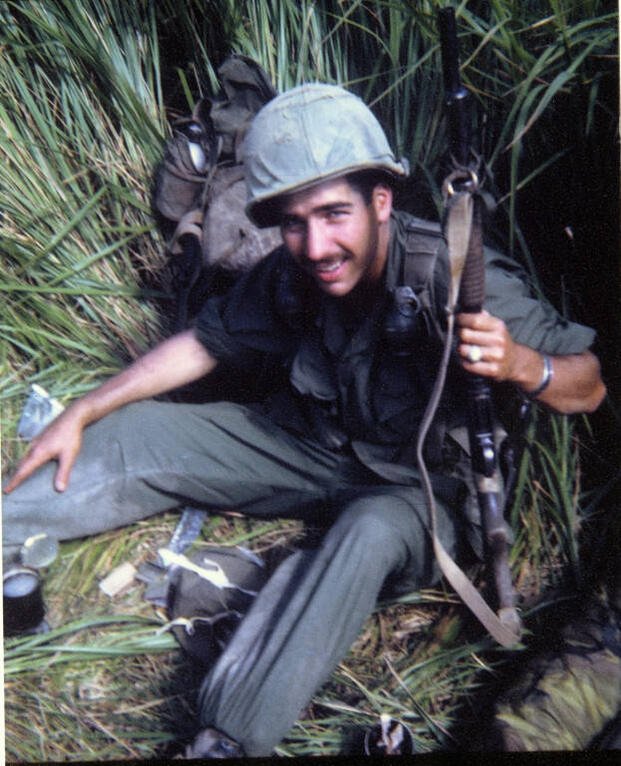
In the summer of 1967, Captain William H. Dabney made a decisive choice that would place him at the heart of one of the Vietnam War’s fiercest battles. Upon arriving at the 3rd Marine Division’s personnel office in Vietnam, Dabney opted for the command closest to the North Vietnamese border, a decision driven by the legacy of his father-in-law, Lieutenant General Lewis “Chesty” Puller.
The Path to Command
Born in St. John, New Brunswick, Canada, on September 28, 1934, William Howard Dabney grew up in Panama and Virginia. After graduating from Christchurch School in 1953, he briefly attended Yale before enlisting in the Marine Corps in 1954. His military journey began at Parris Island and continued in Japan with the 3rd Marine Division, where he rose to the rank of sergeant before his discharge in 1957.
During a funeral in uniform, Dabney encountered the renowned Lieutenant General Chesty Puller, who suggested a lunch meeting that led to Dabney meeting Puller’s daughter, Virginia. Dabney’s education continued at VMI, where he graduated in 1961 and was commissioned into the Marine Corps. He married Virginia McCandlish Puller the same year.
Dabney returned to the 3rd Marine Division, this time stationed in Vietnam. His first day as headquarters company commander was marked by intense combat, a precursor to the challenges that lay ahead.
Into the Fray
December 1967 saw Dabney take command of India Company, 3rd Battalion, 26th Marines, and lead them to Hill 881 South, a strategically crucial location near Khe Sanh Combat Base. This area had been a battleground the previous year, and Dabney’s position was the westernmost American command in South Vietnam, facing a significant North Vietnamese Army (NVA) presence.
On January 20, 1968, Dabney’s men embarked on a mission towards Hill 881 North, only to encounter a formidable NVA force. The ensuing combat was brutal, with Dabney himself orchestrating artillery and air support amidst heavy casualties.
The Marines had inadvertently become part of the Tet Offensive’s opening salvo. As the siege of Khe Sanh commenced, Dabney’s leadership was tested to its limits.
Defending Hill 881 South
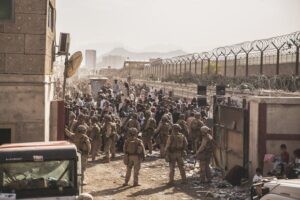
Faced with constant NVA pressure, Dabney ordered the construction of trenches around Hill 881 South. Resupply was perilous, with helicopters drawing enemy fire during each mission. “There are only two ways to get off this hill,” Marines said. “Either fly off or get blown off.” Despite the challenges, Dabney prioritized ammunition over comfort, even as hygiene and living conditions deteriorated.
Operation Sierra, or the ‘Super Gaggle,’ emerged from Dabney’s ideas, drastically improving resupply efforts and reducing casualties. The operation marked a turning point in sustaining the Marines’ defense.
Symbols of Resilience
In a daily ritual, Marines raised the American flag on Hill 881 South, drawing enemy fire but also boosting morale. The flag became a symbol of defiance and unity. Even during somber moments, such as the assassination of Dr. Martin Luther King Jr., Dabney maintained the flag’s position to preserve its morale-boosting effect.
The Siege’s Toll
By April 1968, reinforcements lifted the siege, and Dabney’s men finally left Hill 881 South. The cost was high: over 50 percent casualties, with 42 Marines killed and nearly 200 wounded. Dabney himself had lost significant weight, a testament to the siege’s grueling conditions.
Dabney’s actions earned him the Silver Star and a delayed Navy Cross, highlighting his decisive role in the battle. His military career continued with distinction, concluding as the Commandant of Cadets at VMI.
A Legacy of Courage
Colonel William H. Dabney’s legacy as a leader who exemplified courage and integrity endures. His story is a vivid reminder of the sacrifices made during the Vietnam War and the indomitable spirit of those who served.