In a recent federal court decision in Greenville, Mississippi, a significant chapter in the aftermath of a tragic military plane crash has concluded. James Michael Fisher, who had been accused of obstructing justice and lying to investigators in connection with the 2017 crash, has been acquitted of all charges.
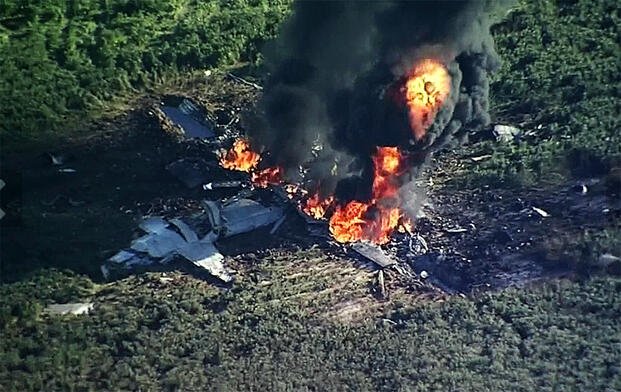
The jury’s decision, reached after an eight-day trial, marks an important moment in the investigation of the catastrophic accident that claimed the lives of 16 service members. The crash involved a KC-130T transport plane, which experienced a critical failure when a propeller blade broke apart mid-flight. This incident occurred during a journey from Cherry Point, North Carolina, to El Centro, California, resulting in the aircraft disintegrating over Mississippi farmland.
In 2011, Fisher was the lead propulsion engineer at the Warner Robins Air Logistics Complex in Georgia. Military investigators contended that civilian maintenance personnel missed identifying defects in a cracked and corroded propeller blade, which later led to the crash. They alleged that Fisher provided false testimony regarding changes to inspection procedures, suggesting a cover-up to deflect blame from maintenance technicians.
During the trial, Fisher’s defense lawyer, Steve Farese, argued that Fisher was not involved in authorizing the inspection changes, as he was in Brazil at the time. Farese stated, “Nobody did it intentionally. As one witness said, there were 10 different ways for that blade to have gone through inspection and be missed or put back in the system accidentally.” Farese highlighted that the document authorizing changes was signed after the propeller in question had already been worked on, implying the changes were irrelevant to the accident.
Prosecutors, who did not provide immediate comment, had accused engineers at Fisher’s base of implementing numerous changes to inspection procedures over a decade, undermining trust in Fisher. However, the defense successfully argued that there was no clear evidence linking these changes to the crash.
The crash site, located near Itta Bena, Mississippi, was strewn with debris across several miles, becoming the site of a memorial a year later. This tragic event was the deadliest for the Marine Corps since 2005, when a helicopter crash in Iraq claimed 31 lives. Post-crash, the military grounded C-130 aircraft fleets for inspections and propeller blade replacements.
The plane, carrying Marine special operations forces for training, originated from Stewart Air National Guard Base in New York. Among the victims were members of a Marine Raider battalion from Camp Lejeune, North Carolina, and other Marines based in New York.