A cool breeze swept across Fort Stewart, Georgia, as the sound of drones sliced through the air, signaling a new era in military training and warfare.
Under the watchful eye of a training instructor, a soldier deftly maneuvered a drone through a complex obstacle course, marking a significant shift in how the U.S. Army prepares its troops for the battlefield.
Drones have become indispensable on modern battlefronts, performing roles from reconnaissance to precision strikes. As the Army incorporates these unmanned vehicles into its units, training centers like the Marne Unmanned Center of Excellence are crucial. Established in March, this center at Fort Stewart immerses soldiers in drone operations through a rigorous program of classroom learning, virtual simulation, and real-world practice.
The Classroom
Initial training involves understanding airspace and flight controls. Soldiers spend weeks at desks, connecting controllers to laptops and navigating virtual drones through challenging scenarios. This phase is critical before handling actual unmanned aircraft.
At Fort Stewart, the training includes a 60-seat simulator that provides a collective training environment, where soldiers interact with drones in coordination with artillery and armored vehicles. This comprehensive practice ensures they are prepared for various combat scenarios.
The Flight Line
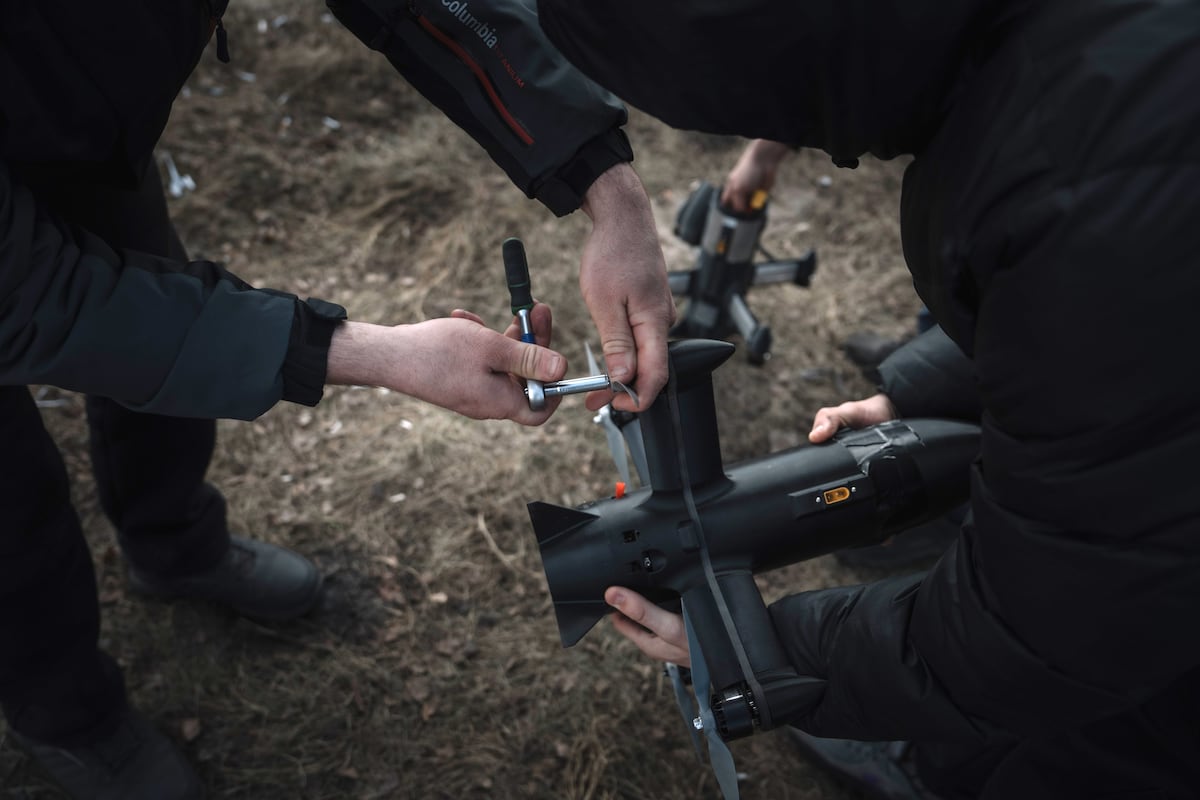
After mastering virtual drones, soldiers transition to real-world practice. Instructors closely monitor their progress as they navigate drones through obstacles. Spc. Tyler Lee, one such trainee, drew parallels between his drone training and his experience playing video games like Call of Duty, highlighting how these skills translate to operating first-person view drones.
Despite his progress, Lee humbly noted, “I’m nowhere near proficient…I would still consider myself a beginner.” His instructor, Staff Sgt. Nway Nway Lwin, emphasized that true expertise comes from mastering basic maneuvers and applying them in real-world scenarios.
The Sky
Advanced training pushes soldiers to fly beyond their line of sight, navigating complex environments without direct visual of the drone. This training requires coordination with Fort Stewart’s air traffic controllers, as drones often share airspace with manned aircraft.
Additionally, some drones are designed for explosive missions, carrying payloads that detonate upon impact. Soldiers practice using these one-way attack drones, reflecting their use in global conflict zones.
Chief Warrant Officer 5 Jonathan Morrison, a key figure in the drone training initiative, challenges operators to exceed mere qualification. “You can be qualified, but can you be well qualified?” he asked. His focus is on ensuring soldiers are confident and ready to execute missions anywhere, anytime.