French Army Recruitment Surplus Amid Equipment Shortages
PARIS — While the French Army grapples with a surplus of eager recruits, it faces critical shortages in essential military hardware, according to deputy chief of staff Gen. Patrick Justel. The stark contrast between personnel and equipment availability has prompted a slowdown in recruitment efforts, despite a robust interest from potential candidates.
Unlike Germany and Poland, which are heavily investing in military hardware but struggling to meet personnel targets, France has had to turn away recruits due to budget limitations, Justel explained at a recent briefing. The deputy chief emphasized that France had more applicants than it could accommodate, having declined to recruit an entire regiment last year.
Following the 2022 Russian invasion of Ukraine, European NATO members, including France, have increased their defense budgets. While Germany and Poland are focusing on expanding active-duty personnel through incentives like increased pay, France is concentrating on bolstering its reserves. “We have completely asymmetrical situations,” Justel remarked. France’s challenge lies in equipment shortages, as opposed to the staffing issues faced by its neighbors.
Germany’s goal is to grow its military force to 260,000 active soldiers by 2035, up from around 186,000 today. Poland aims to boost its forces to 300,000 by mid-2025, expanding from approximately 210,000. In contrast, France currently maintains a force of 191,000 personnel and plans to add 21,400 active-duty troops by 2026.
Poland’s recruitment efforts are hindered by its low unemployment rate, which is the second lowest in the European Union, presenting a competitive labor market, as noted in a RAND report.
Justel highlighted that France’s strong recruitment is attributed to high retention rates and a motivated youth population. France’s demographic advantage includes having one of the largest youth cohorts in Europe, with individuals aged 15 to 19 comprising 6.2% of the population in 2024. Additionally, trust in the military remains high, with 84% of French citizens expressing confidence in their armed forces, as per a Eurobarometer poll.
“To see the number of young people coming to enlist, and not enlisting just to find a job, they’re joining to serve in combat units and looking to defend their country,” Justel stated. However, he also noted, “Where we’re in the opposite situation is in terms of equipment, we’re not sufficiently equipped to handle a high-intensity conflict.”
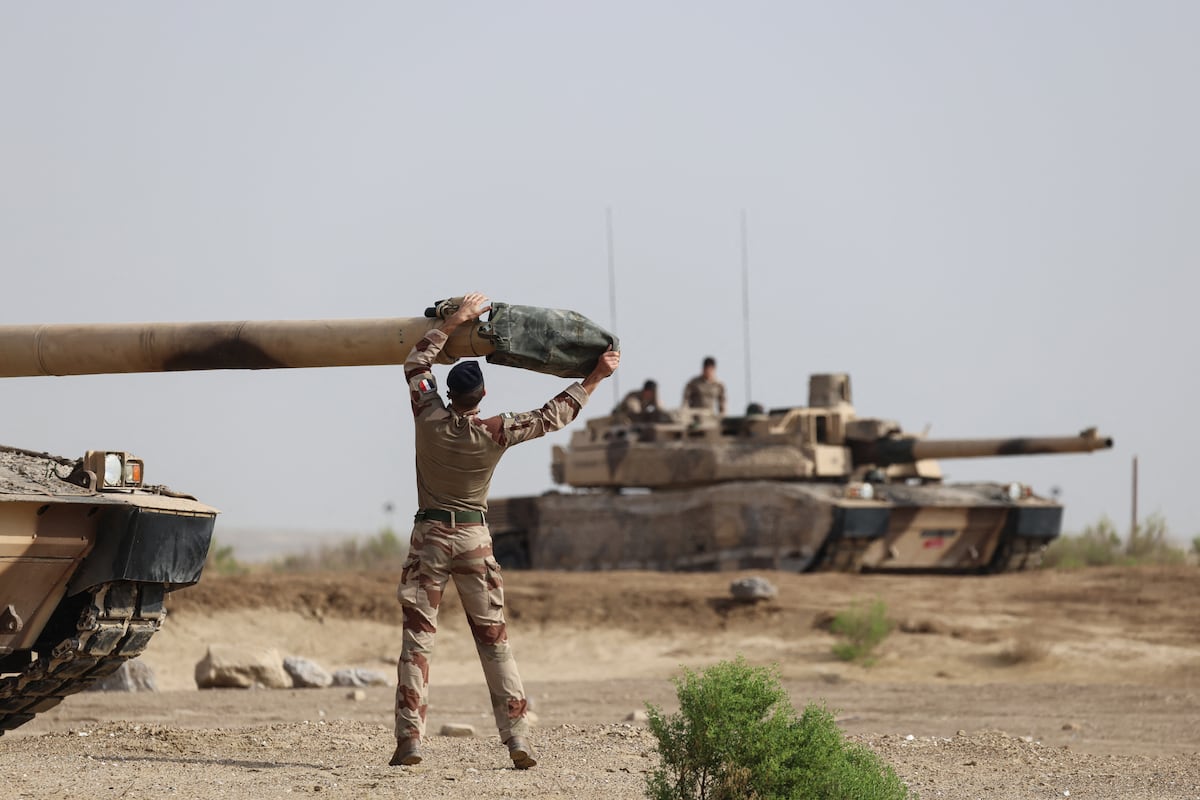
The French Army lacks critical components such as spare parts and has significant gaps in areas including deep fires, ground-to-air defense, and counter-drone capabilities. Despite improvements from recent defense-planning laws, more enhancements are necessary, especially in armored-vehicle modernization and electronic warfare.
To address these equipment shortages, France aims to expand its expertise across the force, with a focus on enhancing capabilities in command, logistics, drones, and electronic warfare. Justel mentioned that “these are more long-term efforts.”
While France finds it challenging to replace U.S. troops permanently in Europe, it relies on regular military exercises in nations like Finland to ensure its forces are well-prepared for rapid deployment when necessary, Justel explained.