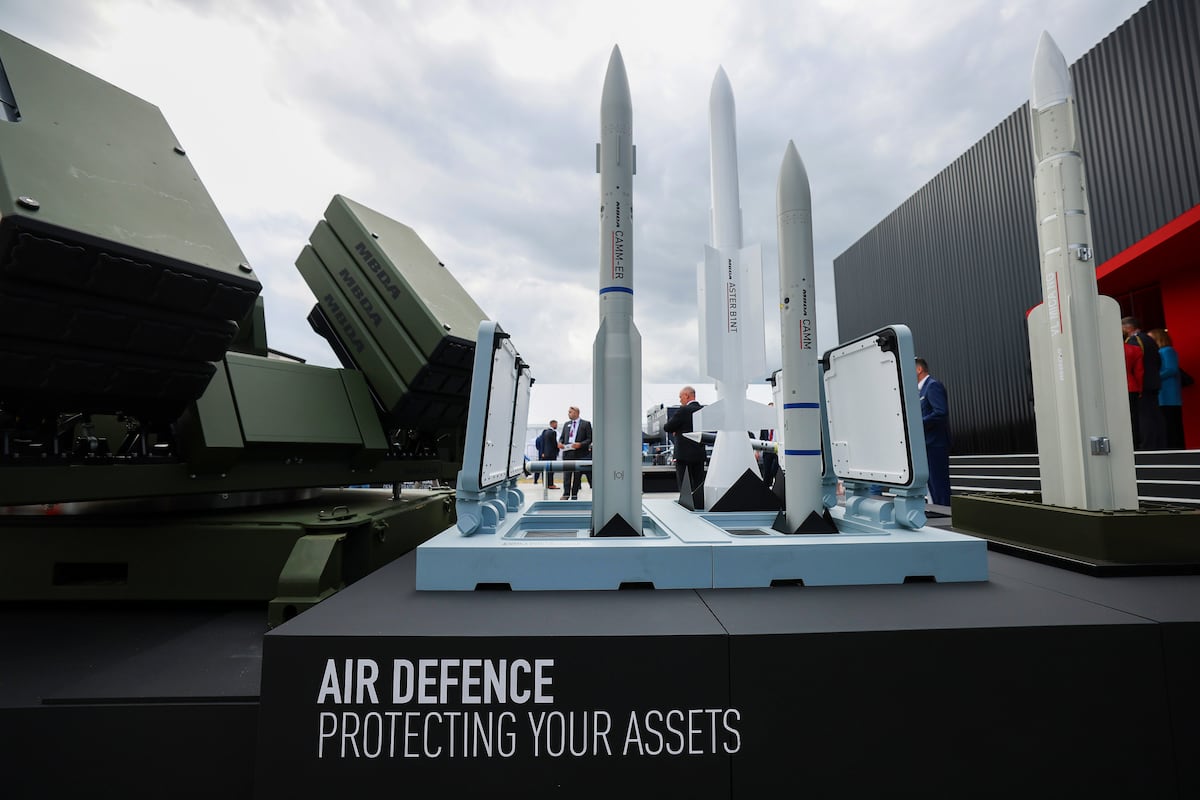
The European initiative to counter hypersonic threats has made strides with the Hydis project, led by MBDA, Europe’s largest missile manufacturer. The project recently received a nod for its solid-propellant interceptor concept, marking a significant step in the development of hypersonic defense systems.
Over the coming year, Hydis will concentrate on advancing critical technologies to reach Technology Readiness Level 3, which signifies experimental proof of concept. This was highlighted in a statement issued by Europe’s Organisation for Joint Armament Co-Operation.
Hydis is one of two major European efforts aimed at developing defenses against hypersonic threats, the other being the Hydef program, spearheaded by Germany’s Diehl Defence and coordinated by Spain’s SMS Sistemas de Misiles de España. The European Defence Fund plans to invest €100 million ($114 million) in one of these initiatives as part of its 2026 work schedule.
The final concept review’s completion has been described by OCCAR as “a significant step forward in the development of a future European capability to counter hypersonic threats.” Managed on behalf of France, Germany, Italy, and the Netherlands, OCCAR confirmed that these nations approved the Hydis industrial consortium’s proposed interceptor concept.
The interceptor aims to counteract hypersonic glide vehicles, hypersonic cruise missiles, and maneuvering ballistic missiles. The concept was evaluated against threat models from Italy’s Centro Italiano di Ricerca Aerospaziale, France’s Onera, and the Dutch technology institution TNO.
The review honed in on the terminal phase of interception by the kill vehicle, establishing a “clear path” for advancing technology, according to OCCAR.
MBDA reported that Avio contributed to the design of the solid rocket motor propulsion, with ArianeGroup and Roxel overseeing the final interceptor stage control mechanism, and Lynred developing the terminal infra-red sensor. Thales provided performance data for both naval and ground-sensor suite options, while GKN Fokker worked on integrating the ammunition into the MK41 naval launcher.
MBDA emphasized, “This new milestone demonstrates the consortium’s full expertise in the fields of hypersonic and ballistic threats, backed by in-depth knowledge of air defense systems,” in its statement.
The EDF has allocated €80 million to the Hydis program, with the four partner countries contributing an additional €60 million. MBDA has been the primary recipient of EDF funds, securing more than €60 million for its seven entities involved in the project.
Meanwhile, Hydef has secured €100 million from the EDF and an extra €10 million from participating countries including Belgium, Germany, Norway, Poland, and Spain. Diehl is the major beneficiary of Hydef funding, receiving €34.7 million.
Hydef initially won the EDF competition in 2022 to develop a hypersonic interceptor. However, the European Commission decided to finance Hydis as a secondary effort following protests from France and MBDA, who had been engaged in hypersonic technology development.
Both Hydis and Hydef are part of the larger European project Twister, aiming to detect and counter hypersonic threats through space-based early warning systems and endo-atmospheric interceptors.