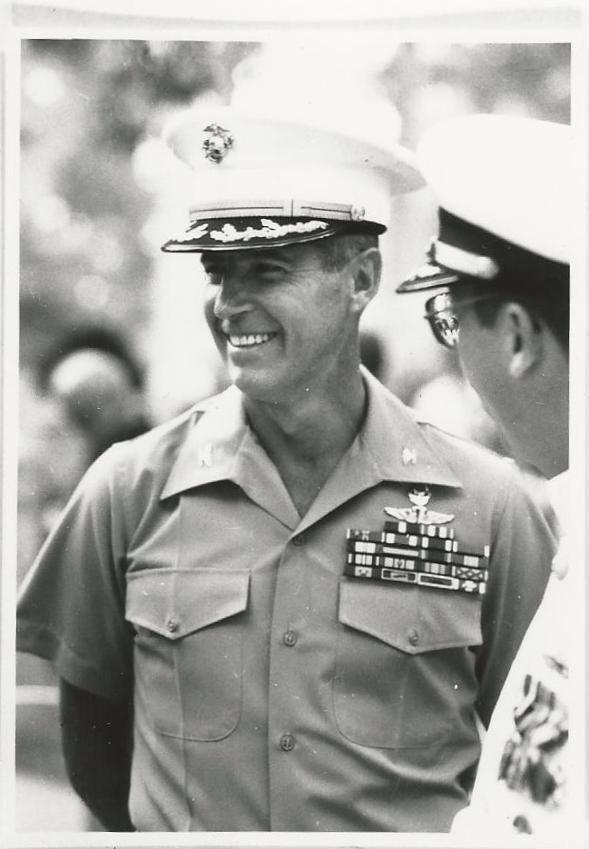
In a moment etched in military history, the courageous actions of Marine Col. John Ripley during the Vietnam War are finally being honored with the Medal of Honor. More than fifty years after his heroic efforts to thwart a North Vietnamese tank advance, Ripley’s valor is set to receive the nation’s highest military accolade.
Heroics Under Fire
In 1972, as the North Vietnamese forces prepared a massive armored assault, Ripley found himself in a crucial position at the Dong Ha Bridge in South Vietnam. With the threat of tanks crossing into southern territories, Ripley took action. Climbing beneath the bridge, he manually placed explosives while under enemy fire, successfully collapsing the structure and stalling the invasion.
This daring act provided critical time for U.S. and South Vietnamese forces, a story that has become legendary within the Marine Corps. “Mission first, Marines always” epitomizes Ripley’s leadership during those perilous moments.
A Time of Conflict
By spring 1972, the Vietnam War had evolved significantly. The U.S. was withdrawing troops, leaving a minimal advisory force as part of the Vietnamization policy. Ripley served as an advisor to South Vietnamese Marines amid a massive North Vietnamese offensive.
Ripley’s son, Tom, recounts the dire situation: “There were 300 men in the battalion with one U.S. Marine advisor,” facing thousands of enemy troops and over a hundred tanks. The Dong Ha Bridge was the only barrier preventing an all-out invasion.
The Critical Barrier
The Dong Ha Bridge, spanning the Cua Viet River, was vital for the North Vietnamese advance. Understanding the stakes, Ripley and his fellow advisors knew the bridge had to be destroyed. With no demolition plan, Ripley volunteered for the dangerous task of placing explosives by hand.
An Enduring Legacy
Ripley’s actions at the bridge not only stalled the enemy but allowed allied forces to regroup and counterattack. His son, Tom, expresses the family’s pride and the emotional weight of this recognition. “It’s kind of surreal for my family,” he said. “I’ve spent my entire life watching this play out.”
The legacy of John Ripley continues to inspire Marines, with his leadership style emphasizing presence and responsibility. “Leadership is a contact sport,” he often said, advocating for leaders to be where decisions are critical.
A Lifetime of Service
The Ripley family’s Marine Corps tradition runs deep, with Tom and other family members serving in various capacities. “It’s not something we talk about,” Tom notes. “It’s something we live.” The Medal of Honor not only honors John Ripley but also the collective efforts of those who served alongside him.
This recognition comes after years of advocacy, a testament to the enduring impact of Ripley’s bravery. As Tom Ripley reflects on this moment, he acknowledges the significance for both his family and the Marines who shared in those historic days. “I miss my dad,” he says. “But to see him recognized alongside those who wear that medal — it’s incredibly special.”
John Ripley’s story stands as a testament to courage and leadership, finally receiving the honor it deserves. More than five decades later, the nation commemorates a moment that has inspired generations within the Marine Corps.