Lithuania Expands Drone Defense with New Acquisition
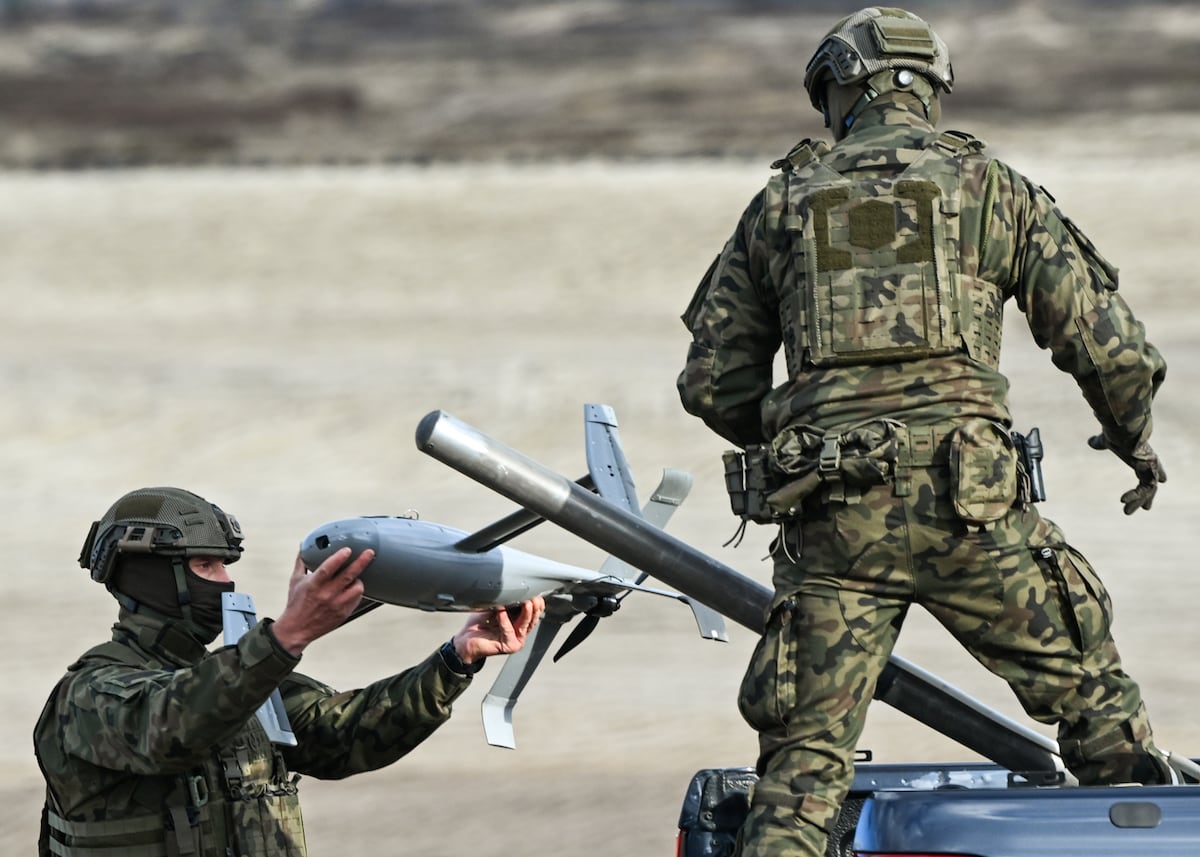
In a strategic move to bolster its defense capabilities, Lithuania has purchased 48 Merops interceptors from U.S. manufacturer Perennial Autonomy. This acquisition makes Lithuania the latest NATO member to invest in the cost-effective $15,000 per-shot counter-drone system.
The decision to procure these systems was made without competitive bidding, and it follows similar deployments and training exercises with Polish and Romanian forces along NATO’s eastern borders. The Merops system represents a new wave of affordable drone countermeasures designed to address the cost imbalance in air defense, where intercepting aerial threats often costs significantly more than launching them.
Lithuanian Defense Minister Robertas Kaunas highlighted the system’s capabilities, stating Merops is “capable of intercepting Shahed, Gerbera, and other similar targets,” as reported by national broadcaster LRT. Perennial Autonomy confirmed these claims, noting that Merops has already proven effective in combat scenarios.
The system saw its first combat success last month when Army Secretary Dan Driscoll informed Congress that Merops had intercepted Iranian Shaheds targeting U.S. troops in the Middle East. The U.S. Army swiftly procured 13,000 Merops interceptors within eight days following Iran’s drone attacks on American positions in February, as Driscoll testified on April 16.
The Pentagon’s choice to utilize Merops came after depleting numerous Patriot missiles, each costing over $3 million, against Iranian drones. “They protected U.S. troops,” Driscoll told lawmakers, defending the $15,000 unit cost as a more sustainable defense measure. “We will make that trade all day long.”
Perennial Autonomy, initially launched as White Stork by former Google CEO Eric Schmidt in 2023, has undergone several transformations before becoming the company it is today. The company recruited former Pentagon innovation chief Will Roper, alongside engineers from Apple, SpaceX, and Google, to develop the Merops system.
While Merops is gaining traction, it faces competition from Ukrainian drones, which are cheaper and have been operational for a longer period. Ukrainian forces first deployed Merops against Shaheds in June 2024, and the system has since found users in Poland and Romania.
Ukraine’s air defense, achieving interception rates averaging 90% for incoming Russian drones and 80% for cruise missiles as of March, has gained international attention. Iranian Shaheds have inflicted significant damage on U.S. military assets in the Middle East, highlighting the need for effective counter-drone systems.
Ukrainian-built interceptors, costing between $1,000 and $3,000 per unit, have successfully downed thousands of Russian Shaheds since 2024, with results tracked through Ukraine’s Mission Control battlefield system. Meanwhile, Merops has recorded over 1,000 Shahed-type intercepts in Ukraine since mid-2024, according to Militarnyi.
Stanislav Gryshyn, co-founder of Ukrainian interceptor manufacturer General Cherry, stated, “Anyone claiming one product is better in all respects is either lying or misunderstanding the market.” His company’s Bullet interceptor recently recorded 3,296 confirmed kills in February, verified through Ukraine’s Delta battle-management system.
The U.S. Army has deployed approximately 20 Merops complexes at one Middle Eastern site with over 100 soldiers and 10 complexes at another site, with a total of 1,000 interceptors across both locations, as reported by Business Insider.
Perennial Autonomy also produces the Bumblebee V2, a multirotor FPV interceptor already in use in Ukraine under a separate $5.2 million Pentagon contract, according to Calibre Defence.
Merops, with a potential price drop to $10,000 per unit at scale, faces a competitive market where Ukrainian interceptors are already available at lower prices. As Kyiv looks to degrade Russia’s economic capacity through price asymmetry, the demand for cost-effective drone defense solutions continues to grow. “When you need to shoot down 60 Shaheds at once, you need $2,000 systems, not $15,000 complexes,” Gryshyn told Military Times.
Ukraine is actively expanding its defense manufacturing capabilities, with production in the first four months of 2026 surpassing all of 2025. The country has opened up its defense market, targeting regions such as the Middle East, Europe, and the Caucasus for arms exports while ensuring its military forces have first claim on production. “The export of Ukrainian weapons will become a reality,” President Zelenskyy announced.