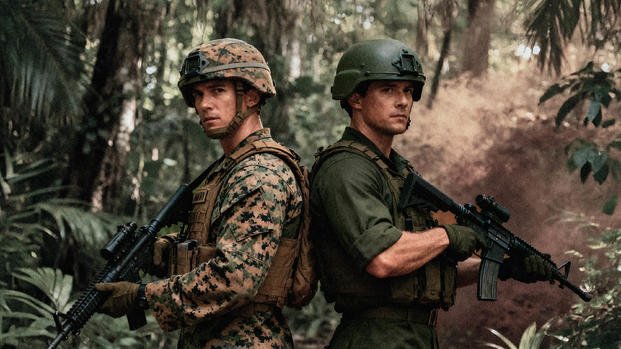
The Marine Corps has long been recognized by its distinctive digital MARPAT camouflage, a pattern that has become as emblematic as its eagle, globe, and anchor insignia. However, after over two decades, there is a growing conversation about returning to simpler uniform designs such as flat coyote brown or traditional olive drab. This shift could potentially streamline logistics, cut costs, and set a new standard for uniformity across military branches.
MARPAT’s Development
Born from the research of Timothy O’Neill in the 1970s, the pixelated MARPAT design is inspired by the Canadian CADPAT, which uses small pixels to break up shapes. The Marine Corps began developing their own version in the late 1990s, choosing a digital pattern over the traditional tiger stripe after extensive field testing. By 2002, MARPAT replaced the Battle Dress Uniform (BDU), marking the first time a U.S. military branch had adopted a service-specific pattern. This inspired other branches to explore similar digital designs, including the Army’s Universal Camouflage Pattern and the Navy’s “blueberries.”

The Cost of Change
The transition to digital camouflage across military branches incurred substantial costs. A 2012 Government Accountability Office report highlighted the inefficiencies and high expenses involved in these changes, with the Army alone spending an estimated $4 billion over five years on new uniforms. This reflects a broader issue of inter-service rivalry and inefficiency. The 2014 National Defense Authorization Act sought to curb such spending by mandating joint camouflage efforts across branches.
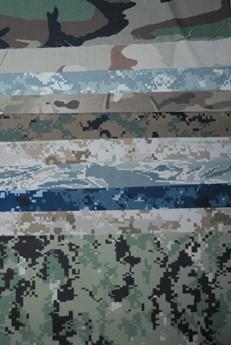
Despite the challenges, the potential for the Marines to lead a shift back to single-color uniforms like coyote brown or olive drab remains promising. These colors offer versatility, blending well in various environments, and could simplify supply chains and reduce costs. Such a move would align with the congressional mandate for unified uniforms and set an example for other branches to follow.
From Concept to Reality
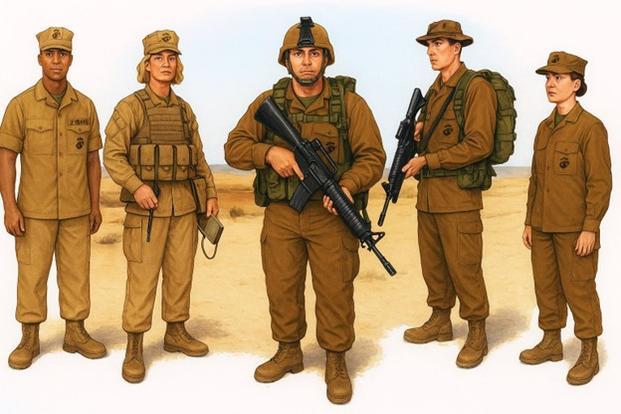
The conceptual shift to coyote brown reflects a move toward simplicity and efficiency. This color can adapt to various settings without the need for complicated patterns, offering practicality in both combat and non-combat roles.
Leading the Way
The Marine Corps has always prided itself on innovation and adaptability. By opting for a solid color uniform, the Corps could once again lead the military in practical and cost-effective solutions. This approach would honor tradition while embracing the fiscal realities of today’s military environment.