In a significant advancement for military technology, the Marine Corps is enhancing its tactical capabilities by integrating a cutting-edge precision strike tool into its infantry squads. Under the Organic Precision Fires-Light (OPF-L) program, Anduril Industries has secured a $23.9 million contract to supply over 600 Bolt-M loitering munitions systems, with deliveries commencing in February.
This initiative empowers rifle squads with long-range, portable drones, enabling them to engage targets without relying on larger support systems.
The Bolt-M is a vertical takeoff and landing quadcopter, weighing between 13 and 15 pounds, with a range exceeding 20 kilometers and an endurance of about 40 minutes.
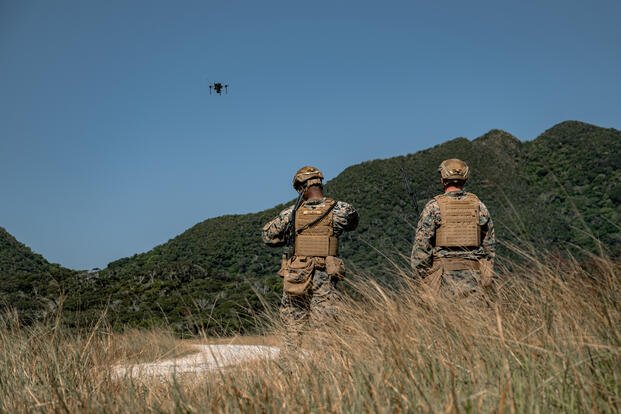
Optimized for swift deployment in challenging terrains, it leverages Anduril’s Lattice software for mission planning, target acquisition, and engagement. Marines can discreetly launch it to gather intelligence and neutralize enemy positions, diminishing reliance on external fire support.
This development is instrumental in the Marine Corps’ strategy for distributed operations, allowing squads to function autonomously in high-threat scenarios. By providing precision fire capabilities at the squad level, the Bolt-M mitigates risk for Marines and accelerates tactical decision-making in contested airspaces.
Advantages of the Bolt-M System
The Bolt-M is recognized for its portability and user-friendly design. Small teams can transport several units along with a compact control station without disrupting operational balance. Once deployed, the drone efficiently surveys enemy activities before delivering its payload with pinpoint accuracy.
Since its introduction in October 2024, over 250 systems have undergone rigorous safety, environmental, and operational testing by the Marine Corps.
These trials have demonstrated its reliability in various conditions, with production capacity set to increase at Anduril’s facility, which can manufacture over 100 units per month. This efficiency ensures cost-effectiveness, enhancing squad capabilities without unnecessary expenditure.
Integration with Force Design 2030
The introduction of the Bolt-M aligns with the Marine Corps’ Force Design 2030, which advocates for dispersed, resilient units capable of operating in littoral and archipelagic environments. The inclusion of organic precision fires is crucial for modernizing infantry battalions to face contemporary threats.
The new system enhances Marine squads’ ability to efficiently engage targets, drawing lessons from recent conflicts where drones have played a pivotal role in neutralizing heavy armor and logistics. In challenging environments, the Bolt-M offers a tactical edge by overcoming natural obstacles and maintaining operational superiority.
While some have expressed concerns about reducing traditional capabilities, the addition of technologies like the Bolt-M underscores the Corps’ commitment to strengthening ground-level operations. For further insight into these changes, refer to our detailed coverage of the Marine Corps Force Design Update: What Every Marine Needs to Know.
Deployment and Training
The first deliveries of the Bolt-M are scheduled for next month, continuing until April 2027. The initial operational units will receive the systems in the summer, highlighting the program’s strategic priority.
Infantry squads and platoons will incorporate the Bolt-M into their standard arsenal, with training emphasizing its automated and ethical engagement capabilities. The contract includes a $249 million ceiling, allowing for diverse vendor participation and adaptability based on operational feedback.
Marines have already explored similar unmanned systems within basic units.
For more information on the evolution of Marine squads, see our article on the Top Marine Says Service Has Finally Settled on 13-Grunt Rifle Squads.
Strategic Impact in the Indo-Pacific
Amidst the strategic complexities of the Indo-Pacific region, the Bolt-M reinforces Marine Corps capabilities, enabling dispersed units to conduct operations from remote locations and deter adversaries effectively.
This advancement addresses logistical challenges where traditional artillery may be constrained.
Drawing on lessons from global conflicts, loitering munitions like the Bolt-M offer significant advantages to agile forces, particularly in dense urban environments or when facing electronic warfare threats.
By harnessing commercial technological innovations, this initiative represents a fiscally responsible approach to defense, avoiding the pitfalls of overly complex programs. As the Marine Corps continues to refine this capability, it may serve as a model for allied forces, promoting interoperability in joint military exercises.
For additional insights into related technologies, explore our feature on Marines Revolutionize Readiness at Innovation Campus, where similar advancements are being developed.
Overall, the deployment of the Bolt-M signifies a pivotal step towards a more self-sufficient and potent Marine infantry, poised to face the challenges of future conflicts.