Marine Corps Embraces AI for Enhanced Training and Decision-Making
The Marine Corps War College is making strides in integrating artificial intelligence (AI) into its training and operations. This initiative is part of a larger effort to prepare officers for a future where human and machine capabilities are closely intertwined. The college’s focus is on using AI to enhance, not replace, leadership as the Corps progresses through Force Design 2030.
Retired Rear Admiral Chris “Boris” Becker, a board member of Atombeam Technologies, emphasizes the goal of AI implementation. He states, “AI’s real value is in freeing a commander’s cognitive capacity for the necessary thinking.” According to Becker, AI can expedite and refine a leader’s understanding of the operational environment despite the vast amounts of data generated by modern sensors and communication technologies.
AI in Training: Testing Grounds and Applications
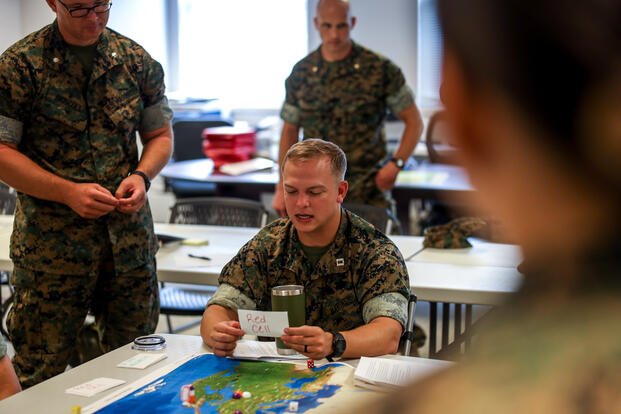
The Marine War College is actively testing machine learning across multiple domains such as intelligence support, Course of Action development, and predictive modeling in wargaming scenarios. These AI tools are supervised by instructors and are designed to be used like any other decision aid.
Andrew Powell, Co-Founder and CEO of Ethos, a company assisting with AI-driven training for the Department of the Navy, highlights the importance of retaining human oversight. “We build AI tools that help warfighters be more efficient and effective without losing sight of the human in the loop,” Powell explains. The approach aims to develop human-machine workflows that enhance preparation while maintaining the critical role of instructor judgment.
Advantages of Real-Time Feedback in Education
A significant transformation AI brings to military education is the provision of real-time performance feedback. Ethos tools offer what Powell terms the “datafication” of learning, where every action within a lesson generates data for instructors. This enables early intervention when students face difficulties, rather than waiting for end-of-course assessments.
Powell cites an example where a Department of the Navy partner experienced a 50% reduction in course failure rates after implementing AI-driven training, saving over two million dollars within a year. As AI tools gain full authorization on classified networks, this adaptive method of instruction is expected to become more prevalent.
Building Trust in AI Systems
Trust in AI systems remains a critical issue within military settings. AI models can sometimes produce misleading or incorrect conclusions. Becker emphasizes the importance of understanding the limits of AI, stating, “Learning how much trust to place in AI is just as important as having the capability.” The Marine Corps has historically innovated while managing risks, a strategy that Becker believes will guide AI adoption.
Aligning AI with Force Design 2030
The experimentation with AI at MCWAR is directly linked to Force Design 2030. As junior officers may need to depend on AI tools for threat assessment in complex environments, these tools are designed to assist rather than replace human judgment. Becker underscores the enduring importance of human leadership, saying, “Focus on the humans. The machines will change.”
Future of Military Training with AI
Powell predicts that AI will become a defining element of military training in the coming years. He identifies the Human–Technology Divide as a challenge, where AI could play a crucial role in bridging the gap if institutions collaborate with reliable partners. These partners should understand both security requirements and the pace of commercial innovation.
“Adopting new technology is always an adjustment,” Powell remarks, emphasizing the need for partnerships with a proven track record in government agency integration. The early initiatives at the Marine War College suggest a future of faster assessments, improved wargames, and officers ready to lead teams in a contested battlespace.
The Core Focus
AI’s introduction into Marine Corps education is being approached methodically, with a clear focus on enhancing the preparedness and efficiency of Marines. While machines are leveraged to augment capabilities, human leadership remains the cornerstone of military training and operations.