Marines Seek Airspace Control Over California’s Johnson Valley, Sparking Civilian Concerns
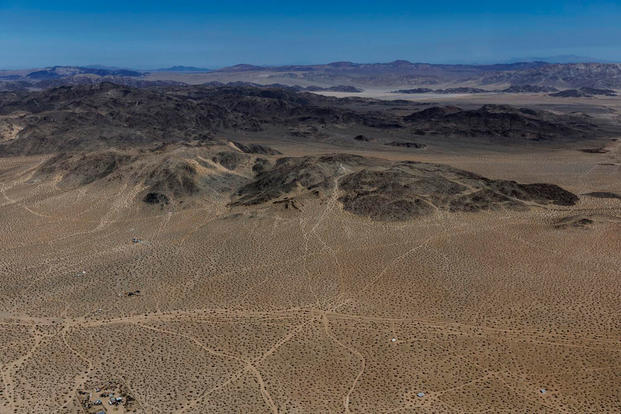
The vast and rugged landscape of California’s Johnson Valley, a beloved destination for off-road enthusiasts, is again at the center of a debate between civilian recreational use and military training needs. More than ten years after the U.S. Marine Corps brokered a deal to share this iconic desert terrain, the military now seeks control of the skies above, raising concerns among local users and aviation officials.
The latest proposal from the Pentagon seeks to limit civilian air traffic over significant portions of the Johnson Valley Off-Highway Vehicle Area, adjacent to the Twentynine Palms Marine base. This move is intended to facilitate expanded training exercises for the Marines. However, frequent visitors and local stakeholders argue that such restrictions would compromise safety and accessibility, particularly impacting rescue operations and the famed King of the Hammers off-road race.
“It feels like it’s literally just another way for them to take the land, but from above,” expressed Shannon Welch, vice president of the off-road group Blue Ribbon Coalition.
Aviation officials have also voiced their objections, concerned about potential disruptions to local airports and increased costs for commercial flights. Despite these concerns, military representatives argue that the fears are overstated. Base officials recently clarified that the airspace would only be restricted for up to 60 days annually. Although there may be requests for additional days in the future, officials assured there would be no intention to limit public access beyond what is currently shared with the Marines.
“There is no intention to restrict public access to Johnson Valley,” stated Cindy Smith, a land management specialist with the base’s government and external affairs.
Among those affected is Dave Cole, a Johnson Valley resident and co-founder of the King of the Hammers event. Cole, who describes the area as his personal “Oahu,” remains optimistic about the potential for compromise. Nevertheless, he worries that the proposal could signal a gradual takeover of the territory the Marines previously sought to annex. “It’s a different bite; same apple,” he said.
Welch highlighted the potential “catastrophic” impact on events like King of the Hammers, which rely on air support for emergency response and broadcasting. Meanwhile, other regions, such as those near the White Sands Missile Range and Yuma Proving Grounds, serve as cautionary examples of how military airspace control can effectively limit public land use.
San Bernardino County Supervisor Dawn Rowe expressed concerns about the potential impact on public safety, citing data that at least 36 medical helicopters responded to the area last year. Local aviation authorities, including the Yucca Valley Airport District and the San Bernardino County Airport Commission, have officially opposed the proposal, citing safety and noise concerns.
Representative Jay Obernolte, a pilot and member of the House, is advocating for the Marines to work more closely with the FAA to alert pilots about restricted airspace status. His proposal intends to ensure that any expansion aligns with previous agreements.
Jim Bagley, a recreational pilot and former mayor of Twentynine Palms, emphasized the importance of public access to the airspace. “What I object to is taking away public access to the public lands — and those public lands include the airspace above them,” he stated.
Despite the controversy, the Marine Corps is committed to working with the FAA on procedures that would allow low-level flights, including rescue helicopters, even during active restrictions. A final decision is anticipated in the fall of 2026.
This story originally appeared in Los Angeles Times.
©2025 Los Angeles Times. Visit latimes.com. Distributed by Tribune Content Agency, LLC.
“`