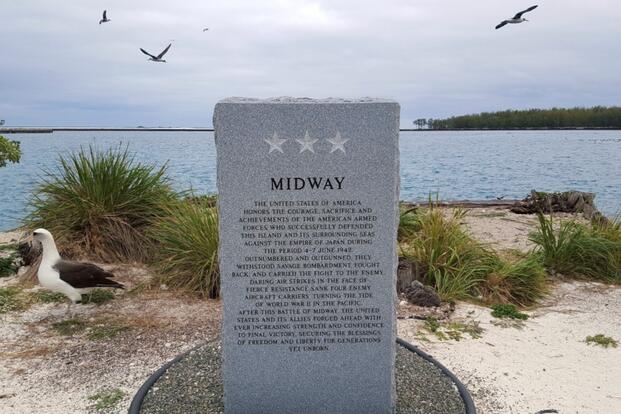
In a pivotal moment of World War II, a squadron of American torpedo bombers embarked on a mission that would alter the course of history, despite suffering devastating losses. On June 4, 1942, 41 Douglas TBD Devastator aircraft took off to counter the Japanese fleet at Midway, only to face heavy casualties and no successful torpedo hits. Yet, their bravery paved the way for American dive bombers to strike a decisive blow, leading to the destruction of four Japanese carriers.
The actions of the three squadron commanders, Lt. Cmdr. John Waldron, Lt. Cmdr. Eugene Lindsey, and Lt. Cmdr. Lance Massey, were recognized with the Navy Cross. However, a group of advocates, including retired Marine Maj. Thomas Rychlik, have argued for decades that their valor deserves the Medal of Honor.
A Marine’s Decades-Long Mission
Maj. Thomas Rychlik, USMC (Ret.), has dedicated over ten years to advocating for the recognition of these commanders. His journey began with a youthful reading of Walter Lord’s “Incredible Victory,” and his fascination with the torpedo bomber pilots’ heroism never waned.
After retiring from a 20-year Marine career, Rychlik delved into classified documents, ship logs, and after-action reports, believing he uncovered evidence that could change historical recognition.
The Battle of Midway
The TBD Devastator faced significant challenges during the battle. It was slow, unreliable, and required pilots to fly directly into enemy fire, making their mission nearly suicidal. Yet, their determination to strike back after Pearl Harbor fueled their courage.
“That’s what makes these men so heroic,” Rychlik noted. “They knew there was such a little chance of hitting, but they still went ahead and did it.”
The Man Who Disobeyed Orders and Found the Enemy
Lt. Cmdr. John Waldron, commanding Torpedo Squadron 8, defied orders during the battle, leading his squadron directly to the Japanese fleet. Despite fierce opposition and no fighter escort, his actions cleared the way for the American dive bombers.
“Well, the hell with you,” Waldron famously radioed. “I know where they are and I’m going to them.”
Waldron’s bold decision resulted in all 15 aircraft being shot down, but his attack forced the Japanese Zeros to sea level, inadvertently aiding the subsequent dive bomber attack.
The Commander Who Should Not Have Flown
Lt. Cmdr. Eugene Lindsey led Torpedo Squadron 6 despite severe injuries sustained in a previous crash. His determination to fly, despite being physically compromised, demonstrated extraordinary bravery.
“This is the real thing today,” Lindsey reportedly said. “The thing we’ve been training for. I’ll take the squadron in.”
His squadron’s attack, although unsuccessful in hitting targets, further disoriented the Japanese defenses.
The Commander Who Went After the Final Carrier
Lt. Cmdr. Lance Massey led Torpedo Squadron 3 against the Japanese, choosing to attack the untouched carrier Hiryu. His decision drew enemy fighters away, allowing American dive bombers to strike other carriers.
Despite the overwhelming odds and eventual loss of most of his squadron, Massey’s actions played a critical role in the battle’s success.
The Sacrifice That Won the Battle
The combined efforts of these torpedo squadrons distracted and confused the Japanese forces, enabling the American dive bombers to effectively attack and destroy the Japanese carriers Kaga, Akagi, and Soryu.
“Even Dick Best admitted the torpedo bomber pilots won the Battle of Midway, despite what he did,” Rychlik said.
The Navy’s Initial Assessments
Despite their contributions, none of the sailors from Midway received the Medal of Honor, a decision influenced by incomplete information and Navy hesitance to award the medal during World War II.
Rychlik argues that factors such as outdated equipment and the Navy’s reluctance to acknowledge flaws in their torpedo bombers contributed to the oversight.
The Navy’s Reluctance to Upgrade Awards
The Navy historically awarded fewer Medals of Honor compared to other branches. Efforts to upgrade awards posthumously have been limited, although recent cases like Capt. Royce Williams’ have shown change is possible.
Rychlik continues to push for recognition, supported by the Navy’s top historian Rear Adm. Samuel Cox, who acknowledged that had information been available in 1942, the squadron commanders might have been awarded the Medal of Honor.
The Fight Continues
In 2021, congressional efforts to review the case were initially dismissed by the Navy. However, Cox’s letter in 2025 renewed hope for revisiting the recognition of these aviators’ heroism.
The Families They Left Behind
The families of Waldron, Lindsey, and Massey continue to honor their legacy. For them, receiving the Medal of Honor would validate their loved ones’ sacrifices and the stories passed down through generations.
Waiting for Justice
Maj. Rychlik’s dedication to correcting the historical record remains steadfast. He hopes that one day, the Navy will officially recognize the extraordinary valor of the torpedo bomber pilots who played a pivotal role in the Battle of Midway.