In the midst of the intense combat on Saipan, a pivotal moment unfolded on June 24, 1944. Maj. Gen. Ralph C. Smith, commanding the 27th Infantry Division, received an unexpected message that would ripple through military history. The note, delivered discreetly, informed him he was relieved of command—a decision made by Marine Corps Lt. Gen. Holland M. “Howlin’ Mad” Smith, which set off a storm of controversy.
The Battle for Saipan: Death Valley and Purple Heart Ridge
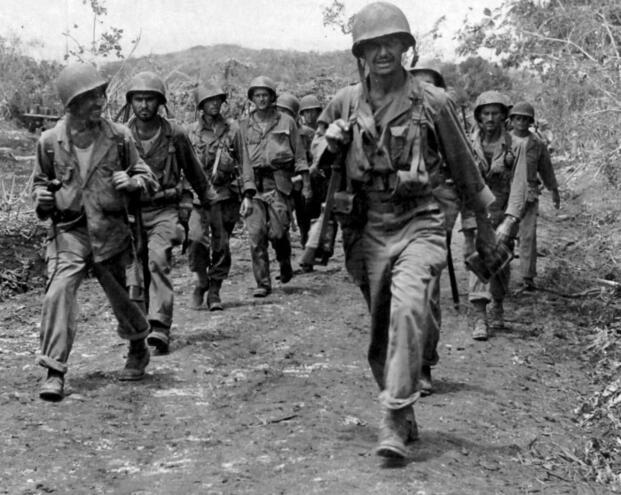
The 27th Infantry Division, consisting of New York National Guard troops federalized in 1940, had been pushing through Saipan’s dense interior for nine grueling days alongside the 2nd and 4th Marine Divisions. Positioned in the center of the island, the division faced the daunting task of navigating a rugged jungle valley beset by Japanese forces entrenched in caves and fortified positions. The Marines advanced on open flanks, while the 27th was mired in the arduous terrain of Purple Heart Ridge and Death Valley, with significant American casualties mounting.
Lt. Gen. Holland Smith, leading the V Amphibious Corps, grew increasingly frustrated with the 27th’s slow pace, as it jeopardized the Marine flanks and the success of the entire operation.
The Makin Atoll Incident
Holland Smith’s disdain for the Army and the 27th Division was not new. Their tense relationship dated back to November 1943 at Makin Atoll, where Holland Smith expected the Army’s 6,500 troops to swiftly defeat 800 Japanese defenders. When this did not happen, Holland Smith’s anger was palpable. His dissatisfaction was compounded upon discovering a regimental commander killed by sniper fire, and he berated soldiers he mistakenly thought were idle infantrymen but were actually supply troops miles from the front. This incident solidified his negative perception of Army effectiveness.
Holland Smith’s criticism extended beyond the battlefield. He frequently lectured junior Army officers on the superiority of Marine tactics, fueling resentment and creating a perception of him as a domineering figure.
The Tensions on Saipan
On Saipan, Holland Smith did not assess the challenging terrain faced by the 27th Infantry Division. His decision to relieve Maj. Gen. Ralph C. Smith, citing the division’s lack of aggression, was influenced by longstanding biases. This unprecedented action was supported by Vice Adm. Richmond Kelly Turner and Maj. Gen. Sanderford Jarman, who temporarily took over the 27th’s command.
However, the fallout from this decision was immediate. Army officers on Saipan saw the relief as an affront, leading to strained relations and a breakdown in cooperation between Army and Marine personnel. Ralph Smith’s parting words warned against Army troops serving under Holland Smith again, reflecting the deep divisions the incident had caused.
The Army’s Response
Maj. Gen. George W. Griner succeeded Jarman and soon recognized the formidable adversities the 27th faced, echoing Ralph Smith’s sentiments about Holland Smith’s prejudice. Meanwhile, Lt. Gen. Robert C. Richardson, in command of Army forces in the Pacific, was furious. He viewed the relief as an attempt by Marines to dominate Pacific operations, prompting him to convene the Buckner Board inquiry. The board, heavily biased with Army testimonies, concluded that the relief was unwarranted.
High Command Intervention
The controversy reached the highest echelons of the U.S. military. Gen. George C. Marshall and Adm. Ernest J. King were concerned about the deteriorating Army-Marine relations. Investigations revealed faults on both sides, with Holland Smith’s command decisions under scrutiny for bias and inadequate understanding of Army operations. Ultimately, Marshall and King opted against official action, hoping to let the matter quietly dissipate.
Media Frenzy and Lasting Impact
The media played a significant role in exacerbating tensions. The San Francisco Examiner and Time magazine published articles that fueled public debate over Army and Marine tactics, impacting morale and public perception. The controversy marred the careers of both Smiths, with Holland Smith sidelined and Ralph Smith reassigned away from Pacific combat zones.
This episode underscored the complexities of interservice rivalry and command dynamics, echoing through subsequent military operations and highlighting the challenges of joint operations in warfare.