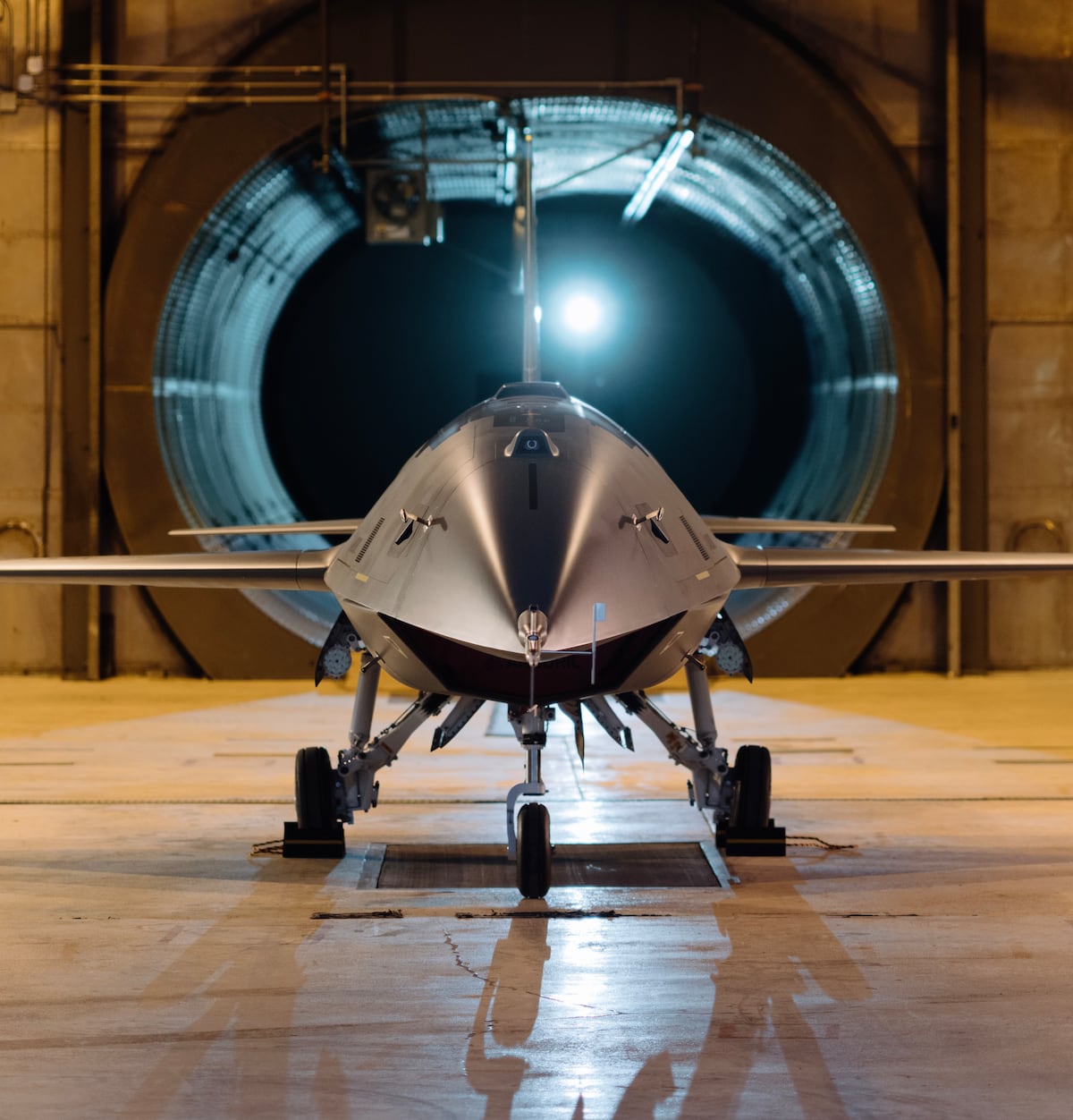
U.S. Air Force Secures Funding for Collaborative Combat Aircraft
In a groundbreaking move, the U.S. Air Force is seeking Congressional approval to fund its Collaborative Combat Aircraft (CCA) initiative, marking a significant shift toward integrating semi-autonomous systems with manned fighter jets.
The Air Force’s fiscal year 2027 budget request includes $996.5 million earmarked for the procurement of Increment 1 CCAs, alongside an additional $150 million for advanced procurement in fiscal year 2028.
When combined with approximately $1.37 billion allocated for ongoing research and development—up from $827 million in the previous fiscal year—the total financial commitment for the program approaches $2.37 billion, as outlined in Pentagon comptroller documents released on April 3.
This investment makes CCA the largest new component in the Air Force’s $30.64 billion aircraft procurement account, signaling the transition from testing to operational use.
Unlike traditional drones, CCAs are jet-powered and semi-autonomous, designed to accompany manned fighters such as the F-35 and F-22. These “loyal wingmen” leverage onboard autonomy for tasks such as navigation, sensor fusion, and weapons deployment, while a pilot in a manned jet assumes the role of mission commander.
The first iteration of CCAs, Increment 1, will prioritize air-to-air and strike capabilities, with plans for electronic warfare and ISR variants in future increments. The Air Force aims to acquire 100 to 150 aircraft in this initial phase, eventually expanding to hundreds or even thousands.
The introduction of CCAs addresses a fundamental challenge: the need for sufficient combat mass against adversaries like China. Designed to be more affordable and numerous than crewed fighters, these aircraft are intended to take on risks that traditional jets cannot.
Initial plans suggest each manned jet will command two CCAs, though simulations indicate a single pilot could manage three to five.
The fiscal year 2027 budget marks the first time the Air Force has allocated real procurement funds for CCAs, signaling a commitment to integrating these aircraft into the fleet. However, several decisions remain unresolved, including basing, maintenance, and training logistics.
The increased funding for research and development indicates that Increment 1 is just the beginning. The Air Force has engaged nine vendors for Increment 2 prototypes, with plans to expand the fleet with lower-cost models for potential Pacific operations.
A production decision for Increment 1 is anticipated this summer, with General Atomics’s YFQ-42A and Anduril’s YFQ-44A leading the competition. Northrop Grumman’s YFQ-48A is also being tested for future phases. While the budget does not specify exact quantities, analysts estimate around 30 units, based on final costs.
Col. Timothy Helfrich, the program’s portfolio acquisition executive, noted that costs are currently below the target of $30 million per unit.
Despite hitting cost targets, challenges remain, including software development and integration with manned systems. The decision to expand Increment 1 or advance Increment 2 will require careful consideration, and the allocation among active-duty, Guard, and Reserve units is still under review.
Congress will play a significant role in shaping the program’s future, with lawmakers requesting detailed briefings on various aspects of the initiative.
While awaiting Congressional approval, the program received international support when the Netherlands committed to funding two Increment 1 CCAs. Under this partnership, the aircraft will operate with the U.S. Air Force’s Experimental Operations Unit, with Dutch personnel contributing to operational concepts.
“The future fight will be fought with allies and partners,” Air Force Secretary Troy Meink stated on April 23. “By aligning our approaches early, we ensure interoperability and shared advantage in the era of human-machine teaming.”