In the Face of Conflict, Ukraine Deploys Robots for Civilian Rescues
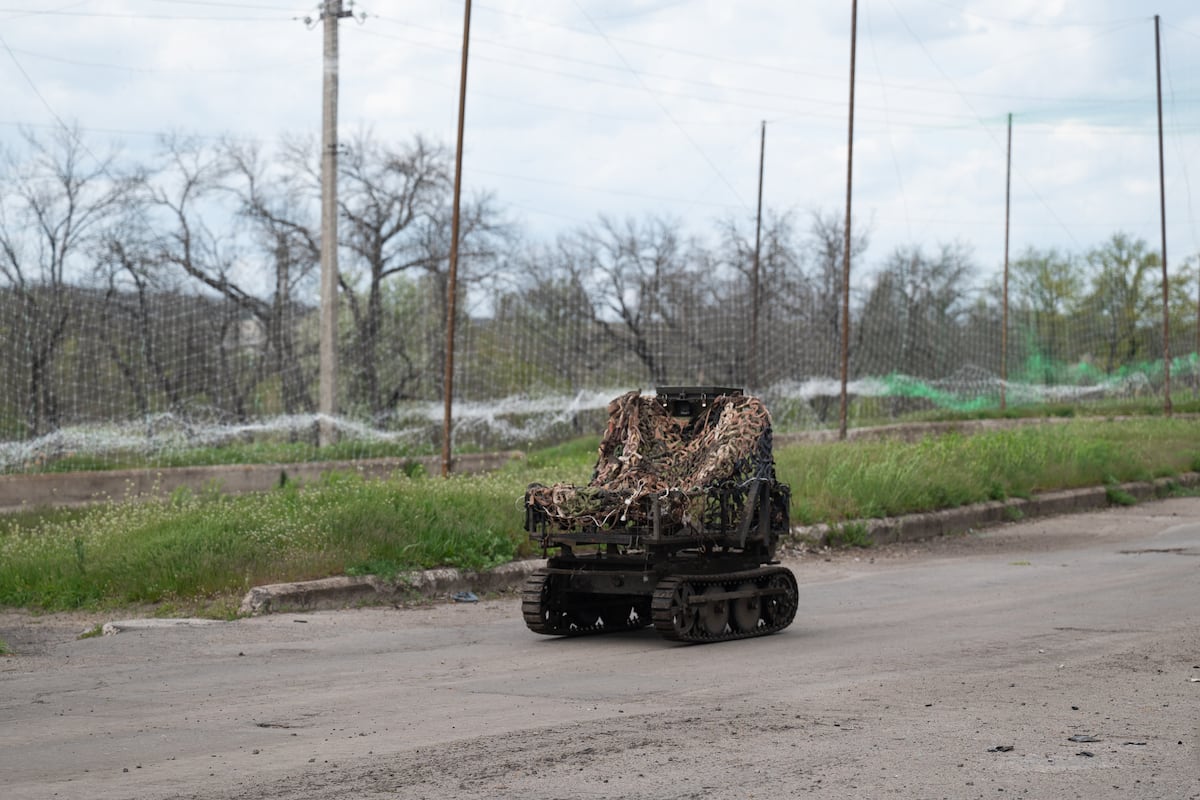
Amid the chaos of war-torn regions, a 77-year-old woman found herself navigating the perilous path through the Lyman grey zone. Her journey, marked by the remnants of conflict and the fallen bodies of neighbors, took a surprising turn when a robot approached her. Initially mistaking it for a blanket, she saw the words “Grandma, get on!” and realized it was her lifeline.
On April 25, Ukraine’s 3rd Army Corps coordinated a daring rescue operation using unmanned ground vehicles (UGVs) supported by reconnaissance drones. The operation was part of a larger effort described in a Telegram post by the 3rd Army Corps. They safely extracted the woman, who had lost her home to Russian forces, along with three other civilians. These evacuees were escorted to a pickup point and transferred to an armored vehicle from the 1st Mechanized Battalion.
The presence of Russian drones in the area made traditional evacuation methods unfeasible, prompting Ukraine to deploy robots. These UGVs, typically used for logistical support and medical evacuations, have become essential in civilian rescue missions on the front lines. “Our goal is for 100 percent of frontline logistics to be performed by robotic systems,” stated Defense Minister Mykhailo Fedorov on April 18, emphasizing the strategic role of these machines.
Heorhii Khvystani, chief of staff of the Unmanned Systems Battalion of Ukraine’s 58th Separate Motorized Brigade, explained at the Lviv Drone Autonomy Conference, “According to the SBS doctrine, a very large number of tasks fall to SBS. This is fire impact, mine-laying, logistical missions, engineering works, evacuation of the wounded and other measures.” He highlighted the dual-use nature of these robots, a strategic doctrine rather than a makeshift solution.
In March alone, the military conducted over 9,000 missions using UGVs, showcasing their versatility and importance on the battlefield. Ukraine aims to significantly expand its robotic ground force, with plans to field 25,000 UGVs within the first half of 2026, according to a Defense News report. President Volodymyr Zelenskyy announced the ambitious production of 50,000 ground robots for the year, underscoring a commitment to minimizing human risk in combat zones.
On the same day of the elderly woman’s rescue, UGVs were also instrumental in extracting a wounded soldier from a Russian ambush, as reported by UNITED24 Media. Earlier in April, Ukraine’s 1st Separate Medical Battalion executed six robotic casualty evacuation missions in a single day, covering an impressive 185 miles as detailed by Defence Blog.
The integration of robotic platforms has reportedly reduced personnel casualties by up to 30%, according to Ukraine’s General Staff. Ukrainian commanders emphasize the life-saving potential of these autonomous solutions. “A person can be preserved, their life can be saved, their time resources can be saved so that they can make decisions on how to apply the tool,” said Yevhenii Lesin, deputy commander in Ukraine’s 412th Brigade “Nemesis,” reinforcing the crucial role of technology in modern warfare.