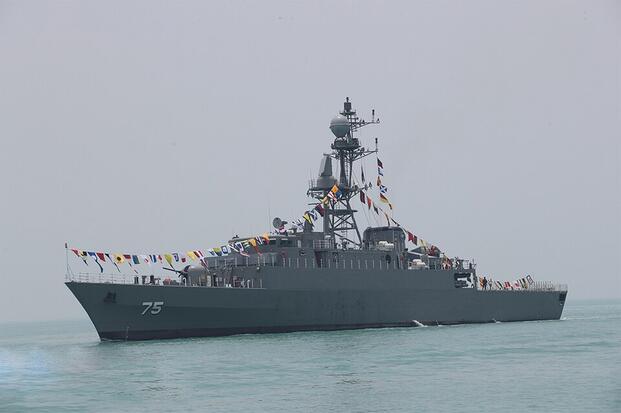
The recent sinking of an Iranian warship by a U.S. submarine in the Indian Ocean has sparked significant geopolitical tension. The Iranian vessel, which had just completed a naval exercise in India, was torpedoed shortly after leaving Indian waters, leaving the Indian government in a challenging position as it navigates its silence amidst mounting domestic criticism.
Sri Lanka’s navy has reported the recovery of 87 bodies and the rescue of 32 survivors from the IRIS Dena, with about 10 sailors still missing. Another Iranian ship has been spotted in Sri Lanka’s exclusive economic zone following the incident, although its identity and purpose remain unclear.
India’s Naval Exercise and Iranian Participation
India’s Exercise MILAN, a key biennial naval drill aimed at enhancing maritime cooperation, recently attracted participation from 74 countries and 18 foreign warships. The event, which concluded on February 25, was attended by Iranian Navy Rear Adm. Shahram Irani. The IRIS Dena had represented Iran in this exercise and was on its return journey when it was targeted by the U.S. submarine 25 miles south of Sri Lanka.
The U.S. Navy did not send a surface warship to MILAN but was represented by a P-8A Poseidon aircraft. The guided-missile destroyer USS Pinckney was scheduled to participate but was redirected to Singapore just before the exercise commenced.
Reactions from Tehran and Washington
Iran’s Foreign Minister, Seyed Abbas Araghchi, condemned the incident as an attack on a ship under Indian diplomatic protection. “The U.S. has perpetrated an atrocity at sea, 2,000 miles away from Iran’s shores,” he stated on social media. “Frigate Dena, a guest of India’s Navy carrying almost 130 sailors, was struck in international waters without warning. Mark my words: The U.S. will come to bitterly regret the precedent it has set.”
Conversely, the Pentagon described the strike as a demonstration of U.S. military prowess. Gen. Dan Caine noted, “To hunt, find and kill an out-of-area deployer is something that only the United States can do at this type of scale.”
The Political Debate in India
Domestically, India’s lack of response has drawn criticism, especially from opposition leaders. Rahul Gandhi accused Prime Minister Narendra Modi of compromising India’s strategic independence, emphasizing, “The conflict has reached our backyard, with an Iranian warship sunk in the Indian Ocean. Yet the Prime Minister has said nothing.”
Critics, including former Indian Navy chief Arun Prakash, have urged New Delhi to express its disapproval. Meanwhile, former diplomat Kanwal Sibal pointed out that the exercise protocol might have left the IRIS Dena defenseless, a claim yet to be verified independently.
The Broader Implications for India
India’s diplomatic ties with both the U.S. and Iran are now under strain. The nation’s oil supply, heavily reliant on the Strait of Hormuz, is at risk due to the ongoing conflict in the region. Furthermore, the sinking challenges India’s position as a stabilizer in the Indian Ocean, a role it has cultivated over years through initiatives like MILAN.
As Operation Epic Fury continues, with reports of over 20 Iranian ships destroyed, including the IRIS Dena‘s sister ships, neighboring countries remain vigilant and concerned about the expanding conflict.