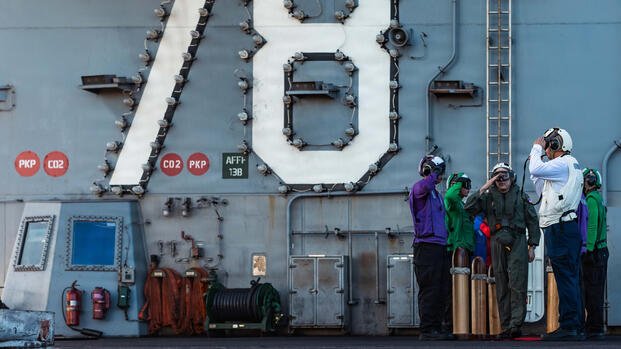
USS Gerald R. Ford is making waves with its prolonged deployment, highlighting the Navy’s focus on crew resilience and operational readiness.
Initially setting sail from Naval Station Norfolk on June 24, 2025, the carrier was expected to complete a standard Mediterranean mission. However, its journey has taken unexpected turns, including operations in the Atlantic, the U.S. Sixth Fleet area, and the Caribbean for U.S. Southern Command missions.
The carrier was later redirected to the Mediterranean due to rising tensions with Iran, as the U.S. fortified its naval presence there. This extended deployment has raised questions about fleet scheduling and the impact on sailors, with the Navy facing continuous global demands.
Adaptation in Deployment Plans
Originally deployed as part of the Navy’s Optimized Fleet Response Plan, the Ford‘s schedule was altered. After participating in NATO exercises and other operations, the strike group moved through the Strait of Gibraltar in November 2025, into the Caribbean.
This maneuver prompted Venezuela to mobilize its military, as tensions heightened with the carrier’s presence in Caribbean waters.
The Pentagon reported that the move was part of a broader U.S. strategy to curb illegal activities, supported by additional air assets in Puerto Rico.
The carrier was tasked with new orders earlier this year, and by mid-February 2026, it was reported crossing the Atlantic again, heading back to the Mediterranean.
By February 20, the deployment had spanned 241 days, potentially surpassing a 294-day mark by mid-April, making it one of the longest post-Vietnam deployments.
Endurance and Logistics
With the deployment extending beyond eight months, the Navy has highlighted the mission’s focus on endurance, noting that over 4 million meals have been served and more than 400,000 gallons of potable water are produced daily. Enhanced satellite connectivity helps sailors maintain family contact, showcasing the logistical efforts to sustain operations.

Carrier strike groups are essentially mobile air bases, capable of sustaining complex operations while at sea. Prolonged deployments challenge the ship’s engineering systems, aviation maintenance, and crew operations, yet officials confirm the ship remains fully mission-capable.
Impact on Fleet and Personnel
The Navy’s fleet is governed by the Optimized Fleet Response Plan, balancing readiness with global presence demands. Currently, 11 nuclear-powered carriers are in the fleet, though not all are deployable due to maintenance schedules.

When a carrier extends its deployment, it affects the entire fleet’s schedule, compressing training and maintenance windows. Sailors’ home time is also affected, with potential impacts on leave and recovery.
Strategic Positioning
Returning to the Mediterranean, the Ford positions the carrier strike group strategically, with access from North Africa to the Middle East. This area provides crucial flexibility for rapid response during crises.

Carrier strike groups bring formidable air and sea power, signifying deterrence and preparedness. Recent incidents have underscored the volatile environment, such as the downing of an Iranian drone near a carrier.