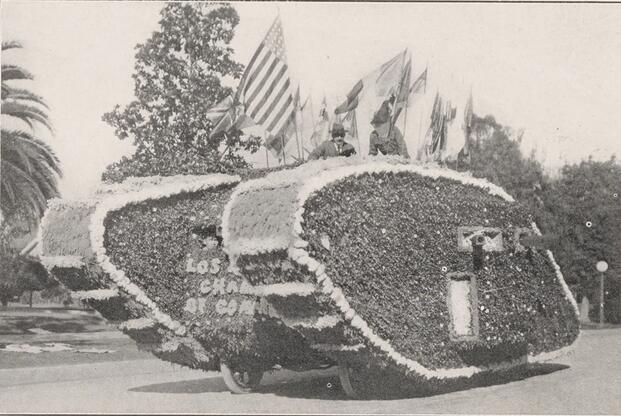
In the midst of World War I, the 1918 Rose Bowl faced the threat of cancellation. With college teams unable to field full rosters due to the war, the classic New Year’s Day game seemed doomed. However, an intervention by President Woodrow Wilson allowed the game to proceed, leading to a unique matchup between military teams: the Mare Island Marines and the Camp Lewis Army squad.
The Contenders: Mare Island vs. Camp Lewis
The Mare Island Marines, stationed near Vallejo, California, boasted an impressive undefeated season in 1917, going 8-0 under the guidance of Coach Hugo Bezdek. Their formidable lineup included former college football stars, and they outscored their opponents 200-10. Among their victories were decisive wins over Oregon, USC, and California.
On the other side, Camp Lewis from Washington, representing the 91st Division, finished their season with a 5-2-1 record. They had already faced and lost to Mare Island twice, making them the underdogs for the Rose Bowl showdown.
The Match Up – January 1, 1918
Before a crowd of 25,000 at Pasadena’s Tournament Park, the game began with Mare Island taking the lead through a field goal by Keith Ambrose in the second quarter. Camp Lewis responded with a touchdown from Dick Romney, a former University of Utah standout, to lead 7-3 at halftime.
In the second half, Mare Island regained control. Walter Brown’s touchdown run put them ahead, followed by a short touchdown by Hollis Huntington and another field goal by Ambrose, sealing a 19-7 victory. As reported in the Pasadena Star-News:
“The 19 to 7 score, in favor of the Mare Island Marines, tells the true story of the football game at Tournament park the afternoon of New Year’s day. The winners were just about as superior to their opponents, the strong Camp Lewis organization, as the final count indicates.”
Military Service Post-Game
The Rose Bowl marked the last bit of camaraderie for many players before heading to battle. Mare Island had 17 players, with nine serving in Europe during WWI. Among them, five rose to the rank of general, having served in further conflicts including WWII and Korea. Similarly, 14 of the 24 Camp Lewis players were deployed to Europe, with one paying the ultimate sacrifice.
“Pity the Germans!”
This remark from the Vallejo Evening Chronicle encapsulated the fighting spirit of the Marines and soldiers as they prepared for deployment.
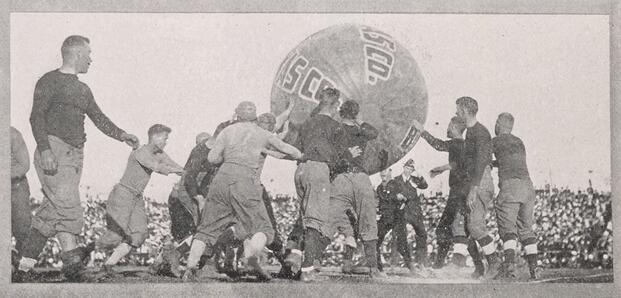
The Enduring Legacy of Marine Football
The victory by Mare Island laid the groundwork for a long-standing tradition of Marine Corps football, highlighted by the Quantico Marines team, which played from 1919 to 1972, amassing 355 wins. For a deeper dive into this history, readers can refer to the detailed account by Robert Billard.
Looking ahead to 2026, the Rose Bowl will continue its storied tradition, this time featuring a matchup between Indiana and Alabama on January 1.