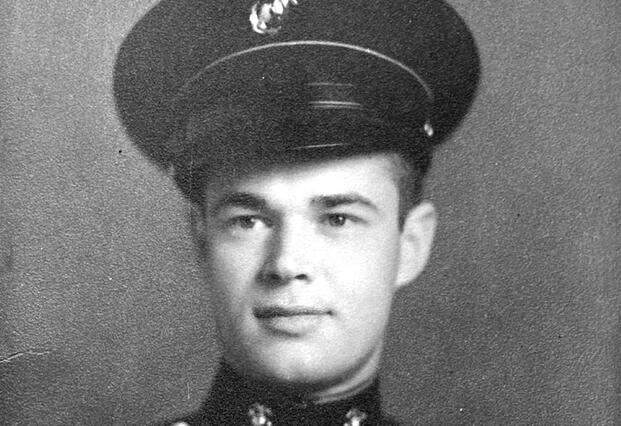
After more than eight decades, a World War II Marine Raider from Cincinnati, who vanished during a fierce jungle battle in the Solomon Islands, is finally set to return home. Thanks to the efforts of the Defense POW/MIA Accounting Agency (DPAA), Pfc. Norton V. Retzsch’s identity has been verified, concluding a long-standing mystery for his family.
On March 4, the DPAA confirmed that Retzsch, who was 25 at the time of his disappearance, was accounted for as of April 1, 2025. His identification was accomplished through dental records, anthropological analysis, and mitochondrial DNA sequencing, providing long-awaited closure for his relatives. Retzsch is slated for burial on April 13 in Marana, Arizona.
Early Days and Deployment to the Pacific
A graduate of Hughes High School in Cincinnati in 1937, Retzsch enlisted in the Marine Corps in September 1941, at the age of 23.
Assigned to Company C, 1st Marine Raider Battalion, 1st Marine Raider Regiment, he was part of the elite units trained for amphibious raids and jungle warfare. Operation Toenails commenced on June 30, 1943, aiming to capture the Japanese-controlled island of New Georgia in the Solomon Islands.
Col. Harry Liversedge’s Northern Landing Group, which included the 1st Marine Raider Battalion, landed at Rice Anchorage on July 5 and began their advance through the dense jungle towards Enogai.
The Battle at Enogai
On July 9, Company C encountered a prepared ambush near Enogai Point. Retzsch and two fellow Raiders went missing during the skirmish. A Marine patrol later discovered a Japanese soldier with Retzsch’s dog tag on the Dragons Peninsula.
According to Father Paul Redmond, the battalion chaplain, a voice responded “Rites” to a challenge, prompting the patrol to open fire. Retzsch had always emphasized that his surname was pronounced “Reetz,” a mispronunciation that exposed the Japanese soldier.
Years of Uncertainty
Post-war efforts by the 604th Quartermaster Graves Registration Company from November to December 1947 failed to locate Retzsch. In 1949, he was declared non-recoverable, and his name was added to the Tablets of the Missing at the Manila American Cemetery in the Philippines.
Unbeknownst to the military, Retzsch’s remains had likely been recovered earlier. In December 1943, unidentified remains were exhumed from the Enogai Cemetery and transferred through various locations, eventually being designated as Unknown X-182 and interred in Manila in 1950.
The case remained unsolved until DPAA researchers revisited New Georgia, identifying a set of remains as potential matches for missing Raiders. In January 2019, X-182 was retrieved for further examination.
The Journey Home
The identification process was assisted by a DNA sample given by Kim Opitz, Retzsch’s great-niece, in 2006. Opitz, a writer residing in St. Louis Park, Minnesota, shared with KARE 11 News that the family never lost hope.
“My mother never, never let us forget about him,” Opitz said. “We never thought that we would know what happened. It was just always going to be a mystery.”
Upon confirmation in 2025, Opitz expressed her emotions, stating, “It was like elation, like I’ve never felt so spiritually high. He’s going to be brought home with honors.”
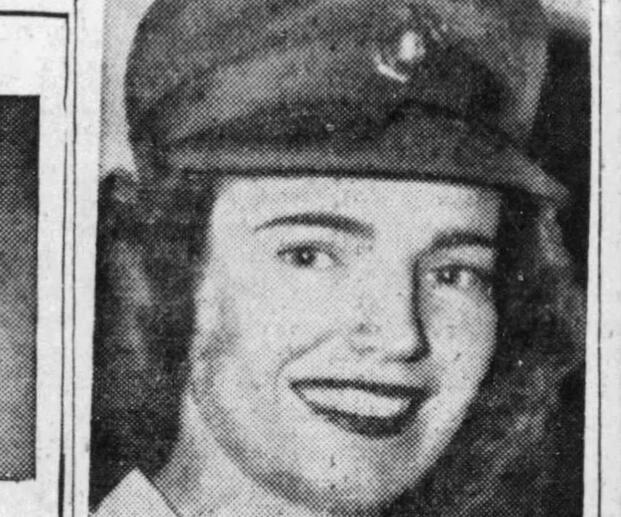
Remembered as a lifeguard with a romantic nature, Retzsch had married six months before deployment. His wife, Margaret, joined the Marine Corps Women’s Reserve after his disappearance, achieving the rank of sergeant before her discharge. She remarried post-war and passed away in 2005.
The Manila American Cemetery has now updated Retzsch’s entry on the Tablets of the Missing with a rosette, marking him as accounted for. Opitz encourages families of missing service members to connect with the DPAA, stating, “If you’re still looking, there’s still a chance.”