Rebuilding Political Power: UAW’s Efforts in Michigan
Recent political canvassing efforts by the United Auto Workers (UAW) in Michigan reflect the union’s push to regain its political influence in a state known for its battleground status. Despite historically aligning with Democratic candidates, the UAW faces internal divisions and trust issues among its members, complicating its efforts to rally support.
Challenges of Internal Divisions and Distrust
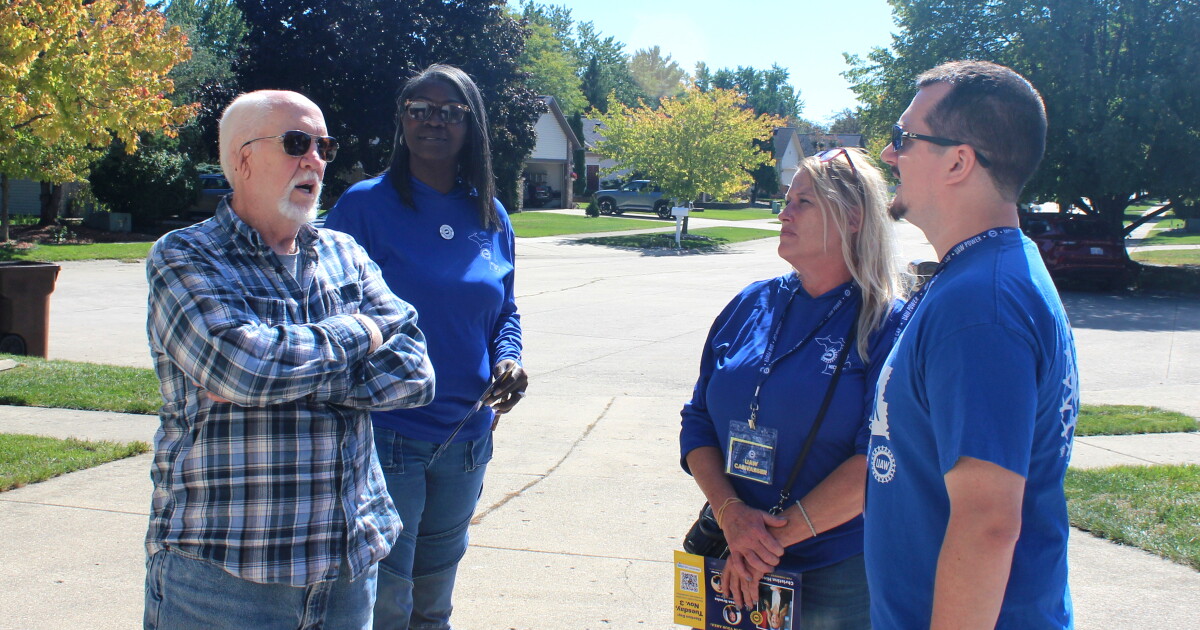
In Macomb County, where former President Donald Trump secured a significant victory in 2024, UAW canvassers encountered retirees with varying political leanings. While concerns about the cost of living were paramount, opinions diverged on which party could best address these issues. The political landscape within the union remains fragmented, with members split between Democratic and Republican candidates.
Former UAW member Betty Anderson expressed frustration with colleagues who supported Trump, accusing them of betraying the working class. This internal political divide poses a significant obstacle to the union’s efforts to consolidate support.
Rebuilding Trust through Transparency
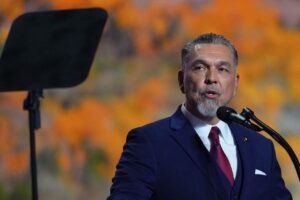
Following a corruption scandal that saw several UAW officials pleading guilty to embezzlement of union funds, current UAW President Shawn Fain has prioritized transparency and accountability. Victories in labor disputes with major automakers have bolstered member confidence, with hopes that this renewed trust will translate into support for UAW-endorsed candidates.
UAW leaders have engaged in open forums with candidates to facilitate member involvement in the political process. The union’s endorsement of progressive Democrat Abdul El-Sayed in the U.S. Senate primary, despite his rival’s extensive auto industry experience, underscores the UAW’s commitment to candidates aligned with its values.
Turning Out the Vote for Political Relevance
As the UAW strives to regain its political relevance, mobilizing voters remains crucial. Professor Robert Bruno emphasizes that the union’s strength lies in its ability to rally support and engage members in the electoral process. The outcome of the UAW’s efforts to bridge internal divisions and rebuild trust will determine its political impact in the upcoming elections.
In the 1980s, the United Auto Workers (UAW) boasted over 600,000 active and retired members in Michigan, making it the largest union in the state. Fast forward to today, and that number has dwindled to around 350,000 members. Despite this decline, UAW leaders remain hopeful, citing a successful primary election campaign drive and a renewed focus on transparent leadership.
During Michigan’s August primary, approximately 113,000 UAW members participated in early voting, demonstrating a high level of engagement within the union. Volunteers are actively canvassing and calling voters to encourage participation on Election Day. In a significant move, the UAW recently held a conference of its Michigan political arm for the first time since 2018, signaling a renewed commitment to member involvement in shaping the union’s direction.
According to UAW representatives, the organization is prioritizing issues such as affordability and empowering members to drive the union’s agenda. Speaking at a conference in Lansing, a UAW spokesperson stated, “We are as active as we can be right now,” highlighting the union’s current dedication to engaging with members and amplifying their voices.
This proactive approach reflects the UAW’s efforts to revitalize its presence and connect with members on critical issues. As the largest union in Michigan, the UAW continues to adapt and evolve to meet the needs and concerns of its members, ensuring their voices are heard and represented in the union’s decision-making processes.