Detroit City Council Approves 13th Consecutive Balanced Budget
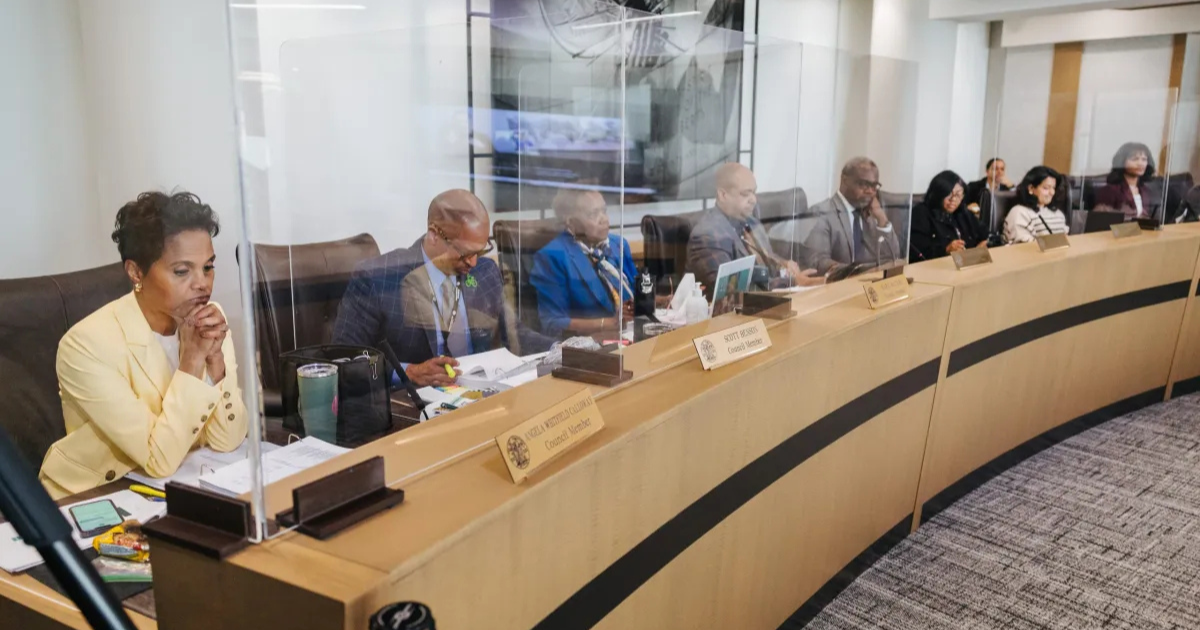
On Tuesday, April 7, the Detroit City Council unanimously approved the city’s 13th consecutive balanced budget, amounting to over $3 billion. The budget discussions, which began in March, led to a financially conservative approach due to slower growth in corporate income tax revenues. Despite limitations, key funding increases were allocated to various sectors, including legacy pension retirees, traffic calming measures, and the Charles H. Wright Museum.
Key Funding Increases and Budget Cuts
Major funding increases in the approved budget include $1.9 million for legacy pension retirees, $2 million for traffic calming measures on the east side, $1.5 million for capital improvements at the Charles H. Wright Museum of African American History, and more. However, the council also identified areas for budget cuts, such as reducing $3.5 million from blight remediation, nearly $3 million from police operations, and $1 million from city capital projects.
Deliberations and Allocations
The discussions around Mayor Mary Sheffield’s proposed budget involved adjustments to align with various departmental needs and initiatives. The council emphasized the importance of making impactful decisions within the budget that resonate for generations. Council President James Tate acknowledged the hard work of city officials and staff throughout the process, ensuring that Detroit’s priorities were addressed.
Moreover, the council engaged in a detailed examination of the Media Services Department budget, seeking additional funds for expanded services. Despite deliberations, concerns were raised about the department’s budget increase and its potential impact on other critical city functions. Ultimately, the council decided against providing additional funding to the department, citing budget constraints.
Future Considerations
While the approved budget outlines allocations for various programs and initiatives, council members expressed a commitment to ongoing discussions and evaluations for future budget cycles. District 3 Councilman Scott Benson highlighted his focus on investments aimed at enhancing wealth generation and financial stability for Detroit residents, underscoring the council’s dedication to addressing community needs.
In Detroit, city officials are making significant strides towards enhancing the community through various investments and initiatives. Council President Pro Tem Mary Sheffield and Councilman Roy McCalister Jr. have been instrumental in securing funds for vital projects that aim to improve the quality of life for residents.
Sheffield, representing District 5, has been proactive in supporting the Charles H. Wright Museum of African American History, a cultural institution that plays a crucial role in preserving and showcasing African American heritage. Additionally, she has worked to allocate $300,000 for park patrol security at recreation centers and parks, as well as $300,000 for hiring new code enforcement officers to combat blight in the city.
Councilman McCalister Jr., representing District 2, has also been dedicated to securing funds for essential community projects. He has successfully obtained $185,000 for holiday installations and events across Detroit and advocated for a capital plan to modernize all 38 firehouses in the city. Furthermore, McCalister Jr. has been a strong proponent of developing a funding model to support the establishment of two new world-class super libraries and refurbishing the Detroit Public Library’s main branch.
District 7 Councilman Denzel McCampbell has focused on expanding food access for seniors, enhancing after-school programming, improving bus stops in his district, and conducting a truck traffic study. McCampbell proudly announced securing $4.5 million for a new recreation center at the Brennan Recreation Area of Rouge Park. He also expressed excitement about the partnership with the Detroit Pistons, who have pledged $20 million for the construction of the center and improvements to the existing Brennan Pool building.
These initiatives mark a significant step towards creating a more vibrant and inclusive community in Detroit. The dedication and commitment of city officials like Sheffield, McCalister Jr., and McCampbell underscore their efforts to address the diverse needs of residents and enhance the overall quality of life in the city.