
Federal Appeals Court Rules Against Trump’s Birthright Citizenship Order
A significant legal decision was made in San Francisco, where a federal appeals court affirmed that the attempt by former President Donald Trump to revoke birthright citizenship is unconstitutional. This decision maintains a previous block on the order by a lower court, marking a critical step closer to a potential Supreme Court review.
The 9th U.S. Circuit Court of Appeals solidified the stance against Trump’s directive, which aimed to deny U.S. citizenship to children born on American soil to individuals without legal status or those temporarily in the country. This ruling follows a similar block by a federal judge in New Hampshire.
The appeals court panel expressed agreement with the district court’s interpretation, stating, “The district court correctly concluded that the Executive Order’s proposed interpretation, denying citizenship to many persons born in the United States, is unconstitutional. We fully agree.” This maintains the decision by U.S. District Judge John C. Coughenour, who was the first to halt the order.
The ruling holds national significance as the Supreme Court has limited the authority of lower courts to enact nationwide injunctions. However, the 9th Circuit found the case fit one of the exceptions, as a group of states argued that a nationwide order was necessary to ensure birthright citizenship remains consistent across the country.
Judges Michael Hawkins and Ronald Gould, both appointed during President Bill Clinton’s administration, supported the national injunction, noting, “We conclude that the district court did not abuse its discretion in issuing a universal injunction in order to give the States complete relief.”
However, Judge Patrick Bumatay, appointed by Trump, dissented. He challenged the states’ standing to sue and cautioned against the broad application of universal relief, stating, “We should approach any request for universal relief with good faith skepticism, mindful that the invocation of ‘complete relief’ isn’t a backdoor to universal injunctions.” He did not comment on the constitutionality of ending birthright citizenship.
This legal battle centers around the 14th Amendment’s Citizenship Clause, which guarantees citizenship to all born or naturalized in the U.S. Justice Department lawyers have argued that the phrase “subject to United States jurisdiction” suggests citizenship is not automatically granted simply based on birth location.
The states involved—Washington, Arizona, Illinois, and Oregon—argue this interpretation contradicts the clear language of the amendment and historical precedent set by a Supreme Court decision in 1898, which affirmed birthright citizenship to a child born in San Francisco to Chinese parents.
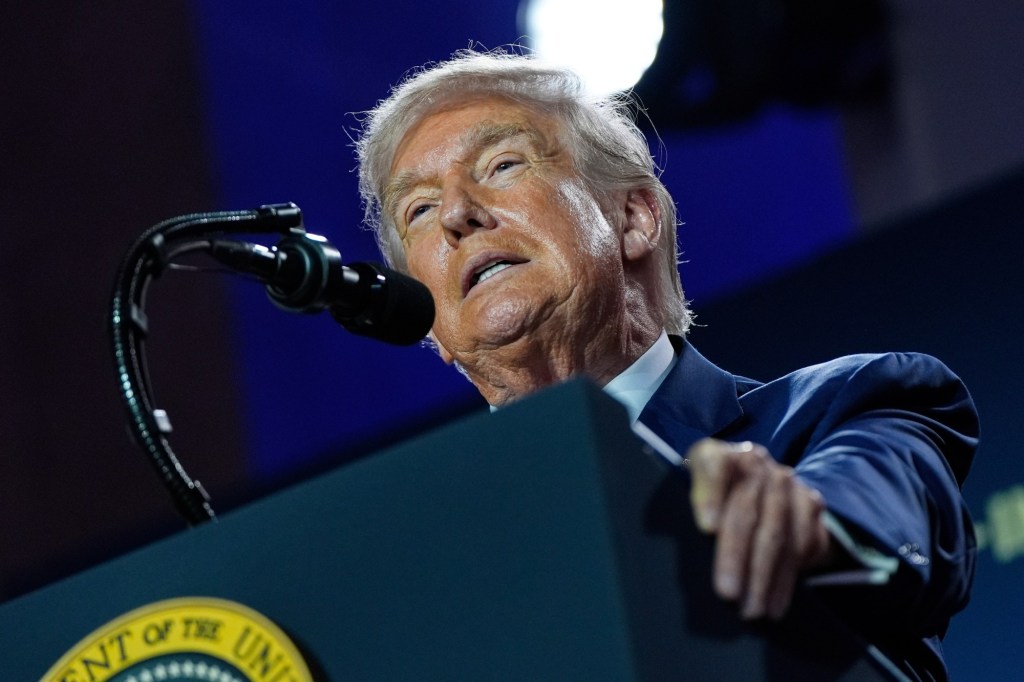
Trump’s executive order posits that children born in the U.S. are not citizens if their mother lacks legal status or is in the country temporarily, and if the father is neither a U.S. citizen nor a lawful permanent resident. This order has prompted at least nine lawsuits challenging its legality across the nation.
Associated Press writer Rebecca Boone contributed to this story.
Originally Published: