Federal Court Decisions Challenge Indefinite Detention of Migrants
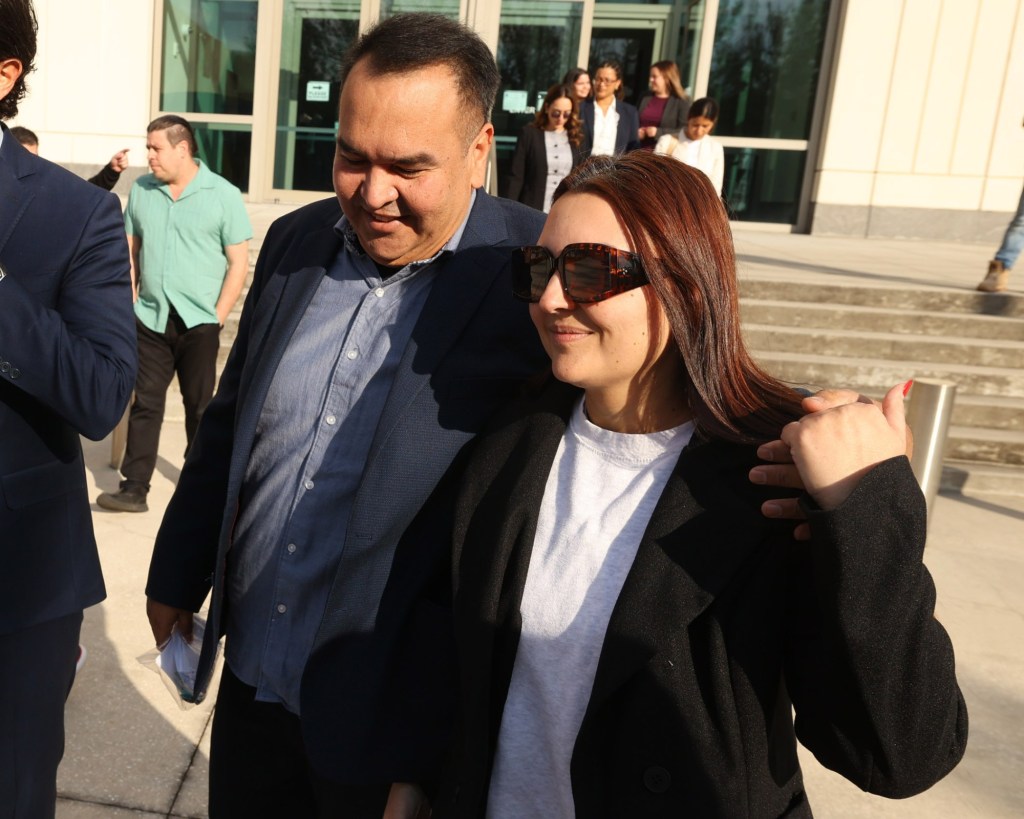
In a significant legal development, three migrants — Reynel Bautista-Anzola, Angel Marquez-Perez, and Francisco Delgado-Garcia — recently appeared in an Orlando federal courtroom, where their cases took a pivotal turn. The men, who had been under ICE custody for several weeks, were brought in shackled, awaiting a decision on their detention status.
U.S. Senior District Judge Gregory Presnell swiftly ordered their release after noting the excessive delay in providing bond hearings. “In our general jurisprudence, a reasonable time for a bond hearing would be 72 hours, not 17 days,” Presnell remarked regarding Delgado-Garcia’s case.
Their release highlights a growing resistance among federal judges to a Trump administration policy that detains non-citizen immigrants indefinitely, even those without criminal records. This policy starkly contrasts with early promises by the administration to target only “the worst of the worst.”
Despite the administration’s stance, some judges and the public have supported the widespread detentions. Notably, the Fifth Circuit Court of Appeals in Louisiana recently upheld such detentions, interpreting a federal provision historically applied to border detainees as applicable to all undocumented immigrants, a decision some legal experts argue could redefine due-process rights.
Central Florida attorney Fritz Scheller criticized the ruling, stating, “If you’re going to take this interpretation … that it applies to individuals who are already in the United States, then what you’ve done is essentially made an endless, ever-present border.”
While the Fifth Circuit’s decision does not impact Florida detainees directly, a similar case in the Atlanta-based 11th Circuit may hold significant consequences for migrants in the Southeast and could potentially escalate to the Supreme Court.
Since early 2025, nearly 600 migrants in Central Florida have filed habeas corpus petitions challenging prolonged detention, with thousands securing release, including 17 individuals in Orlando. This surge in legal actions has burdened federal courts, as ICE reports a record 68,000 detainees in its facilities.
The legal debate revolves around two statutes: one for migrants stopped at the border and another for those already in the U.S., with the latter often granting bond hearings. However, the Fifth Circuit contended that the 1996 law does not guarantee such hearings for migrants residing in the country.
Suchi Mathur, a senior litigation attorney with the American Immigration Council, described the government’s stance as a “legal fiction,” noting, “That’s not a plain text reading of the statute.”
Federal judges in Orlando have pushed back against the indefinite detention argument, leading Assistant U.S. attorneys to concede bond hearings, albeit under contentious circumstances. In Bautista-Anzola’s case, a bond hearing was scheduled in Jacksonville, far from his place of arrest, prompting Judge Presnell to criticize the decision before ordering the man’s release.
Attorney General Pam Bondi hailed the Fifth Circuit’s decision as a victory against “activist judges,” prompting a sharp retort from Presnell, who found it “shocking” for such remarks to come from the nation’s top legal official.
Orlando attorney Phillip Arroyo has played a crucial role in securing the release of detainees, a feat described by one judge as “herculean.” However, Arroyo cautioned that bond hearings might not be a complete solution, as the immigration courts fall under the Justice Department’s control, and bond amounts can be financially prohibitive.
The Orlando Center for Justice, traditionally focused on providing affordable legal services, is now adapting to defend detained migrants, a necessity co-founder Gisselle Martinez did not foresee. “We have never seen anything like this,” Martinez said, emphasizing the need for families to prepare for legal battles.
Efforts by Scheller and his team of pro bono attorneys, including former federal prosecutors, reflect a community rallying to support detained migrants. “We’re not charging them any money,” Scheller stated. “We’re just doing this because it’s the right thing to do.”
Yet, Arroyo notes that the backlog in immigration courts has only worsened, leaving detainees waiting extended periods for bond hearings. “If you had asked me a year ago, I would have said a lot of immigration judges are relatively neutral,” Mathur said, but she lamented the courts’ current state under administrative pressure.
Judge Presnell has since prohibited the re-arrest of Bautista-Anzola, Marquez-Perez, and Delgado-Garcia, pending further court orders. Bautista-Anzola, seeking asylum in the U.S., expressed his relief post-release, stating, “I came here because I needed protection. I can’t go anywhere else. I can’t go back to my country.”