Want this newsletter in your inbox each week? Sign up here.
The political climate in the U.S. is becoming increasingly tense as Donald Trump’s influence continues to grow. With paramilitary troops visible in urban areas and reports of immigrants being detained under harsh conditions, the response from Democratic leaders has been criticized for being largely passive, resulting in voter disillusionment.
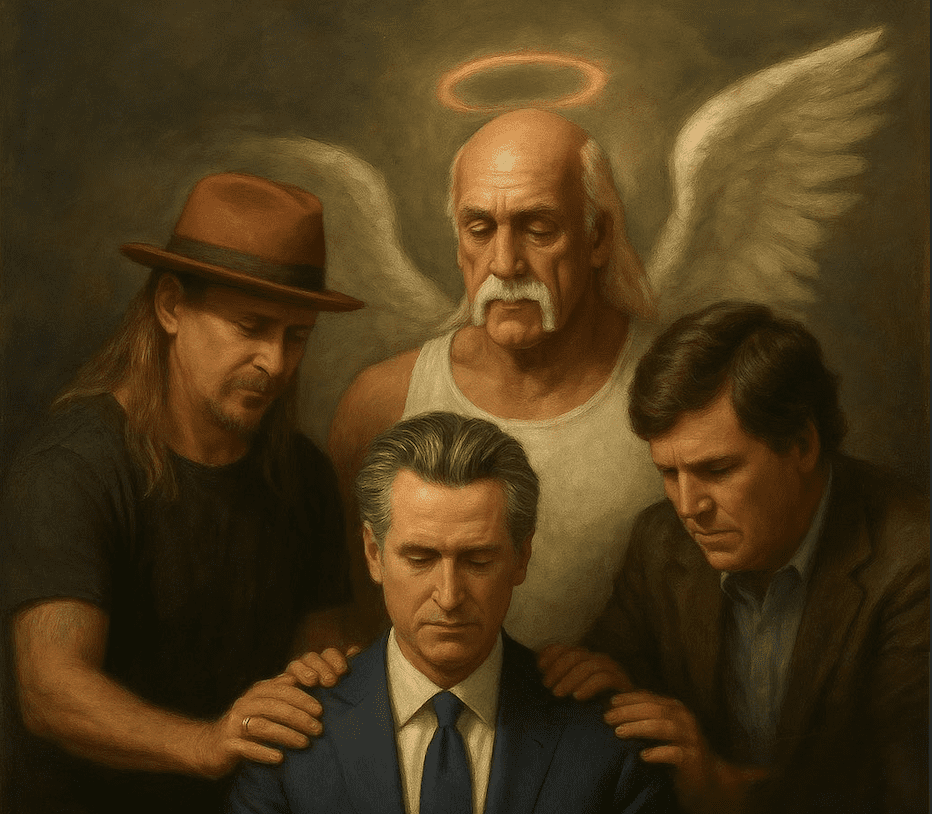
In contrast, California Governor Gavin Newsom has taken a more direct approach through his social media channels, mocking Trump and his supporters. While these posts may not directly counteract the actions of Trump’s administration, they serve as a symbolic resistance and have resonated with many who feel helpless.

A year ago, such outspoken posts from Newsom would have seemed unlikely. In 2021, a D.C.-based firm hired me to manage social media for Democratic candidates. Having previously worked on Tom Steyer’s presidential campaign, I aimed to help reshape the party’s narrative ahead of the midterms.
At the time, Republicans were aggressively pushing narratives, such as the false claim that Supreme Court nominee Ketanji Brown Jackson was lenient on child pornography cases. I believed that a more combative approach was necessary, deviating from the “when they go low, we go high” strategy.
However, the candidates I worked with were uncomfortable with this strategy, preferring less confrontational messaging. I adjusted my writing to meet their preferences, which ultimately led to disappointing election results and my subsequent dismissal.
While Newsom’s social media efforts alone won’t alter the political landscape, they could inspire Democrats to rethink their approach to communication amid rising authoritarianism. Although Democrats do not hold any major governmental power, they can still influence public discourse.
Elie Mystal, writing in The Nation, discusses the impact of small acts of resistance. “I know these kinds of individualized, person-to-person acts of political and social resistance work… because it’s what the bad guys do,” Mystal noted. “They don’t let their individual feelings of powerlessness stop them from using what power they have maximally. They don’t despair—they get angry.”
This is what Newsom appears to be channeling through his actions.
As things stand, the future may not seem bright, but there’s a possibility that the Democratic Party’s evolution in response to Trump’s era could become a defining narrative.
ICYMI
Treasury Secretary Scott Bessent recently described a part of the One Big Beautiful Bill Act as a potential pathway to the privatization of Social Security.
Given Social Security’s critical role in preventing poverty among 16.3 million Americans aged 65 and older, changes to the program are politically sensitive. American Journal News reached out to 31 of the 35 most vulnerable House Republicans for comment on Bessent’s assertion but received no responses.
Read more: Vulnerable House GOP silent on Bessent’s Social Security privatization claim
WATCH AN AD
Senator Susan Collins, the only Republican from a state Trump lost in 2024, is facing a challenging re-election campaign. Democratic hopes to regain control of the Senate may hinge on defeating her.
Graham Platner, an oysterman and combat veteran, is among the Democrats vying for her seat. Platner’s campaign video criticizes billionaires, supports universal healthcare, and advocates for ending the war in Gaza. Notably, Platner shares a communications consultant with Zohran Mamdani and Dan Osborn. Check it out!

2028 WATCH… Ruben Gallego met with donors… Raham Emanuel met with the WSJ editorial board…
Want this newsletter in your inbox each week? Sign up here.