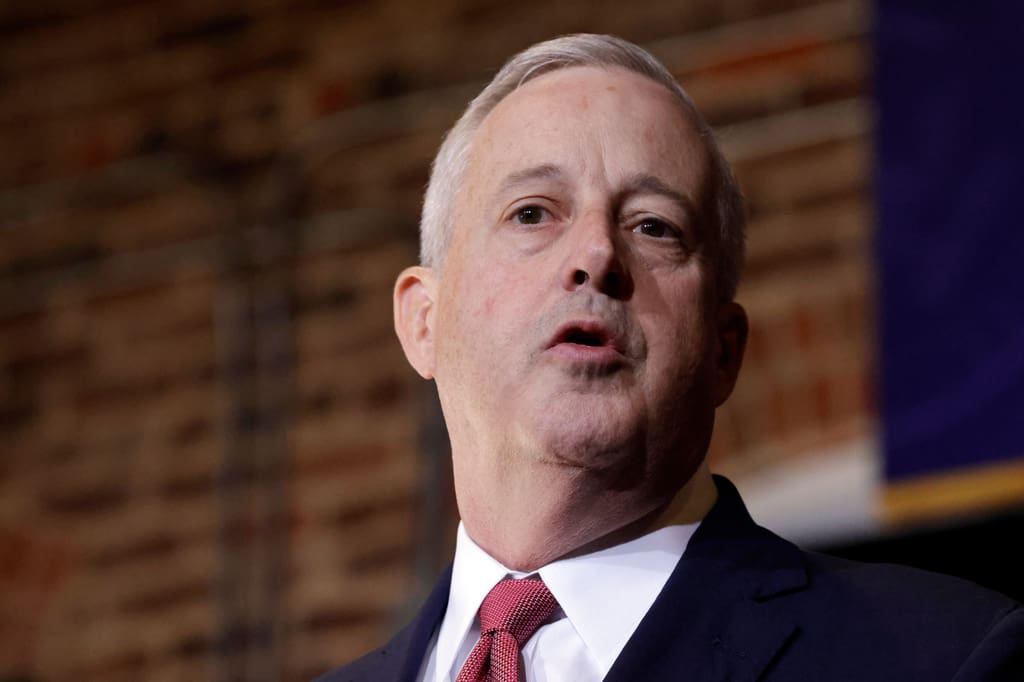
In a political landscape where the distinction between insider and outsider often blurs, Michael Whatley is being portrayed as a fresh face by the conservative group Americans for Prosperity, despite his extensive history in lobbying and political circles. This comes in the form of a new advertisement that paints him as a change-maker rather than a power-seeker.
Though the ad suggests Whatley is dedicated to making a difference, a look at his career reveals a pattern of movement between lobbying and public service. Federal disclosures required of lobbyists show that since 2005, Whatley’s efforts have largely supported oil and gas interests, with ongoing financial ties to the sector.
In government roles, Whatley has served as deputy assistant secretary at the Energy Department, chief of staff for Sen. Elizabeth Dole, and as chair for both the North Carolina Republican Party and the Republican National Committee over various periods from 2001 to 2025.
Whatley’s foray into lobbying began in 2005 with The Patriot Group, a firm that quickly dissolved but managed to represent major utility providers like Cinergy, which later merged into Duke Energy. Duke Energy remains a financial backer of Whatley’s Senate bid and is anticipated to request rate increases for North Carolina residents soon.
Between 2005 and 2008, Whatley was with O’Connor & Hannon, now Nossaman LLP, where his work brought in at least $1.3 million, overseeing accounts for major firms like Exxon Mobil, General Electric, and Lockheed Martin.
In 2007, Whatley co-founded HBW Resources, a firm that thrives in sectors such as energy and infrastructure. From its inception through 2022, it amassed over $8 million from corporate clients like the American Petroleum Institute, a significant oil and gas trade association.
During his leadership of the North Carolina GOP and RNC from 2022 to 2025, Whatley also consulted for Capital City Ventures, earning $755,555 over two years. His key clients included Centrus Energy and GE Vernova.
With an estimated net worth ranging from $3.5 to $12 million, Whatley is far from the outsider image being promoted. Americans for Prosperity, the group supporting him, is linked to Koch Industries, known for its petroleum and polymer production.
Notably absent from Whatley’s campaign rhetoric are the issues of high utility and gas prices. His Democratic rival, former Governor Roy Cooper, actively addresses these concerns with proposals for energy efficiency and regulating power-hungry data centers.