Michigan Republicans Request Federal Oversight of State Elections
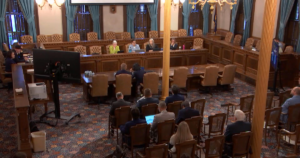
Nearly two dozen Michigan Republican lawmakers have petitioned the Trump administration to play a more active role in monitoring the state’s elections next year. The move comes as Michigan gears up for a series of significant statewide races that could potentially be highly contested.
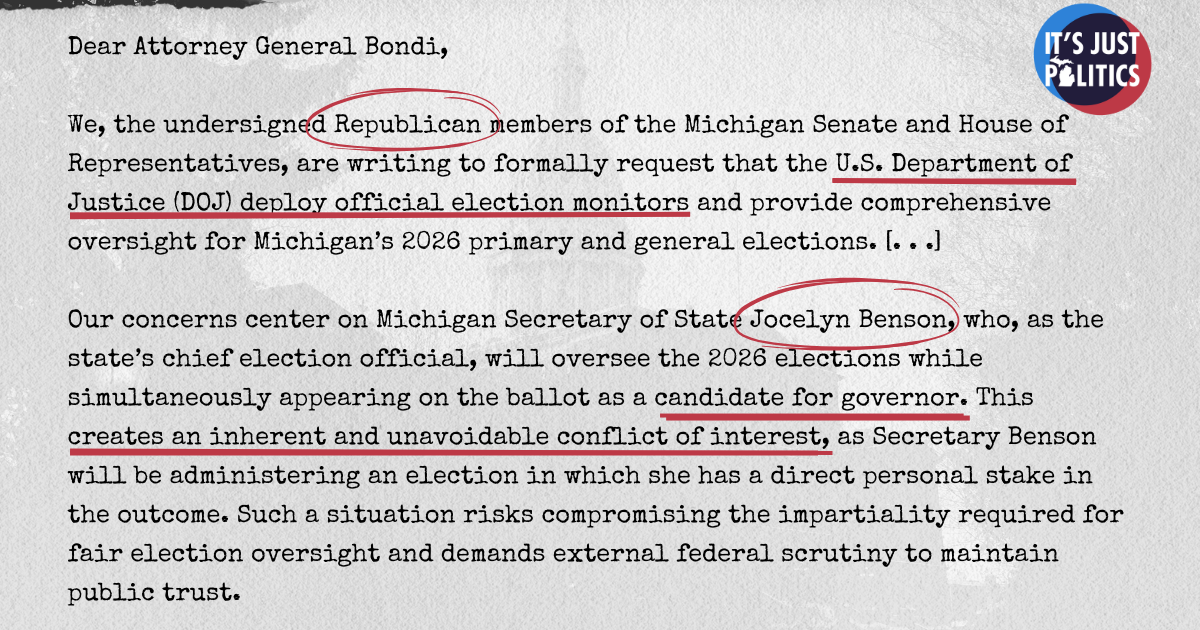
In a letter addressed to U.S. Attorney General Pam Bondi, 22 Republican state legislators expressed concerns about the conduct of past and future elections in Michigan. The letter highlights the ongoing tensions between the Republican lawmakers and Democratic Secretary of State Jocelyn Benson, who oversees the state’s election processes.
The lawmakers argue that Secretary Benson’s involvement in the upcoming elections poses a conflict of interest, especially as she is also a candidate seeking the Democratic nomination for governor. They believe that external federal oversight is necessary to ensure fair election practices and maintain public trust.
Among the signatories of the letter are prominent figures such as state House Election Integrity Committee Chair Rachelle Smit, state Senator and Michigan Republican Party Chair Jim Runestad, and state Senate Minority Leader Aric Nesbitt, who is vying for the GOP nomination for governor.
Secretary Benson’s office has dismissed the request for federal oversight, emphasizing that Michigan’s elections are already safeguarded by a robust system that includes input from local clerks and observers from both major political parties, as well as federal monitors.
The Department of Justice has refrained from commenting on the Michigan GOP lawmakers’ appeal, setting the stage for a potential clash over election oversight in the state.
With upcoming races for governor, attorney general, secretary of state, U.S. Senate, the entire U.S. House, and all 148 seats in the Legislature, the stakes for Michigan’s elections next year are notably high.
In a recent political update, Congresswoman Elissa Slotkin outlined her ambitious Project 2029, which includes proposals like declaring a housing national emergency and introducing a competitive public insurance option. This announcement came during a town hall organized by the progressive veterans group Vote Vets, where Slotkin hinted at potential presidential ambitions, leaving room for speculation. Additionally, the Michigan state Senate passed bills to prohibit paying political petition circulators per signature, aiming to reduce fraudulent practices in the petitioning process. The bills, supported mostly along party lines, now await consideration in the Republican-controlled state House. Furthermore, Michigan defended its new tax on cannabis in court against a lawsuit from the marijuana industry, arguing that the 24% wholesale tax does not conflict with the voter-approved initiative legalizing recreational marijuana. The legal battle will proceed with oral arguments scheduled for November 25th, ensuring a swift decision before the tax takes effect on January 1st. Stay tuned for more updates on these significant political developments.
—
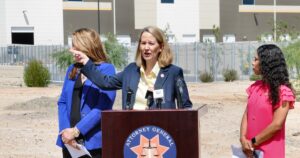
Congresswoman Slotkin Unveils Project 2029, Hinting at Potential Presidential Run
During a packed town hall organized by Vote Vets, Congresswoman Elissa Slotkin unveiled Project 2029, a comprehensive plan that includes proposals such as declaring a housing national emergency and introducing a competitive public insurance option. The event sparked speculation about Slotkin’s potential presidential ambitions, with Politico’s Adam Wren reporting her response to the question as “Not a no!”
Michigan State Senate Passes Bills to Curb Petition Circulator Fraud
This week, the Michigan state Senate approved bills to prohibit paying political petition circulators per signature. The move aims to address concerns about fraudulent practices by paid circulators who may mislead signatories about the content of the petitions. The bills, which received mostly partisan support in the Democrat-controlled Senate, will now move to the Republican-led state House for further deliberation.
Michigan Defends New Marijuana Tax in Court Against Industry Lawsuit
In a significant legal development, Michigan defended its new 24% wholesale tax on cannabis in court against a lawsuit from the marijuana industry. The state argued that the tax aligns with the 2018 voter-approved initiative legalizing recreational marijuana and does not require legislative supermajorities for enactment. The court scheduled oral arguments for November 25th to determine the legitimacy of the tax before it takes effect on January 1st. Stay updated for more details on this ongoing legal battle.