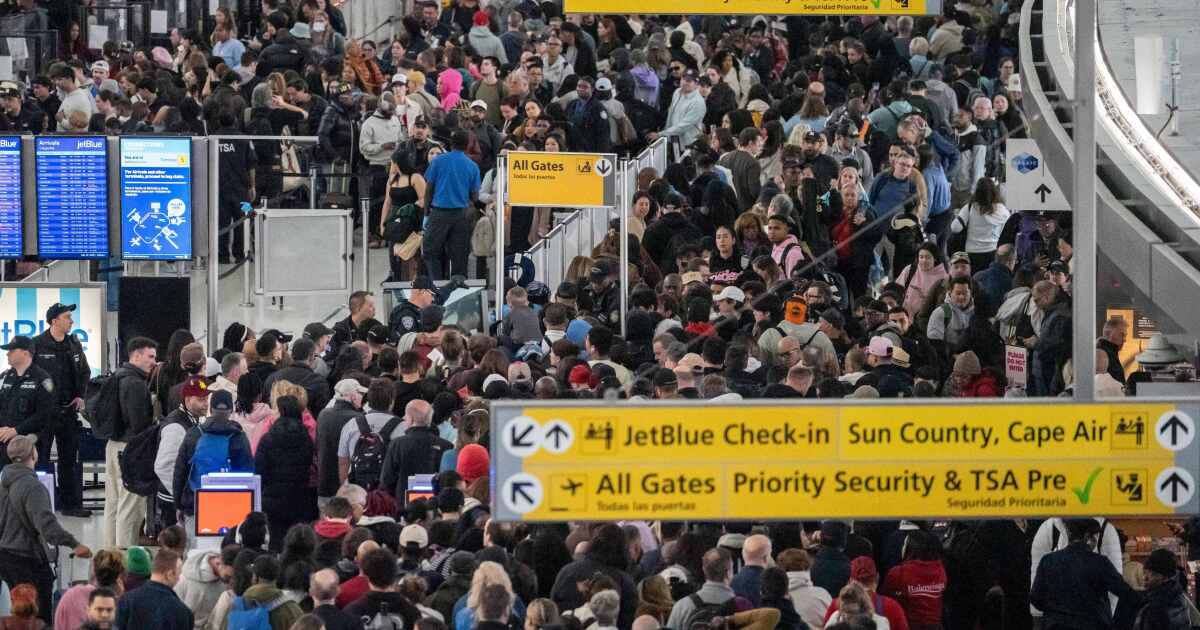
President Trump Sends ICE Agents to Airports Amid TSA Delays
President Trump has announced the deployment of Immigration and Customs Enforcement (ICE) agents to U.S. airports to assist Transportation Security Administration (TSA) personnel facing longer security lines due to the partial government shutdown. This move comes as the shutdown of the Department of Homeland Security enters its sixth week, impacting TSA workers’ paychecks and causing disruptions for travelers nationwide.
ICE Deployment and Reaction
Acting Assistant DHS Secretary Lauren Bis stated that the shutdown led to over 400 TSA officers quitting and thousands calling out due to financial constraints. To address the situation, ICE officers will be deployed to affected airports to help mitigate delays. Atlanta Mayor Andre Dickens confirmed ICE presence at Hartsfield-Jackson Atlanta International Airport, emphasizing that their role is not for immigration enforcement but to manage lines and crowds.
However, the decision to send ICE agents to airports has faced criticism. Everett Kelley, president of the American Federation of Government Employees representing TSA officers, expressed concerns about untrained agents replacing TSA staff. The ACLU and House Minority Leader Hakeem Jeffries also condemned the move, citing potential fear among travelers.
Operational Uncertainty and Funding Issues
Details about the specific duties of ICE agents at airports remain unclear. While ICE expects to assist in specialized roles to help alleviate TSA duties, Transportation Secretary Sean Duffy suggested that ICE agents could operate X-ray machines. Concerns are raised that without DHS funding, TSA wait times may worsen as workers could quit or not show up by the end of the week.
Congress’ failure to pass a DHS funding bill has left agencies like TSA and FEMA in a challenging position, while ICE still holds sufficient funding from previous allocations. The ongoing DHS shutdown originated from incidents in Minnesota involving fatal encounters between federal immigration agents and U.S. citizens.
New Article:
Understanding the Impact of Climate Change on Global Food Security
Climate change continues to be a pressing issue affecting various aspects of our world, including food security. Recent studies have shed light on the significant impact of changing climate patterns on global food production, raising concerns about future food availability. Let’s delve into the key findings and implications of these studies to better understand the challenges posed by climate change on food security.
According to a recent report by the Intergovernmental Panel on Climate Change (IPCC), rising temperatures, changing precipitation patterns, and extreme weather events are threatening food production worldwide. The report highlights that these climate-related factors are already affecting crop yields, livestock productivity, and fisheries, leading to reduced food availability and increased food insecurity in many regions.
One of the key findings of the report is the vulnerability of small-scale farmers in developing countries to the adverse effects of climate change. These farmers, who rely heavily on rain-fed agriculture, are particularly at risk due to their limited resources and capacity to adapt to changing climatic conditions. As a result, their livelihoods and food security are under threat, exacerbating poverty and malnutrition in these vulnerable communities.
Furthermore, the report emphasizes the importance of implementing sustainable agricultural practices and resilient food systems to mitigate the impact of climate change on food security. Investing in climate-smart agriculture, promoting biodiversity, and improving water management are crucial steps towards building more resilient food systems that can withstand the challenges posed by a changing climate.
In response to these findings, policymakers, researchers, and stakeholders are called upon to take urgent action to address the threats of climate change on global food security. Collaboration between governments, international organizations, and local communities is essential to develop strategies that promote sustainable agriculture, enhance food production, and ensure food access for all, especially in the face of a changing climate.
As we navigate the complexities of climate change and its implications for food security, it is clear that concerted efforts and innovative solutions are needed to safeguard the future of our food supply. By prioritizing sustainability, resilience, and equity in our food systems, we can work towards a more secure and sustainable future for all.