
By CHRISTINA A. CASSIDY
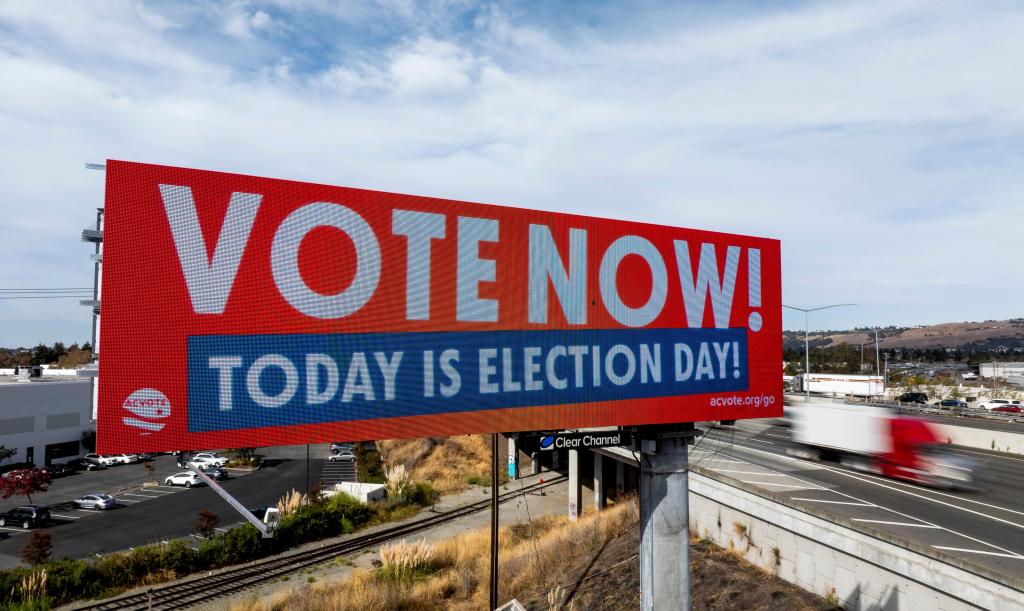
ATLANTA (AP) — The long-debated issue of timely ballot counting has taken center stage in recent months, with President Donald Trump and Republican allies focusing on reducing the wait time for election results. This renewed push has prompted legislative changes across several states.
Central to the controversy is Trump’s executive order on elections, which was signed in March but remains entangled in legal challenges. It targets the practice in many states of counting mailed ballots that arrive post-Election Day.
The U.S. Supreme Court is reviewing a case from Illinois to determine if a challenge can proceed, part of several Republican-led lawsuits aiming to set an Election Day deadline for counting mail ballots.
This year, states like Kansas, North Dakota, and Utah have enacted laws requiring mail ballots to be received by Election Day.
In California, a frequent target of Republican criticism due to its extended vote counting, a bill is being considered to expedite the process.
Federal Law and Ballot Deadlines
Trump’s executive order suggests that federal law mandates ballots be received by Election Day. “This is like allowing persons who arrive 3 days after Election Day, perhaps after a winner has been declared, to vote in person at a former voting precinct, which would be absurd,” the order states.
Despite Trump’s claims, there is no evidence to support the idea that late-arriving ballots are a significant source of fraud. States vary in their approach, with some, like California and Mississippi, accepting them, and others, like Colorado and Indiana, rejecting them.
Steve Simon, Minnesota’s chief election official, emphasized, “There is nothing unreliable or insecure about a ballot that comes back after Election Day.”
While most of Trump’s executive order is currently paused by the courts, it includes directives for the attorney general to enforce federal law against states counting late ballots for federal elections.
Republican-Led Changes in State Law
Since the 2020 election, five states have passed laws moving mail ballot deadlines to Election Day, according to the Voting Rights Lab. Kansas, for instance, will no longer accept mail ballots arriving up to three days after Election Day, a practice instituted in 2017 due to postal delivery issues.
Kansas state Sen. Mike Thompson likened the grace period to giving a football team extra chances to score after the game ends, saying a uniform end time is necessary.
Challenges in California
California’s lengthy counting process has drawn criticism, with U.S. Rep. Bryan Steil blaming the state’s “lax election laws” for delays. California, housing nearly 22.9 million registered voters, allows ballots to be received up to seven days post-Election Day if postmarked by then.
Dean Logan, Los Angeles County’s chief election official, reported counting nearly 97% of ballots within a week in 2024. Meanwhile, Assemblyman Marc Berman has proposed legislation to hasten the counting process, maintaining the 30-day certification period but requiring most ballots be counted within 13 days.
Berman stated, “I don’t think that we can stick our heads in the sand and pretend like these conspiracies aren’t out there and that this lack of confidence doesn’t exist, in particular among Republican voters in California.”
The proposed changes aim to bolster confidence in California’s election system by ensuring more timely results.
___
Associated Press writer John Hanna in Topeka, Kansas, contributed to this report.
Originally Published: