Want this newsletter in your inbox each week? Sign up here.
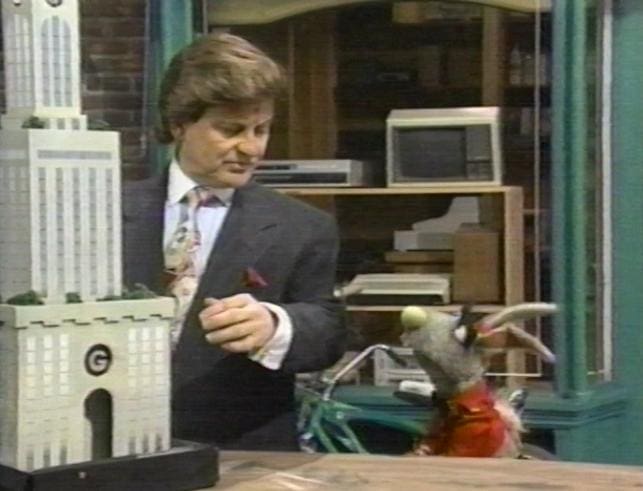
In 1994, a notable episode of Sesame Street introduced a character named Ronald Grump, portrayed by Joe Pesci. This character, a less-than-reputable developer sporting an unmistakable orange wig, served as a satirical vehicle to educate children about the pitfalls of greed. His ambition? To raze Sesame Street for a new skyscraper.
In a memorable scene, Grump asserts, “If there’s one thing I despise, it’s cheap sentiment! Hugs, kiddie television, cute furry animals!”
Fast forward thirty years, and Donald Trump, along with congressional Republicans, is advocating for cuts to the Corporation for Public Broadcasting (CPB). Such cuts could jeopardize PBS funding and potentially endanger the future of Sesame Street, a program renowned for its positive societal impact.
A 2015 study conducted by economists Melissa Kearney and Phillip Levine revealed that children who watched Sesame Street demonstrated improved reading and math skills, comparable to those who attended preschool. As preschool remains inaccessible to nearly one-third of American children, this finding underscores the show’s critical role in early childhood education.
Levine and Kearney noted, “This show initially aired in 1969; its fundamental goal was to reduce the educational deficits experienced by disadvantaged youth. It cost pennies on the dollar relative to other early childhood interventions.”
PBS stations derive 15–18% of their funding from CPB, equating to about $375 million annually. The remaining budget is supported by public contributions.
Beyond educational benefits, Sesame Street has also been shown to enhance cultural awareness. A study by VoxDev indicated that viewers of the show had a heightened understanding of racial issues and were more accepting of diverse cultures. In adulthood, these individuals were more inclined to support minority and female political candidates.
Discontent with public broadcasting is not a novel sentiment among Republicans. Mitt Romney suggested defunding the CPB during his 2012 presidential campaign. Similarly, Trump’s initial presidency featured multiple attempts to cut CPB funding, though Congress thwarted these efforts.
Trump argues that public broadcasting entities harbor bias against him and should not receive federal funding. Nevertheless, NPR and PBS are consistently ranked among the most trusted news outlets in the nation, prompting questions about whether Trump’s stance is a rejection of perceived media bias or an aversion to established realities.
In an episode from 1992, Ronald Grump abandoned his plan to demolish Sesame Street, swayed by Big Bird and Oscar the Grouch’s lessons on community and cooperation. It was a rare instance where Sesame Street’s optimism might have been too hopeful—some perspectives remain unyielding.
ICYMI
Amidst recent severe flooding in central Texas, Senator Sheldon Whitehouse delivered a stark admonition to his fellow lawmakers: implement fossil fuel regulations now to mitigate future climate disasters.
Whitehouse warned, “It is entirely possible that history will show that the three most consequential disasters for America in our lifetimes were the capture of the Supreme Court by right-wing billionaires, the influx into our elections of floods of corrupting special-interest dark money, and the success of the fossil fuel climate-denial operation at blockading solutions to the fossil fuel emissions crisis.”
This marks the 300th time Whitehouse has issued such a warning, with his first plea dating back to 2012 when he criticized President Barack Obama for insufficient climate action. Whitehouse has been reiterating his message consistently since then.
Read more: Whitehouse urges his colleagues to get serious about climate change for the 300th time
WATCH AN AD
Dr. Jasmeet Bains, a Californian physician and state assemblymember, has announced her candidacy for Congress in the state’s 22nd District. This race is expected to be among the most closely contested in the upcoming elections.
Bains’ campaign video prominently features the One Big Beautiful Bill Act, criticizing current Representative David Valadao for supporting the law, particularly its Medicaid cuts, which impact approximately 67% of CA-22 residents.
This strategy is anticipated to be a common approach for several Democratic House campaigns nationwide in 2026. Watch the video below!

2028 WATCH… Andy Beshear tells ‘Meet the Press’ he’s considering run… AOC raked in a massive fundraising haul… RFK Jr. is pumping up his super PAC…
Want this newsletter in your inbox each week? Sign up here.