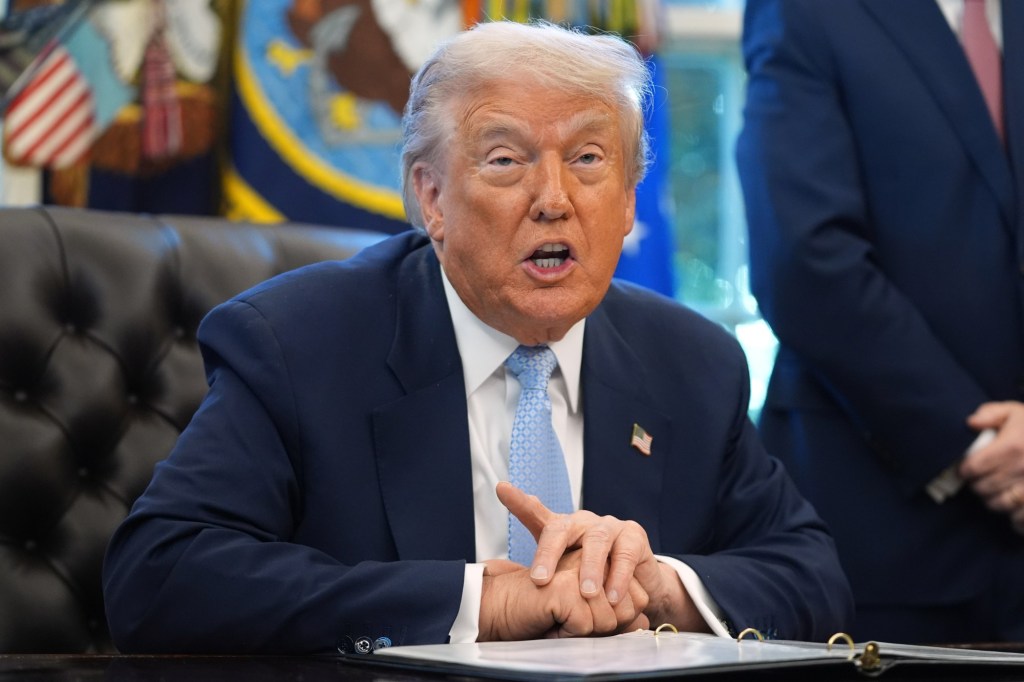
Trump Signs Bill for Release of Epstein Files Amid Political Pressure
In a significant development, President Donald Trump has signed into law a bill that mandates the release of documents related to Jeffrey Epstein, the convicted sex offender. This decision comes after enduring pressure from within his party, despite his previous reluctance to approve such a measure.
The legislation requires the Justice Department to disclose all files and communications pertaining to Epstein, including details regarding the investigation into his 2019 death in federal custody, within a 30-day timeframe. The bill allows for certain redactions concerning Epstein’s victims to protect ongoing federal investigations, but prohibits withholding information for reasons of “embarrassment, reputational harm, or political sensitivity.”
Initially, Trump had the opportunity to release these files of his own accord months prior but chose not to. He has cited that Democrats have used the Epstein case to divert attention from Republican successes. “Democrats have used the ‘Epstein’ issue, which affects them far more than the Republican Party, in order to try and distract from our AMAZING Victories,” Trump commented on social media as he confirmed signing the bill.
This legislative move marks an unexpected pivot for what was once considered an unlikely initiative. It was supported by an unusual coalition comprising Democrats, a Republican critic of Trump, and some of the president’s former allies. Last week, the Trump administration even went as far as summoning Rep. Lauren Boebert of Colorado, a Republican advocate for the files’ release, to the Situation Room to discuss the issue, although she remained steadfast in her position.
Political Dynamics and Legislative Outcome
Trump executed a swift reversal over the weekend, acknowledging that congressional action on the files was unavoidable. He attributed his change of heart to a desire to prevent the Epstein issue from sidetracking the Republican agenda. “I just don’t want Republicans to take their eyes off all of the Victories that we’ve had,” Trump stated on social media, elucidating his rationale behind the sudden decision.
The House of Representatives passed the bill with an overwhelming 427-1 vote, with Rep. Clay Higgins of Louisiana casting the lone dissenting vote. Higgins expressed concerns that the bill’s language might inadvertently reveal information about individuals not involved in any wrongdoing. The Senate followed suit, endorsing the bill unanimously without a formal voting process.
Trump’s past association with Epstein has been documented, although he maintains that he severed ties upon learning of Epstein’s illicit activities. Prior to Trump’s subsequent term in office, some of his political associates had propagated conspiracy theories regarding the government’s management of the Epstein case, alleging a cover-up of potentially damaging details within the files.
For more information, visit the AP News website.