Escalating Tensions: U.S. Military Operations Result in American Casualties
Three American service members have tragically lost their lives, with five others seriously injured, in the latest military engagements between the United States and Iran. These incidents mark the first American casualties in a significant offensive that has provoked a swift response from the Islamic Republic. The U.S. Central Command, responsible for operations in the Middle East, shared this information via a post on X, though specific details about the timing and location were not disclosed.
According to the statement from Central Command, additional personnel sustained minor injuries, including shrapnel wounds and concussions, but are expected to return to active duty soon. The identities of the deceased service members will be withheld until their families have been notified.
The U.S. military has refuted Iranian claims regarding an alleged strike on the USS Abraham Lincoln aircraft carrier, stating on X that the ballistic missiles did not pose a threat as they “didn’t even come close.” This denial comes amidst heightened tensions and military maneuvers in the region.
President Donald Trump had previously cautioned about the potential risks involved in the operation, stating, “The lives of courageous American heroes may be lost, and we may have casualties. That often happens in war. But we’re doing this not for now. We’re doing this for the future.” The president’s warning highlighted the precarious nature of military engagements in the region.
The recent U.S.-Israeli military strikes, which resulted in the death of Iran’s supreme leader, Ayatollah Ali Khamenei, have led to retaliatory attacks by Iran on U.S. bases located in Bahrain and the United Arab Emirates. The paramilitary Revolutionary Guard of Iran has issued a stern warning of launching its “most intense offensive operation” targeting both Israeli and American military sites.
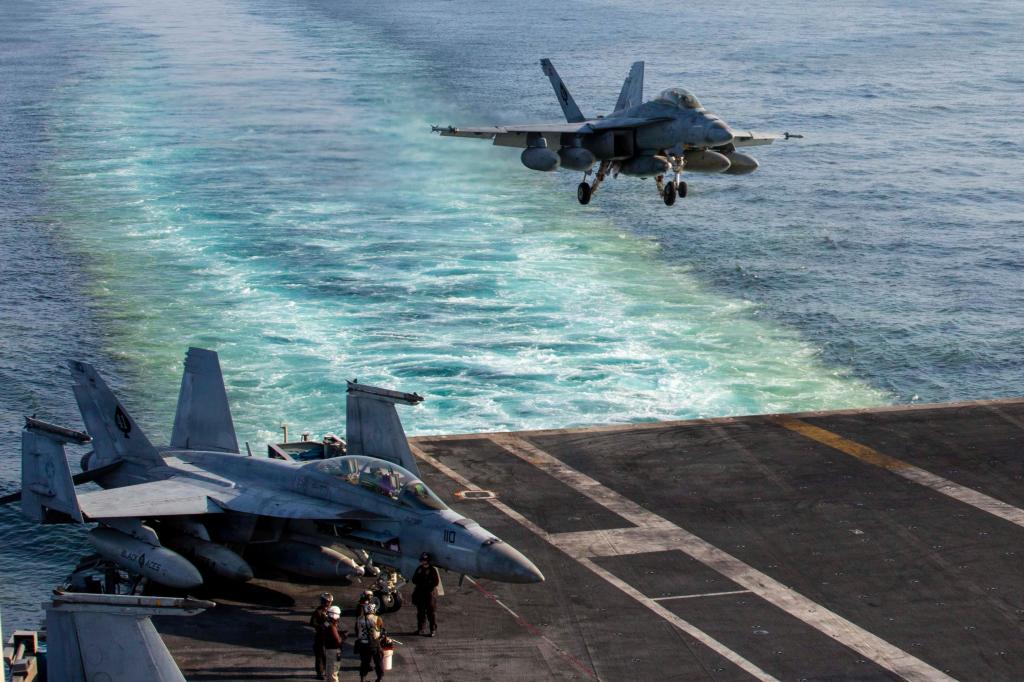
Prior to these developments, President Trump had significantly reinforced the U.S. military presence in the Middle East, bringing in the largest concentration of American forces in decades. The deployment included the USS Abraham Lincoln and three guided-missile destroyers, which arrived in January, substantially increasing the region’s naval capabilities.
The world’s largest aircraft carrier, the USS Gerald R. Ford, along with four destroyers, was redirected from the Caribbean to the Middle East. The carrier had been part of a successful U.S. raid in Venezuela that led to the capture of Nicolás Maduro, who now faces drug trafficking charges in New York. Though the operation resulted in no American fatalities, some troops sustained injuries.
One such injured service member, Army Chief Warrant Officer 5 Eric Slover, received the Medal of Honor during Trump’s State of the Union address. Slover piloted the lead Chinook helicopter that played a crucial role in the Venezuelan operation.
President Trump’s administration has initiated several military operations during his second term, including strikes against the Islamic State in Syria and Nigeria. These actions were in response to various attacks on U.S. interests and allies, demonstrating a continued commitment to combating terrorism and maintaining strategic dominance in volatile regions.