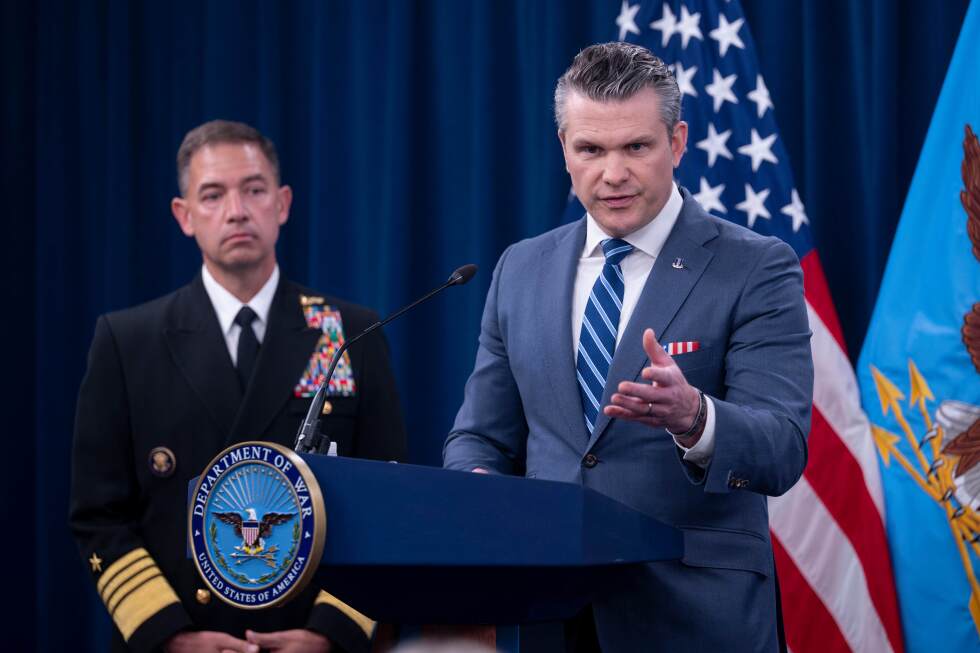
A contentious debate over press freedom and security concerns at the Pentagon has taken a new turn, as an appeals court has ruled in favor of the Defense Department’s policy requiring journalists to be escorted on its grounds. The decision comes amidst ongoing legal challenges by The New York Times, which argues that the policy infringes on constitutional rights.
Appeals Court Ruling
The U.S. Court of Appeals for the District of Columbia Circuit issued a split decision allowing the Defense Department to enforce its press access policy while the Trump administration appeals a lower court’s ruling against it. This is not the final word on the lawsuit filed by The New York Times, but the majority opinion suggests the administration might prove the legal validity of its escort requirement.
A previous ruling by U.S. District Judge Paul Friedman had found the Pentagon’s new credential policy to be a violation of journalists’ constitutional rights. However, the appeals court has temporarily suspended that ruling. Judges Justin Walker, J. Michelle Childs, and Bradley Garcia heard the case, with Childs dissenting, stating, “Reporters can hardly verify sources, gather information, or speak candidly with Department personnel with an escort looming over their shoulders.”
Responses from Key Figures
Defense Department spokesperson Sean Parnell welcomed the panel’s decision, emphasizing that unescorted access had led to unauthorized disclosures of sensitive information. He stated, “Since implementing the current access policy, the Department has seen a meaningful reduction in these unauthorized disclosures, which when they occur can endanger the lives of service members, intelligence personnel, and our allies.”
Theodore Boutrous, representing The Times, noted that the ruling is “a narrow, preliminary one” and expressed confidence in the strength of the newspaper’s constitutional arguments. He said, “We look forward to defending the full scope of the district court’s rulings in The Times’s favor in this appeal.”
Background and Implications
The legal battle over press access at the Pentagon highlights the ongoing tension between national security measures and press freedom. The policy, introduced by Defense Secretary Pete Hegseth’s team, was intended to curtail unescorted movement within the Pentagon to prevent leaks of classified information. However, it has sparked significant controversy and legal scrutiny due to its potential impact on journalistic practices.
The judges involved in the case were appointed by presidents from both major political parties, reflecting the broader political context of the legal discussions. Judge Walker was nominated by President Donald Trump, while Judges Garcia and Childs were nominated by President Joe Biden. Judge Friedman, who initially ruled against the Pentagon policy, was appointed by President Bill Clinton.
For more details, view the Defense Department and the court ruling.