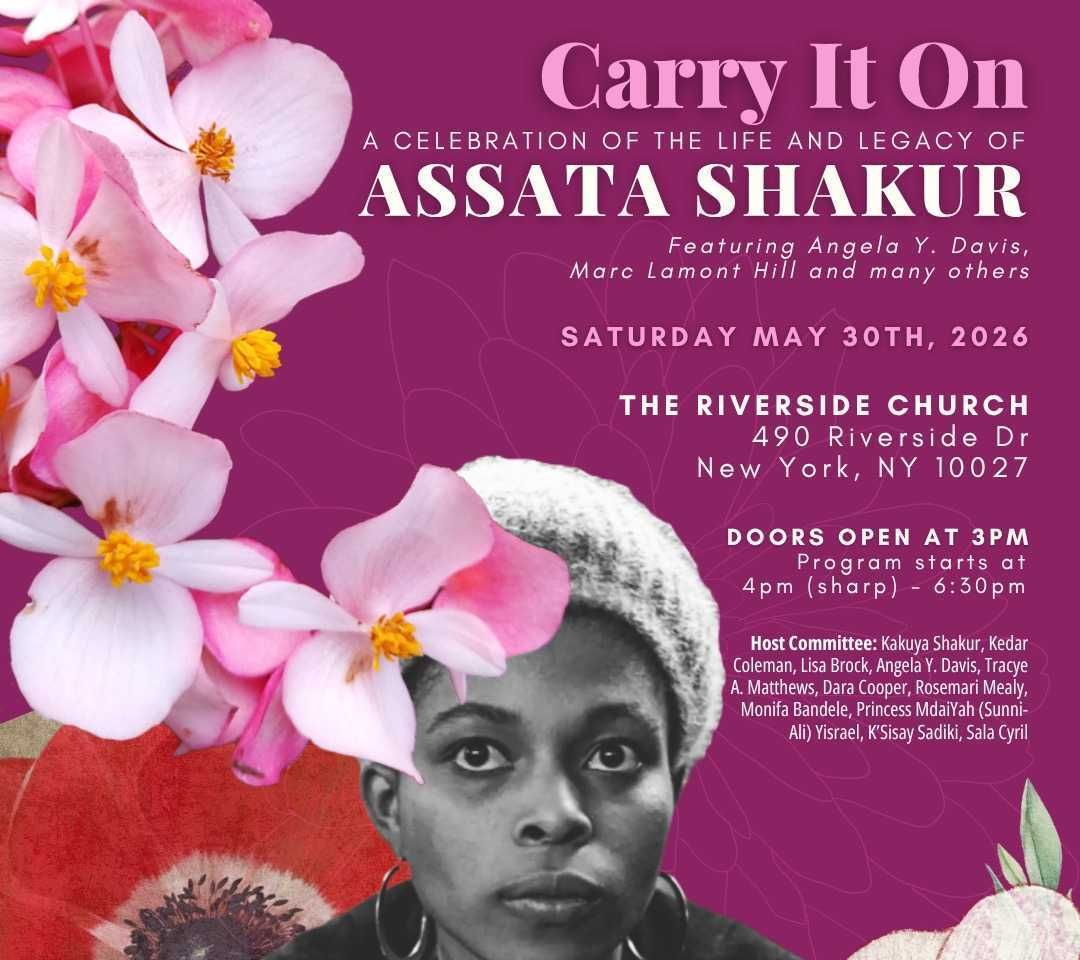
A Gathering to Honor Assata Shakur: Legacy of a Freedom Fighter
Amidst the towering presence of The Riverside Church in New York City, a momentous event unfolds as individuals committed to the cause of Black liberation gather to celebrate the influential life of Assata Shakur. This gathering, titled Carry It On: A Celebration of the Life and Legacy of Assata Shakur, is both a homage and a call to action.
Notable figures such as Angela Y. Davis and Marc Lamont Hill are slated to speak, alongside a host of dedicated organizers like Kakuya Shakur and others who have tirelessly advocated for Black liberation over the decades. The event promises to be accessible to many, as it will be filmed and livestreamed, ensuring that those unable to attend in person can still participate.
This is not the first time Shakur’s legacy has been celebrated following her passing on September 25, 2025. Various organizations have commemorated her life, from Black Women Radicals to the Anti Police-Terror Project, each highlighting her impact on Black feminist and liberation movements.
In the face of a posthumous branding as a terrorist by FBI Director Kash Patel, who cautioned against “romanticizing” her, the community’s response has been one of defiance and remembrance. This reaction underscores the ongoing struggle against systemic assaults on Black and brown communities, reflected in increased ICE raids and the rollback of civil rights protections by the current administration.
Assata Shakur’s life story is one of resilience and resistance. Born as JoAnne Deborah Byron in 1947, she became an influential member of the Black Panther Party, championing social programs and community health initiatives. Despite facing numerous legal battles and imprisonment, she never wavered in her commitment to her ideals.
Her escape from prison in 1979 and subsequent asylum in Cuba marked a significant chapter in her life, allowing her to continue her work in activism and education. Her autobiography, Assata: An Autobiography, remains a powerful testament to her journey and her unwavering belief in Black solidarity and love.
Shakur’s legacy is not just a historical narrative but a blueprint for current and future movements. Her ability to inspire and educate continues to resonate, especially in times when Black communities face heightened challenges. As the celebration unfolds, it serves as a reminder of the enduring power of her story and the necessity of continuing her mission.
The event, orchestrated by organizers like Kakuya Shakur and Angela Davis, is a testament to the strength of collective memory and the refusal to let Assata’s contributions fade into obscurity. As participants gather, they uphold her legacy, ensuring it remains a vital part of the ongoing struggle for freedom and justice.
For more on Assata Shakur and related topics, you can explore the following links:
- Revolutionary Fighter For Black Liberation Assata Shakur Dies At 78
- Celebrating And Remembering Black Panther Assata Shakur
- Op-Ed: Assata Shakur And The Endless War Against Black Liberation
- Assata Shakur Lived And Died Free
- Angela Davis: FBI Targeting Assata Shakur ‘Reflects Very Logic Of Terrorism’ [VIDEO]