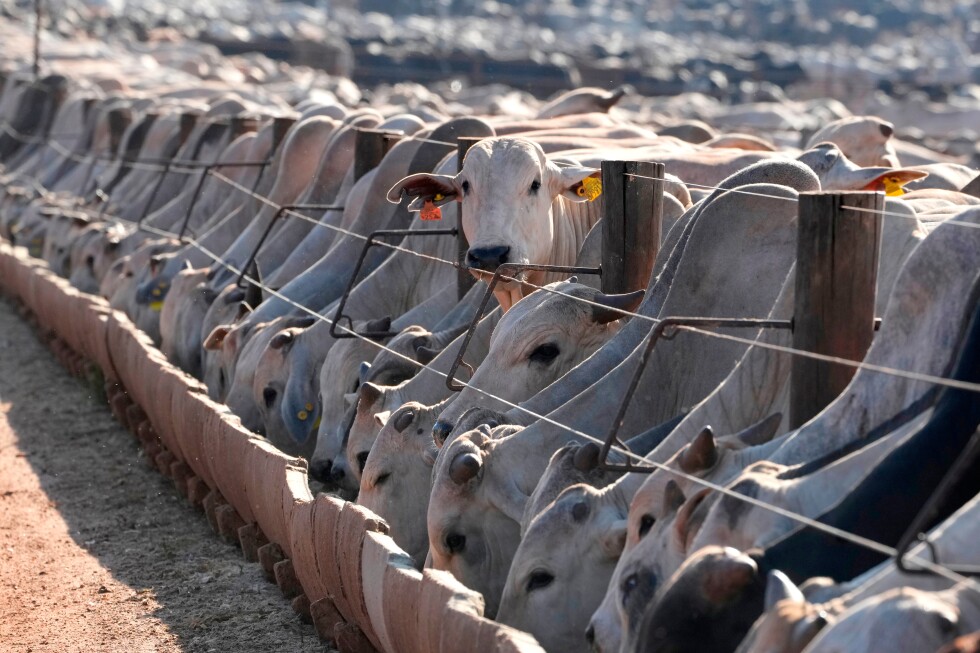
Brazil finds itself in a challenging position as the European Union has decided to block its animal product exports starting in September. This move comes shortly after the tentative activation of a major trade deal between the European Union and Mercosur, a South American trade bloc that includes Brazil, Argentina, Paraguay, and Uruguay. This agreement, valued at approximately $22 trillion, could be affected by the EU’s latest decision.
The trade pact, which began its provisional application on May 1, is currently under scrutiny by the European Court of Justice. Opposition from European farmers and environmental organizations has been significant, with concerns about potential threats to their industries, price fluctuations, and environmental considerations.
Brazil’s agriculture ministry expressed its dismay over the EU’s decision, which reportedly stemmed from a lack of assurance that Brazilian animal products were free from growth-promoting antimicrobial substances. As a result, Brazil’s representative to the EU is scheduled to engage with EU officials to seek clarification on this matter.
In 2025, EU nations ranked as the third-largest market for Brazilian beef exports, preceded only by the United States and China. The blockade on Brazilian animal products could thus have considerable economic implications for Brazil.
European Commission President Ursula von der Leyen has enacted the EU-Mercosur agreement provisionally, bypassing the EU Parliament. The deal’s continuation hinges on the European Court of Justice’s decision, as EU legislators are currently challenging the ratification process.
For more information on Latin American news, visit AP’s Latin America coverage.