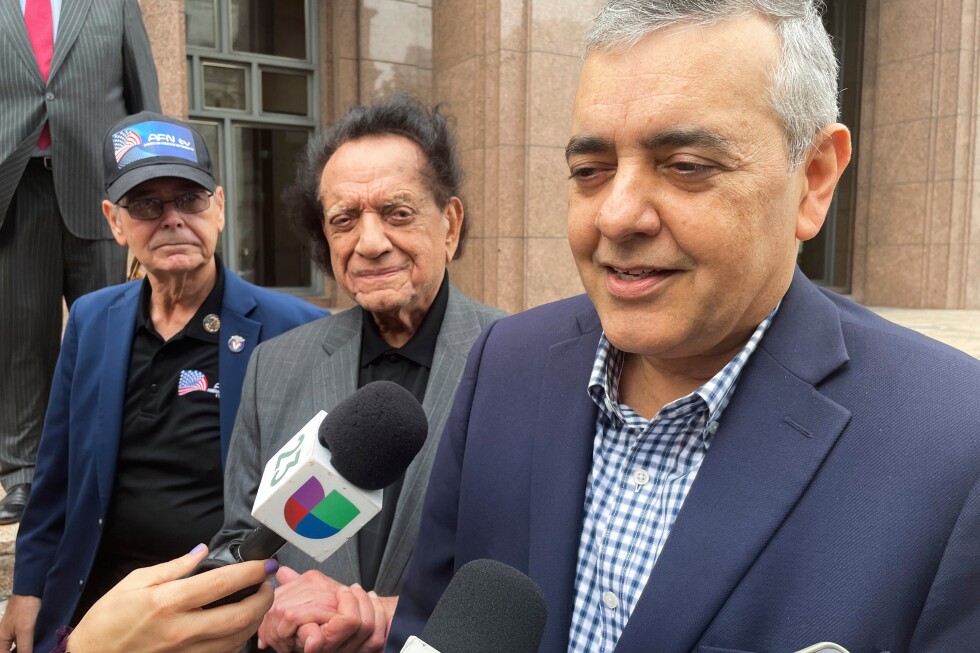
In a significant legal development, a former Miami congressman, intimately connected to U.S. Secretary of State Marco Rubio, found himself at the center of a courtroom drama. David Rivera, a Republican, was convicted Friday for his role in a covert $50 million lobbying effort on behalf of Venezuela during President Trump’s initial term in office.
Rivera, alongside political consultant Esther Nuhfer, faced a jury that found them guilty on all charges. These included failing to register as a foreign agent with the Department of Justice and conspiring to launder money in their work for Nicolás Maduro’s administration. Rivera remained expressionless as the verdict was announced.
Previously released on bond, Rivera was ordered into custody by Judge Melissa Damian, who cited his substantial financial resources as a potential flight risk. His legal troubles are far from over, as he faces additional federal charges in Washington, D.C., related to foreign lobbying activities.
Miami: A Hub for Foreign Influence
This trial unveiled Miami’s pivotal role in international influence campaigns, particularly those targeting U.S. policy towards Latin America. The case underscored Miami’s reputation as a haven for both corruption and fervent anti-Communist sentiment among its large expatriate community.
Key witnesses, including Rubio, Texas Congressman Pete Sessions, and a prominent Washington lobbyist, expressed their surprise upon discovering Rivera’s contract with a U.S. subsidiary of Venezuela’s state oil company, PDVSA.
The 11-count indictment unsealed in 2022, accused Rivera of leveraging his Congressional connections to persuade the Trump administration to soften its stance on Venezuela and lift harsh sanctions. Prosecutors depicted Rivera and Nuhfer as manipulating influential contacts like Rubio and Sessions in a strategic attempt to normalize relations with the U.S.
Prosecutor Roger Cruz emphasized during closing arguments, “As long as the money kept coming in, they didn’t care from where.”
A Political Career at Risk
Prosecutors revealed that Rivera and Nuhfer concealed their lobbying work to protect Rivera’s political image as a staunch anti-Communist. This secrecy extended to the creation of an encrypted chat group named MIA, involving key figures like Venezuelan media mogul Raúl Gorrín, charged in the U.S. with bribing top officials in Venezuela.
Code names were used for various participants: “bus driver” for Maduro, “Sombrero” for Sessions, “The Lady in Red” for Rodríguez, and “melons” for large sums of money. The term “La Luz” was frequently mentioned in communications regarding payments from Caracas.
Defense attorneys argued that Rivera and Nuhfer believed their actions were legal. The $50 million contract with Rivera’s consultancy firm was aimed at enticing ExxonMobil back to Venezuela, and defense claimed it was not within the scope of the Foreign Agents Registration Act.
Attorney Ed Shohat stated, “He was working every possible angle to get Nicolás Maduro out,” while Nuhfer’s attorney, David Oscar Markus, compared the prosecution to the Salem witch trials, asserting his client’s innocence.
Efforts to Influence ExxonMobil
Despite the defense’s claims, prosecutors contended that Rivera’s contract with PDV USA served as a facade for illicit lobbying. When exposed, the duo allegedly attempted to obscure their activities by falsifying documents and creating sham agreements, including one justifying a $3.75 million transfer to a company managing Gorrín’s luxury yacht.
Their political maneuvers involved arranging meetings for Rodríguez in key locations and enlisting Sessions to orchestrate an introduction between Rodríguez and ExxonMobil’s CEO. Sessions also conveyed a letter from Maduro to Trump after meeting secretly with the Venezuelan leader.
However, these efforts unraveled swiftly. Within six months of his presidency, Trump imposed sanctions on Maduro, labeling him a “dictator” and initiating a campaign to oust him. Despite this, Rodríguez has now emerged as a key figure in the subsequent U.S. administration, following Maduro’s removal by military forces.
Rivera, who shared a residence with Rubio in Tallahassee before his election to Congress in 2010, has a history of controversy. Allegations include funding a Democratic spoiler candidate in 2012. Though not charged, he has faced investigations into campaign finance violations and dealings with a gambling company while in the Florida legislature.