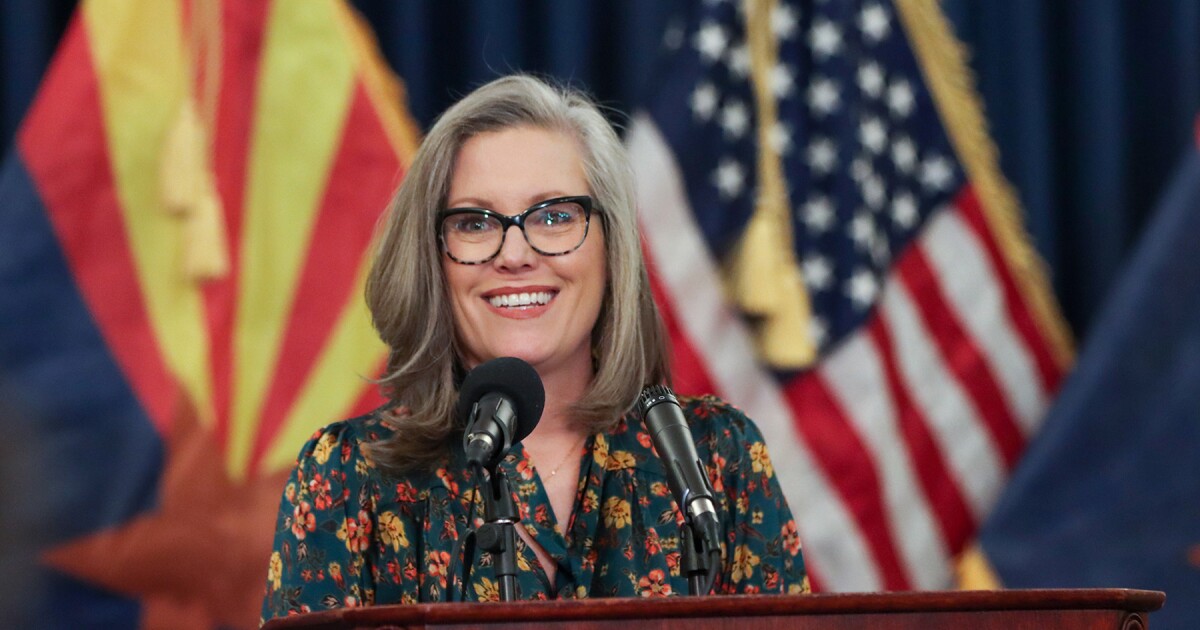
Arizona’s Governor Katie Hobbs has unveiled a new tax proposal designed to bring state-level cuts for middle-class families in line with the federal reductions supported by President Donald Trump. While Hobbs is open to discussions about additional cuts for higher-income individuals, she emphasizes that any such proposals must be financially viable.
Earlier this month, Hobbs introduced her plan, which suggests elevating the standard deduction for Arizona taxpayers to match the changes in Trump’s “Big Beautiful Bill,” formally known as H.R. 1. The proposal also suggests new deductions for seniors over 65 and allows the deduction of tips, qualified overtime, and interest from specific car loans.
The governor stressed her commitment to working collaboratively with the president to benefit Arizona residents, aligning this with a pledge she made after Trump’s election.
“I am looking forward to working with Republicans at the beginning of session to codify this,” Hobbs stated.
However, her initiative has sparked criticism from Arizona’s Republican lawmakers.
“Middle-class families deserve honesty, not last-minute attempts to steal credit for others’ hard work,” remarked Sen. J.D. Mesnard (R-Chandler), chair of the state Senate’s tax policy committee.
Some Republicans accuse Hobbs of attempting to rebrand federal Republican tax cuts as her own, particularly after she labeled them as “Governor Hobbs’ Middle Class Tax Cuts Package.”
“Let’s be clear: Governor Hobbs didn’t create these tax cuts — she’s trying to take a victory lap on the GOP’s work,” Mesnard asserted.
Conformity
Importantly, Hobbs’ proposal does not endorse other federal cuts within H.R. 1 that she believes favor the wealthy, such as accelerated equipment write-offs for businesses.
“I am ensuring that Arizonans have lower taxes, and this will benefit almost every single tax filer,” she noted.
Republicans caution that not fully aligning with federal cuts could complicate tax filing for Arizonans, potentially requiring them to perform separate calculations for state and federal returns, which are typically unified.
This situation could lead to an “accounting nightmare,” according to Sen. John Kavanagh (R-Fountain Hills), the state Senate Majority Leader.
While Hobbs is open to considering additional federal tax cuts for Arizona, she insists that such discussions should be part of broader budget talks, which traditionally conclude after the April tax filing deadline.
Conversely, she urges rapid legislative action on the middle-class tax cuts she supports, aiming for implementation in January to benefit taxpayers on their 2025 returns.
“The Washington budget made this tax cut retroactive,” Hobbs explained. “I’m making sure that the majority of Arizonans, everyday Arizonans, middle-class Arizonans, can claim this higher standard deduction. The tax cuts for billionaires and for corporations come with a big price tag, and I want Republicans to show me in budget negotiations how they want to pay for that.”
The Cost
The Governor’s Office estimates that Hobbs’ preferred tax cuts will result in a $215 million revenue shortfall for the state, while fully integrating the federal cuts into state law could cost $438 million in lost revenue next year, according to state budget analysts.
This financial aspect adds another layer of complexity to budget negotiations between Hobbs and Republican lawmakers, who have faced budget deficits and financial challenges recently, including the near-insolvency of a program aiding Arizonans with disabilities.
Democrats, including Hobbs, have partly attributed recent fiscal strains to an income tax cut from former Republican Gov. Doug Ducey that favored wealthier residents.
Hobbs has not yet detailed how she plans to finance the smaller-scale cuts she supports.
“You’ll see it in our budget when we put out our budget in January,” she promised.
Kavanagh expressed confidence that lawmakers would find the resources to fund the full range of tax cuts.
Howard Fischer with Capitol Media Services contributed to this report.