States are exploring innovative solutions to curb the influence of corporate and “dark money” spending in politics, aiming to challenge the precedent set by the Supreme Court’s 2010 Citizens United ruling. This decision has allowed corporations and similar groups to spend freely on political campaigns, sparking debates about its impact on democratic processes.
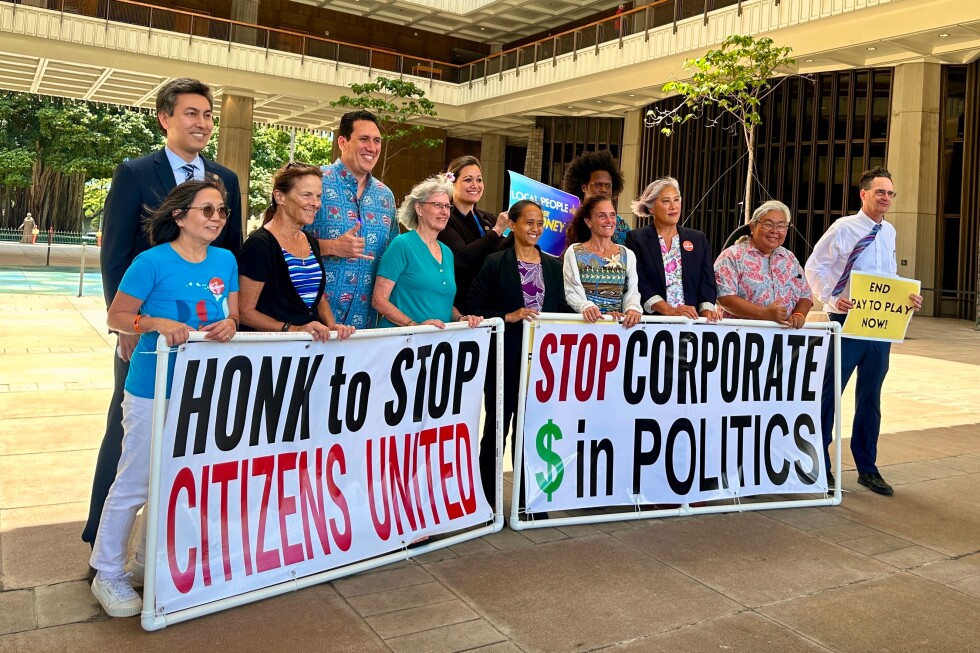
Hawaii is on the verge of potentially redefining how corporations can engage in political spending. A bill recently sent to the governor proposes a new definition for corporations, effectively barring them from financing election campaigns. Meanwhile, in Montana, a grassroots initiative is gathering momentum, with volunteers collecting signatures to place a similar measure on the ballot this November.
Proponents argue that public sentiment is largely opposed to corporate and obscure funding in elections, necessitating such reforms. Critics, however, contend that states lack the authority to override Supreme Court rulings through legislation. Attempts to introduce similar bills in 14 other states have stalled, reflecting the complexity of the issue.
Shift in Political Financing Post-Citizens United
The Citizens United ruling originated from a 2008 case where a conservative organization sought to broadcast ads for an anti-Hillary Clinton film. This landmark decision dismantled restrictions on corporate and union spending in elections, provided they do not contribute directly to candidates.
This ruling has evenly benefited both major political parties. According to OpenSecrets, outside political expenditures in the 2024 federal elections soared to over $4 billion, a figure nearly 12 times greater than in 2008. The Brennan Center for Justice also reported a record $1.9 billion in spending from groups not required to disclose their donors, commonly referred to as “dark money.”
Campaign finance expert Justin Levitt from Loyola Law School notes that corporate restrictions might not substantially alter the landscape of political spending, as substantial contributions often come from wealthy individuals like Elon Musk.
Redefining Corporate Influence
Tom Moore, a former Federal Elections Commission lawyer and current senior fellow at the Center for American Progress, advocates for a redefinition of corporate powers to prohibit campaign spending while allowing lobbying activities. This approach aims to address the Citizens United ruling within the framework of corporate law.
Moore suggests that if a state enacts this redefinition, it would inevitably face judicial scrutiny. “This is a genuinely new approach to getting Citizens United out of America’s politics that is based on absolutely foundational corporation law,” he explained.
Decisions Await in Hawaii and Montana
The fate of the Hawaii bill now rests with Governor Josh Green, who has until June 30 to decide on a veto. State Senator Karl Rhoads, who introduced the measure, believes Hawaii could set a transformative precedent. “This is an instance where a small state has a chance to make big waves on the national scene,” Rhoads stated.
However, Hawaii’s Attorney General Anne Lopez has expressed concerns about the bill’s legal viability and associated defense costs. In Montana, the initiative known as The Montana Plan progresses as volunteers gather signatures to bring the issue to voters, following a favorable state Supreme Court ruling.
Jeff Mangan, leading the Montana ballot effort, asserts that the initiative has strong public support. “It really resonates with citizens,” he noted, emphasizing the public’s direct experience with the effects of corporate political spending.
Legal Challenges and Future Prospects
Former Federal Election Commission member Bradley Smith remains skeptical about the legal durability of Moore’s proposal. He warns that state-level attempts to circumvent Supreme Court rulings might not withstand judicial review.
Smith also speculates that such measures might prompt corporations to exit states rather than limit their political expenditures. Loyola’s Levitt agrees that the initiative’s success is uncertain, but anticipates that the Supreme Court would likely review any significant state-level changes.