Historic Photos of Martin Luther King Jr. with Hawaiian Lei Unveiled in Honolulu
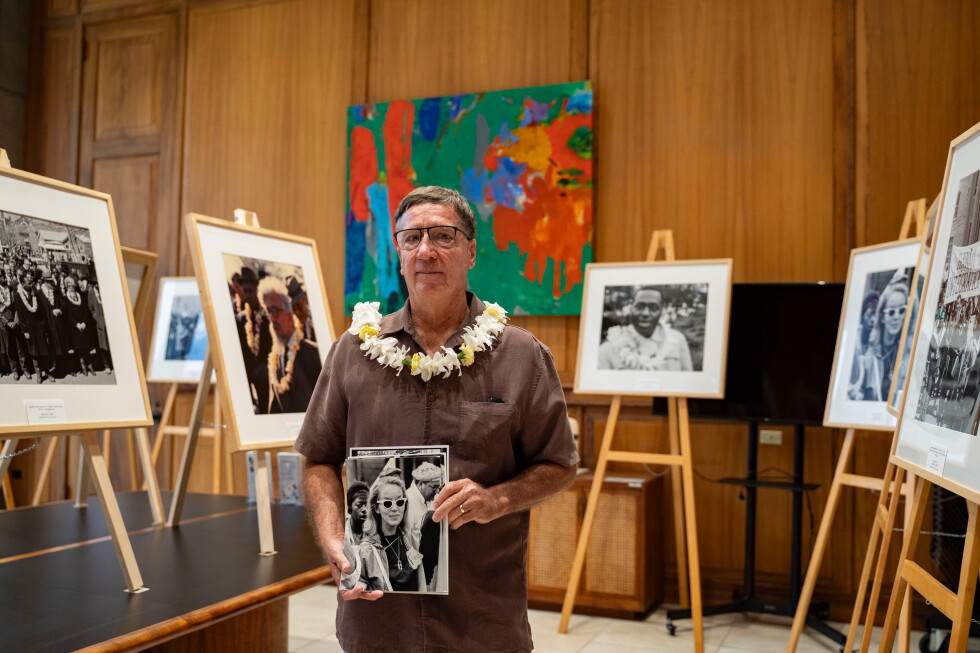
A remarkable collection of photographs featuring the Rev. Martin Luther King Jr. adorned with Hawaiian lei has been opened for public viewing at the state Capitol in Honolulu. These images highlight the unique connection between Hawaii and the Civil Rights movement, capturing a pivotal moment when residents from the Aloha State joined King in Selma, Alabama.
The Selma-to-Montgomery marches were instrumental in the passage of the Voting Rights Act of 1965, which dismantled many discriminatory practices against Black voters in the Deep South. In March 1965, a group of five individuals from Hawaii traveled to Alabama, bringing with them dozens of lei, a symbol of Hawaiian culture and hospitality. While some photos of King wearing these garlands have been previously published, the current exhibit includes many never-before-seen images, showcasing subtle variations and previously unrecognized figures.
Among the delegation was Charles Campbell, a high school teacher and chairman of the Hawaii Civil Rights Conference. In a March 20, 1965 article from The Honolulu Advertiser, Campbell remarked, “Selma has the capability of becoming a real sore that could affect the entire nation.”
King was photographed with the lei around two weeks after the infamous Bloody Sunday incident, where marchers were violently confronted by state troopers on the Edmund Pettus Bridge. These significant photographs were captured by Civil Rights photographer Matt Herron, whose widow has since donated them to Hawaii’s Department of Accounting and General Services.
The images hold a personal connection for Steven Springel, who found his mother, Nona Ferdon, featured in the collection. Ferdon, who passed away in 2021, was a graduate student and single mother when she made the journey to Selma. Springel reflected on his childhood in Hawaii, where racial inequality was not a part of his experience, unlike the situation his mother witnessed firsthand.
This exhibit is part of Hawaii’s contributions to the 250th anniversary of the United States, explained Keith Regan, the acting governor and state comptroller. He emphasized the importance of highlighting Hawaii’s role in the Civil Rights movement, noting the delegation’s effort to travel thousands of miles to support equality and justice.
The lei, made from plumeria flowers picked from the grounds of Kawaiahaʻo Church in Honolulu, were worn by the Hawaii members during the first day of the 50-mile march. The tradition of giving lei continues to symbolize sharing “aloha” and is a common practice for various celebrations and recognitions in Hawaii.
Tomi Knaefler, a reporter with the Honolulu Star-Bulletin who traveled with the delegation, was unable to attend the recent news conference due to her age, but her daughter Pamela MacDonald was present. MacDonald recalled her mother’s dedication to the assignment, which she regarded as one of her most cherished.
The exhibit also coincides with the conclusion of the U.S. Supreme Court’s 2026 term, which saw significant changes to the Voting Rights Act, potentially impacting decades of progress in Black political representation. This historical display serves as a poignant reminder of the ongoing struggle for equality and the vital contributions from across the nation.