Enduring Effects of Voting Restrictions: A Look at Texas and Beyond
As the 60th anniversary of the Voting Rights Act’s passage by the Senate is commemorated, the present state of voting rights in America reflects a stark contrast, with increasing voter suppression laws. The Supreme Court’s decisions, particularly in cases like Shelby County v. Holder, have weakened the most potent aspects of this landmark legislation, leading to a resurgence of voting barriers.
Numerous states have enacted laws that impose new challenges to voting, raising concerns about their potential impact on upcoming midterm elections. Research from the Brennan Center suggests that these laws have a significant and lasting suppressive effect on voter participation. Eligible voters who encounter obstacles in one election are often discouraged from voting in future contests, sometimes for years afterward.
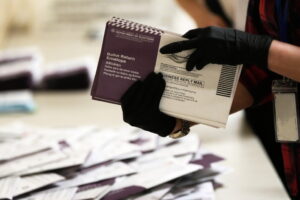
In a detailed study, social scientists Kevin Morris and Coryn Grange, alongside political scientists from Barnard College and Tennessee State University, examined the effects of Texas’s S.B. 1, which restricts mail-in voting. The research showed that Texas rejected a significant number of mail ballot requests and mail-in votes primarily from nonwhite voters during the 2022 primary. Voters whose ballots were rejected showed a marked decrease in participation, being 16 percentage points less likely to vote in the subsequent general election.
These findings challenge the notion that the uproar over new voting laws is overstated. They demonstrate that restrictive voting laws do indeed suppress voter turnout. The Brennan Center’s study further illustrates how racial disparities in voter turnout have widened, particularly in counties previously monitored under the Voting Rights Act.
Moreover, the new Texas law limits voting by mail primarily to those aged 65 and older, indicating that even steadfast voters face deterrents. Younger voters, especially, may be discouraged from participating due to these barriers at the onset of their voting journey.
Political analyst Michael Podhorzer has noted the phenomenon of “generational replacement,” where established voters continue their participation while younger, potential voters are hindered by new restrictions. This trend highlights the silent but severe impact of disenfranchisement.
The Brennan Center, along with other groups, is challenging S.B. 1 through litigation, although recent Supreme Court decisions like the 2021 Brnovich case have complicated efforts to defend voting rights. National legislation is seen as essential to address these challenges. Measures such as the Freedom to Vote Act and the John R. Lewis Voting Rights Advancement Act aim to establish national standards and restore the Voting Rights Act’s efficacy.
While the path to implementing these reforms has been fraught with challenges, the need for them remains urgent. As political parties and campaigns work to protect voting rights, citizens must remain vigilant and resilient against efforts to restrict their access to the polls. Historical lessons remind us that progress relies on the determination of individuals to overcome barriers to voting.
The inspiration drawn from Texas’s experience, where President Lyndon Johnson once invoked the courage of Selma marchers and his own early teaching experiences, underscores the ongoing battle for voting rights. As Johnson once said, he intended to use his position to help improve the future for all Americans. Let us hope that the lessons learned today will lead to meaningful change once more.