A federal judge has temporarily halted the deployment of National Guard troops in the Chicago area, citing insufficient evidence of a “danger of rebellion” amid the Trump administration’s immigration policies. This move is seen as a significant win for Illinois and Chicago’s Democratic leadership, who have been at odds with President Donald Trump over military involvement in urban areas.
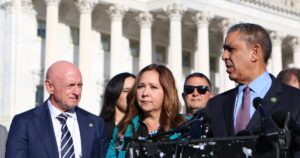
“The court confirmed what we all know: There is no credible evidence of a rebellion in the state of Illinois. And no place for the National Guard in the streets of American cities like Chicago,” stated Governor JB Pritzker.
The judge ruled that the federal administration’s actions violated the 10th Amendment, which delegates certain powers to the states, and the 14th Amendment, which guarantees due process and equal protection under the law.
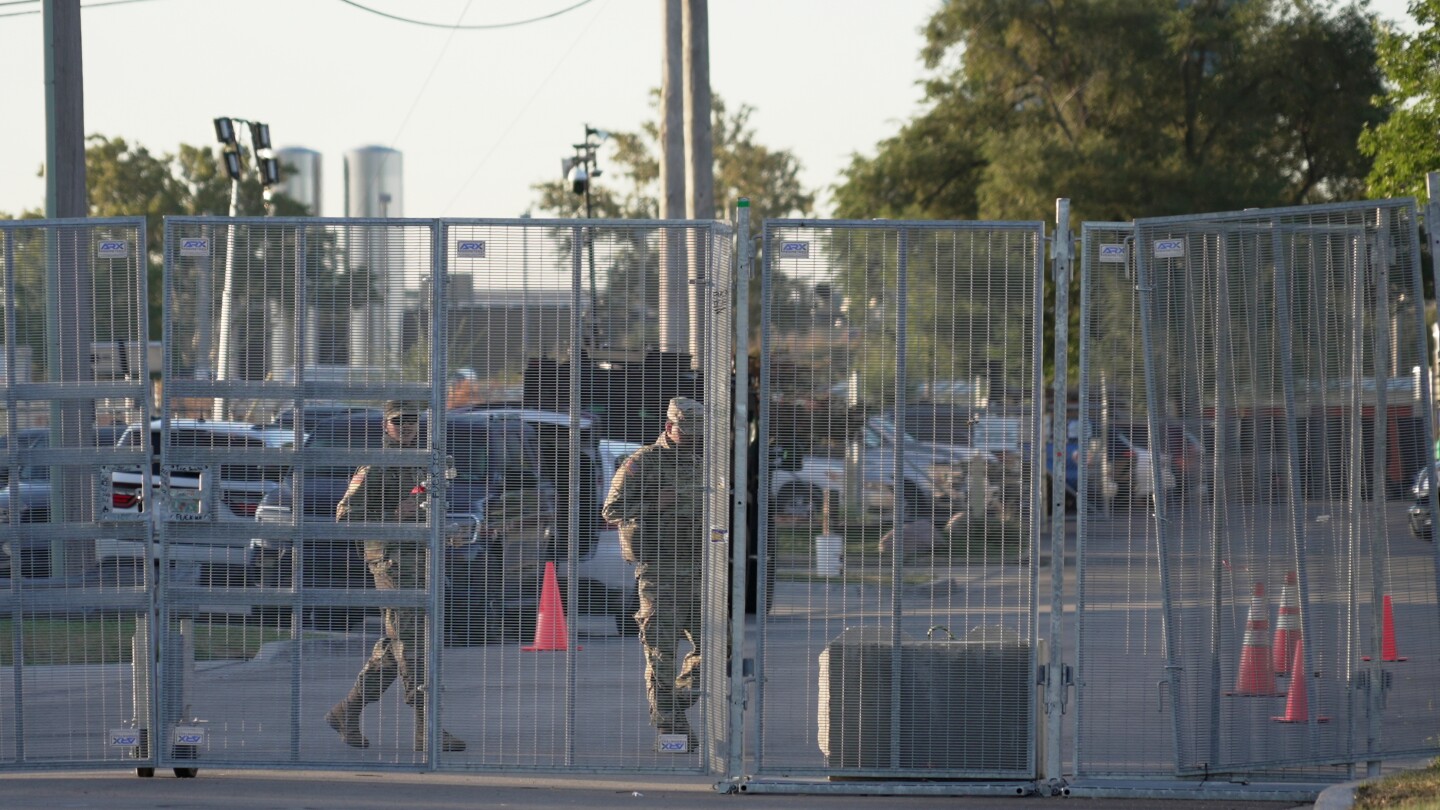
Currently, the fate of the troops, including some stationed near a U.S. Immigration and Customs Enforcement facility in Broadview, remains uncertain. The U.S. Northern Command has refrained from commenting, directing inquiries to the Department of Defense, which has cited ongoing litigation as a reason for its silence.
Guard’s Presence in the State
As the lawsuit was filed, National Guard members from Texas and Illinois were already en route to a U.S. Army Reserve Center in Elwood, southwest of Chicago. These troops, under the U.S. Northern Command, had been activated for a 60-day period.
Some members of the Guard spent Wednesday night in vehicles outside the Broadview ICE facility, emerging the next day to patrol the area. This site has previously been a hotspot for confrontations between protesters and federal agents. According to U.S. Justice Department lawyer Eric Hamilton, the Guard’s mission was to secure federal properties and assist government law enforcement, not to tackle all crime in Chicago.
The Posse Comitatus Act, established nearly 150 years ago, restricts military involvement in domestic law enforcement. However, President Trump has indicated a willingness to invoke the Insurrection Act, which would permit the deployment of active-duty military in states unable to manage insurrections or those resisting federal law.
“Chicago is seeing a brazen new form of hostility from rioters targeting federal law enforcement,” Hamilton remarked during the proceedings.
Despite these arguments, Judge Perry remained unconvinced, asserting, “I have seen no critical evidence that there is a danger of rebellion in the state of Illinois.”
Potential for Extension
The judge’s decision will expire on October 23 at 11:59 p.m., with a follow-up hearing scheduled for October 22 to consider extending the order another two weeks. Perry criticized the Department of Homeland Security’s narrative, suggesting it stemmed from Trump’s “animus toward Illinois elected officials” and described their portrayal of events as “simply unreliable.” Appointed by President Joe Biden, Perry’s skepticism reflects a broader critique of the federal government’s characterizations of the protests.
Chicago and Illinois officials have labeled the troop deployments unnecessary and illegal. “The president does not have the unfettered discretion to turn America’s military against its own citizens when they exercise their constitutional rights,” said Illinois Attorney General Kwame Raoul.
Despite Trump’s portrayal of Chicago as a crime-ridden “hellhole,” crime statistics suggest a notable decline. Trump has criticized Pritzker and Mayor Brandon Johnson for allegedly failing to protect federal agents during immigration operations, to which Pritzker responded defiantly, “Come and get me.”
Legal Challenges in Other States
In parallel legal battles, a federal appeals court is deliberating whether Trump had the authority to mobilize 200 Oregon National Guard troops for deployment in Portland, where protests have persisted outside an ICE facility. A temporary restraining order had already been issued against this move, following Trump’s brief mobilization of California troops for Portland.
Several states have weighed in, with two dozen Democratic-led states supporting the legal challenge against Trump’s actions, while twenty others, led by Republican Iowa, endorse the administration.
Furthermore, a Chicago judge found that immigration officers repeatedly breached a 2022 consent decree, which mandates ICE to provide documentation for warrantless arrests. Immigrant advocacy groups are optimistic that hundreds of detainees could see reduced bonds or the removal of ankle monitors.
Troops Anticipated in Memphis
In Tennessee, troops are expected to begin operations in Memphis, with Republican Governor Bill Lee’s approval. Police Chief Cerelyn “CJ” Davis expressed hope for a balanced presence, aiding in traffic management and retail area security without creating an atmosphere of “over-militarization.”
Meanwhile, in California, a judge deemed the deployment illegal in September, but with only 300 troops remaining, no order for withdrawal was issued.